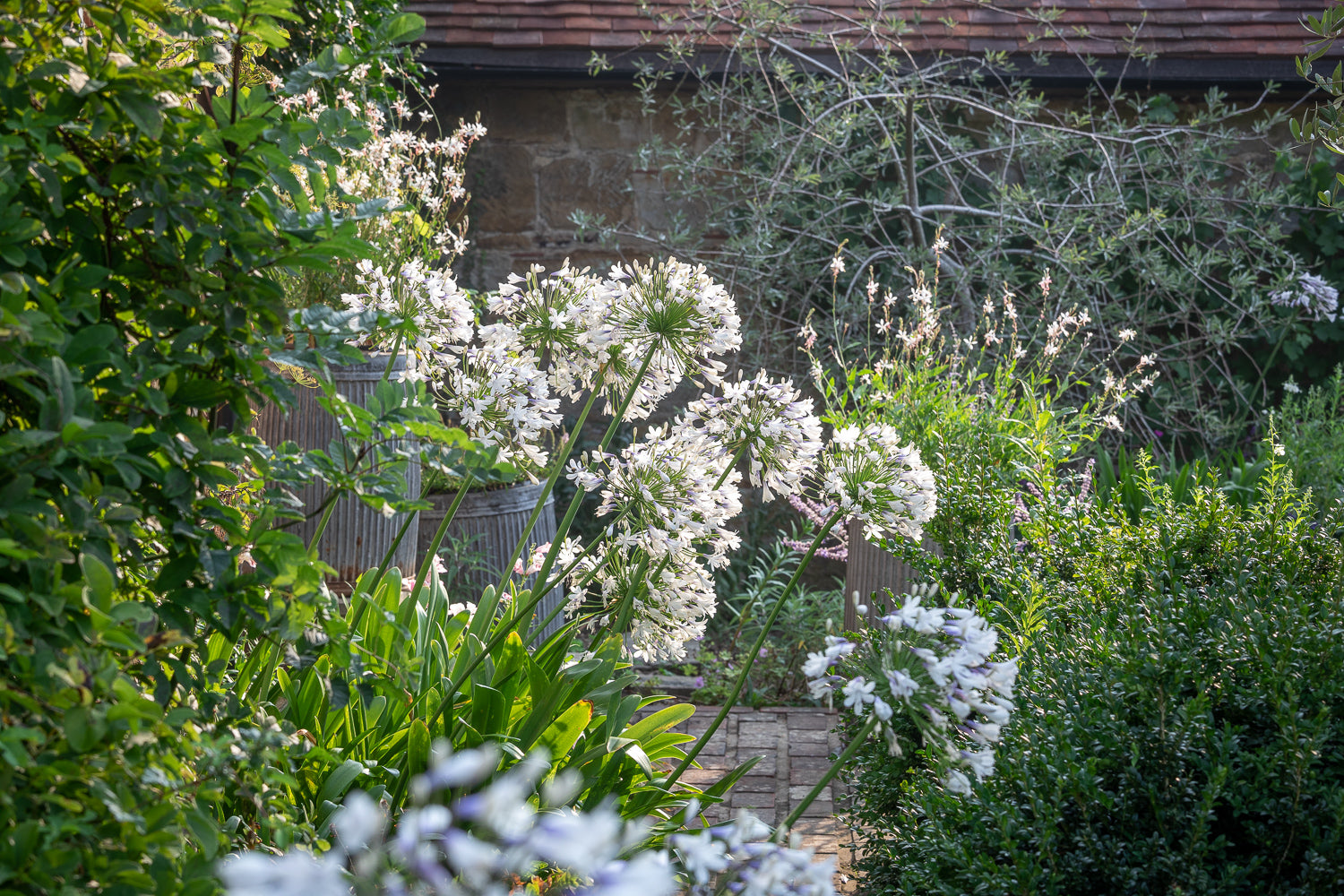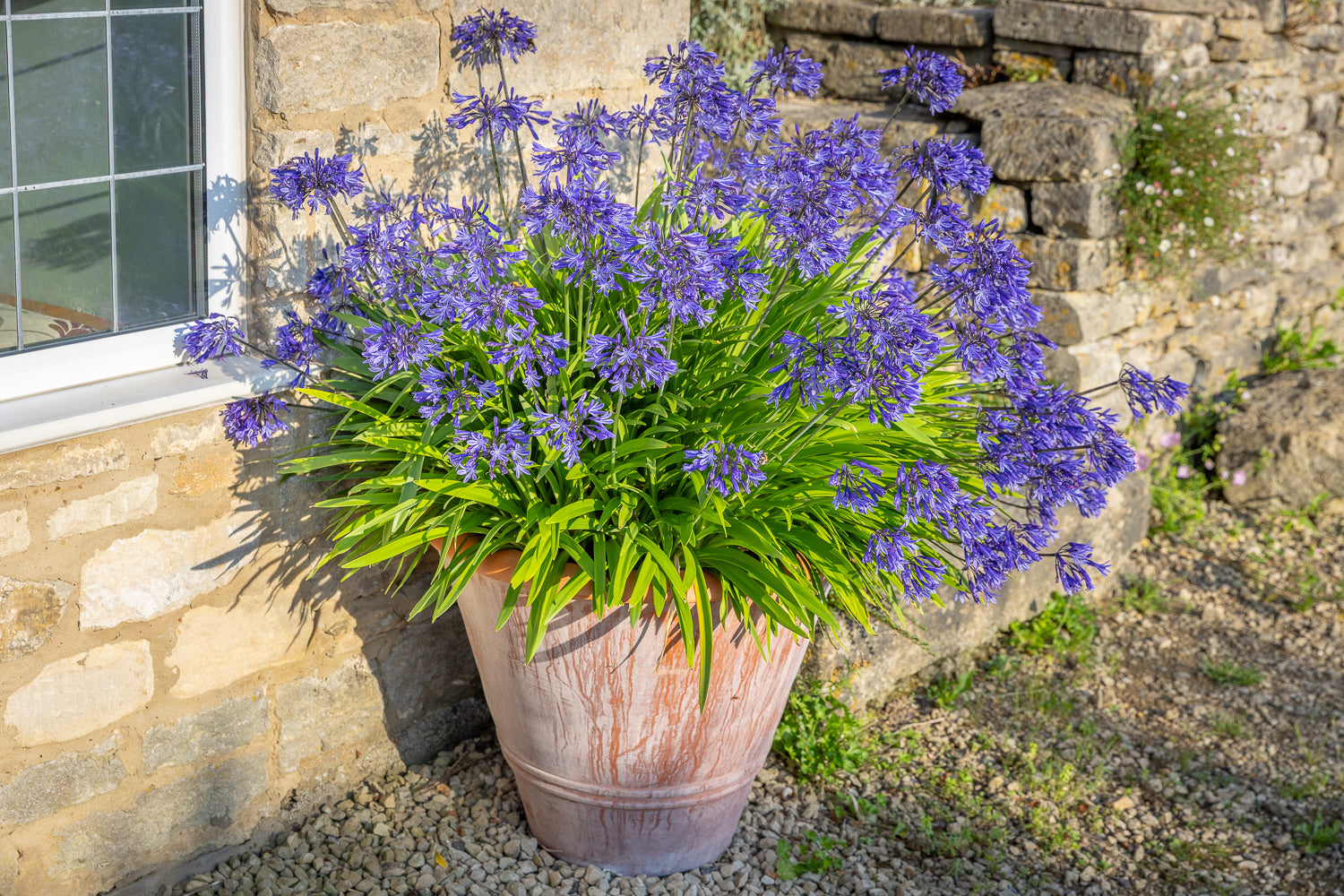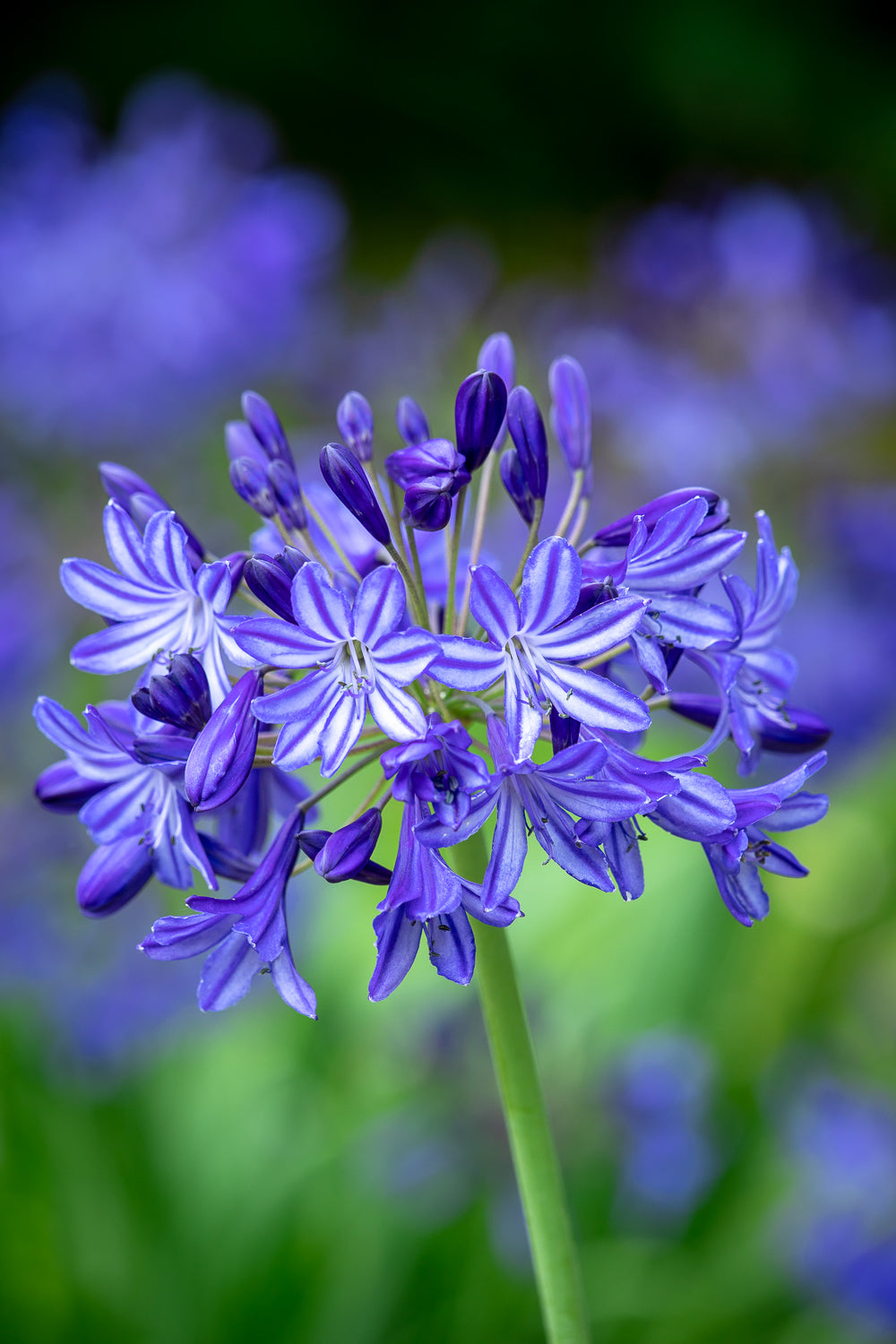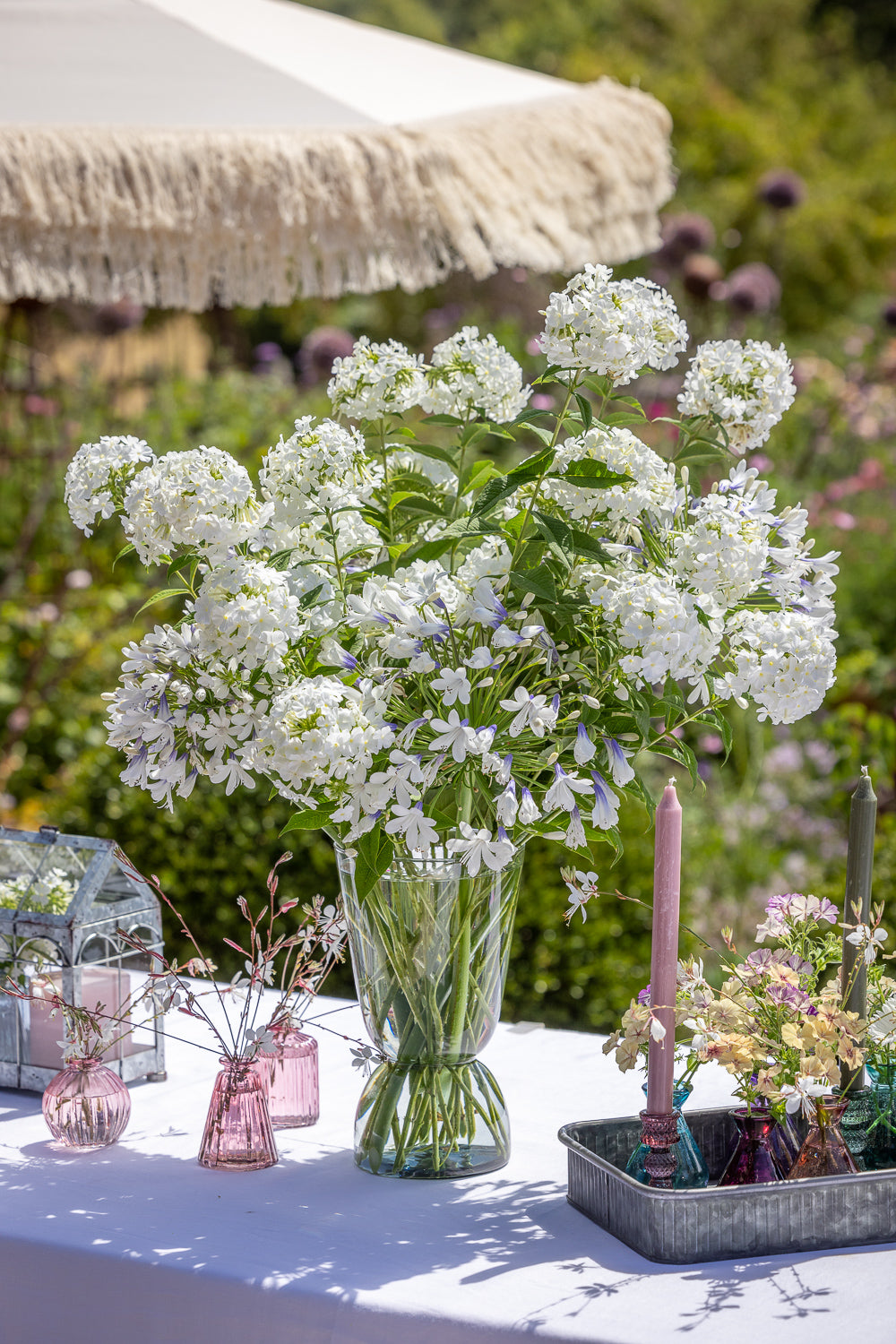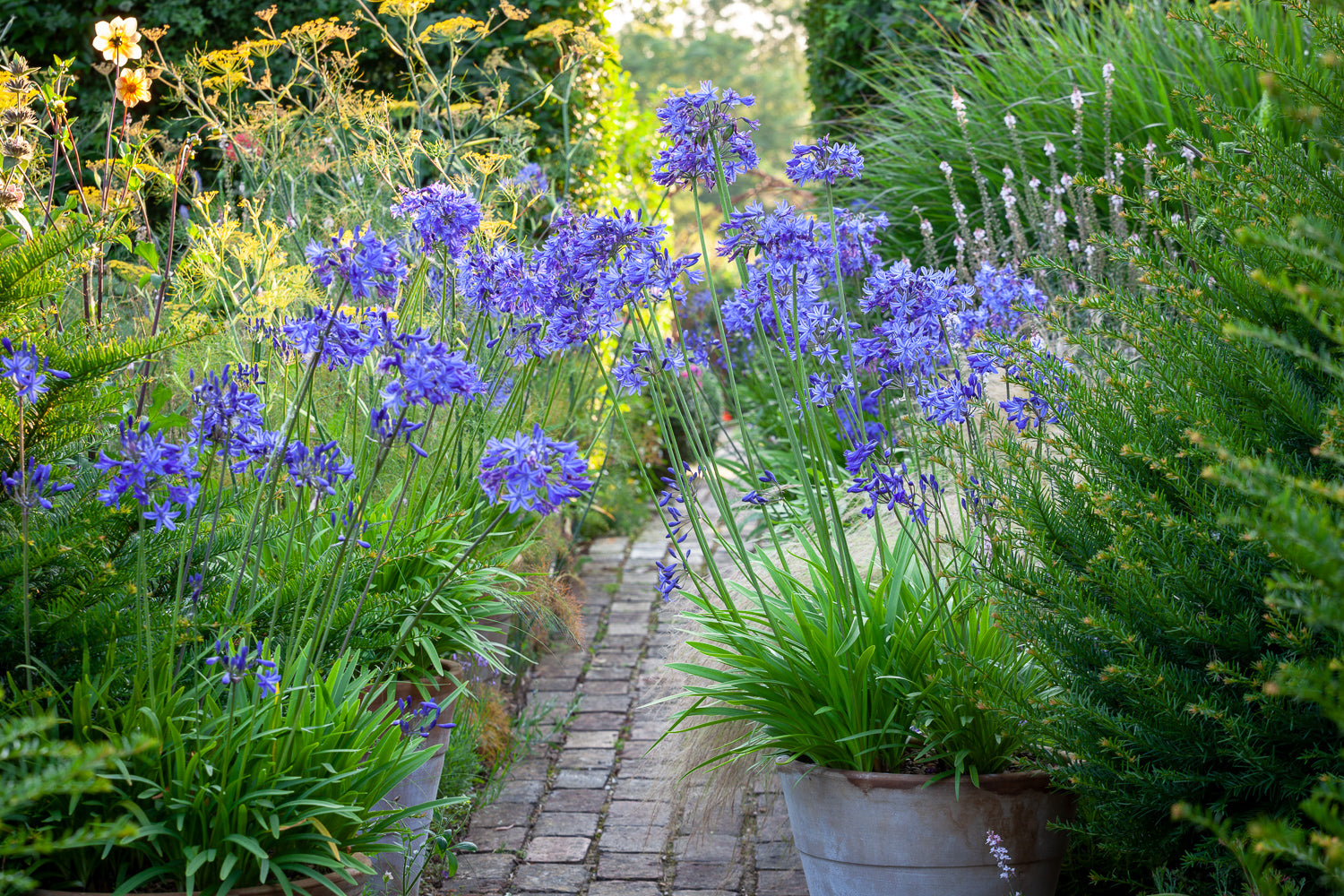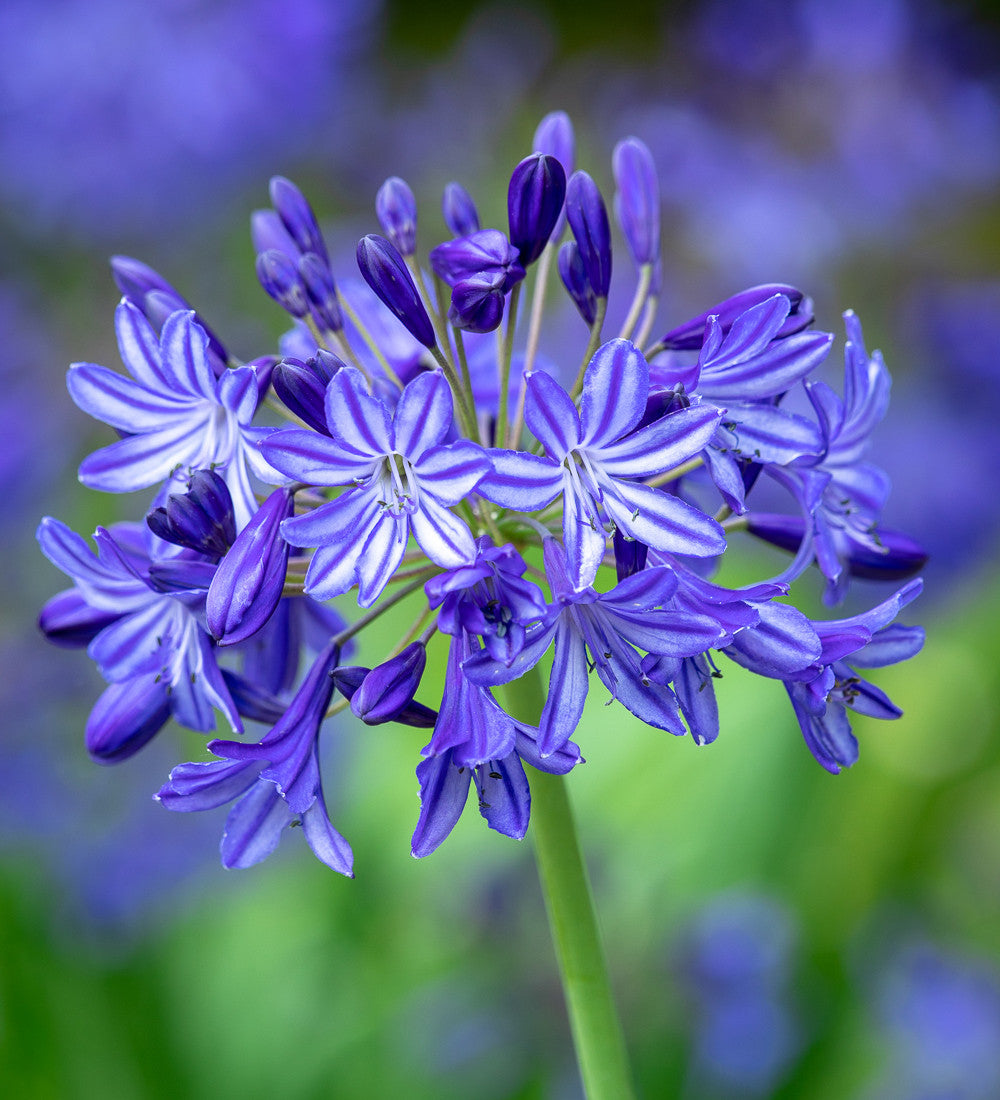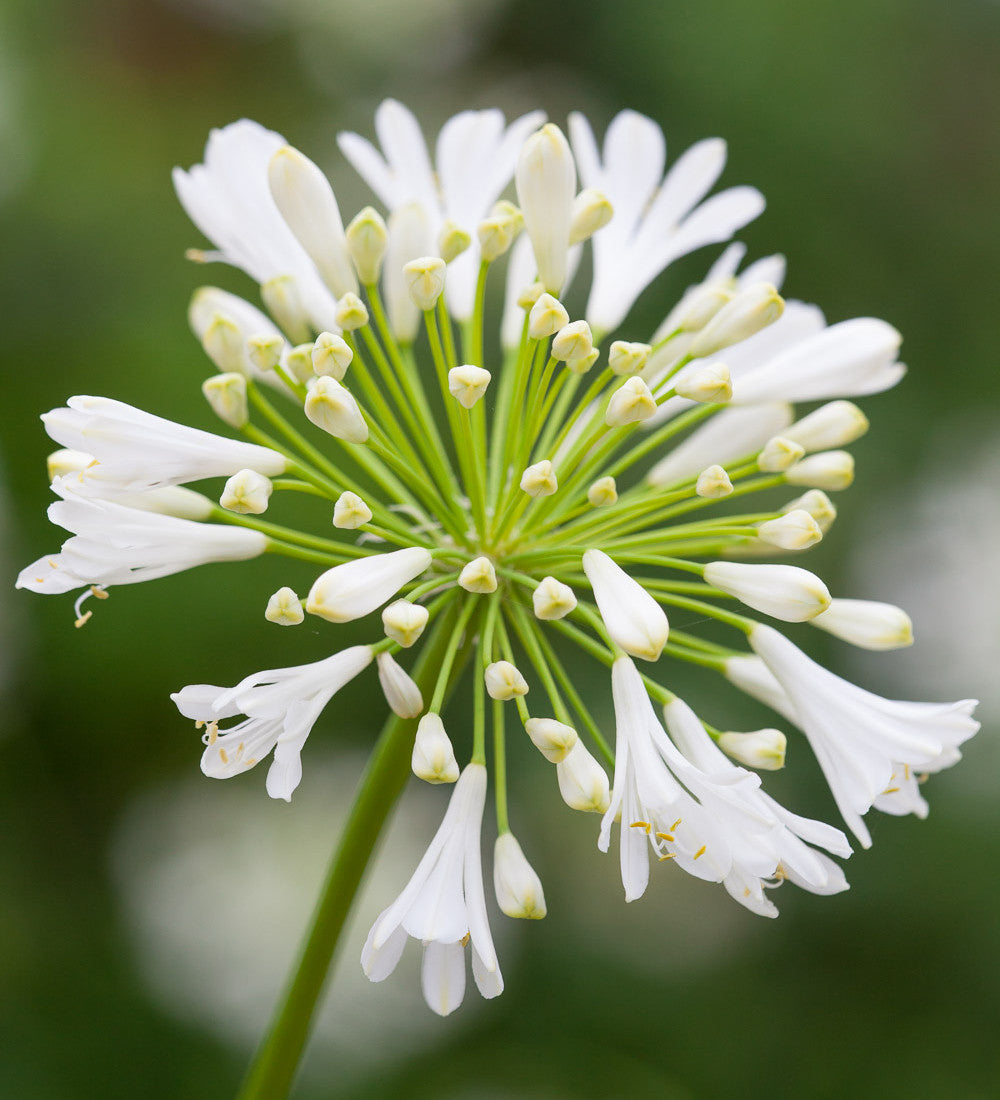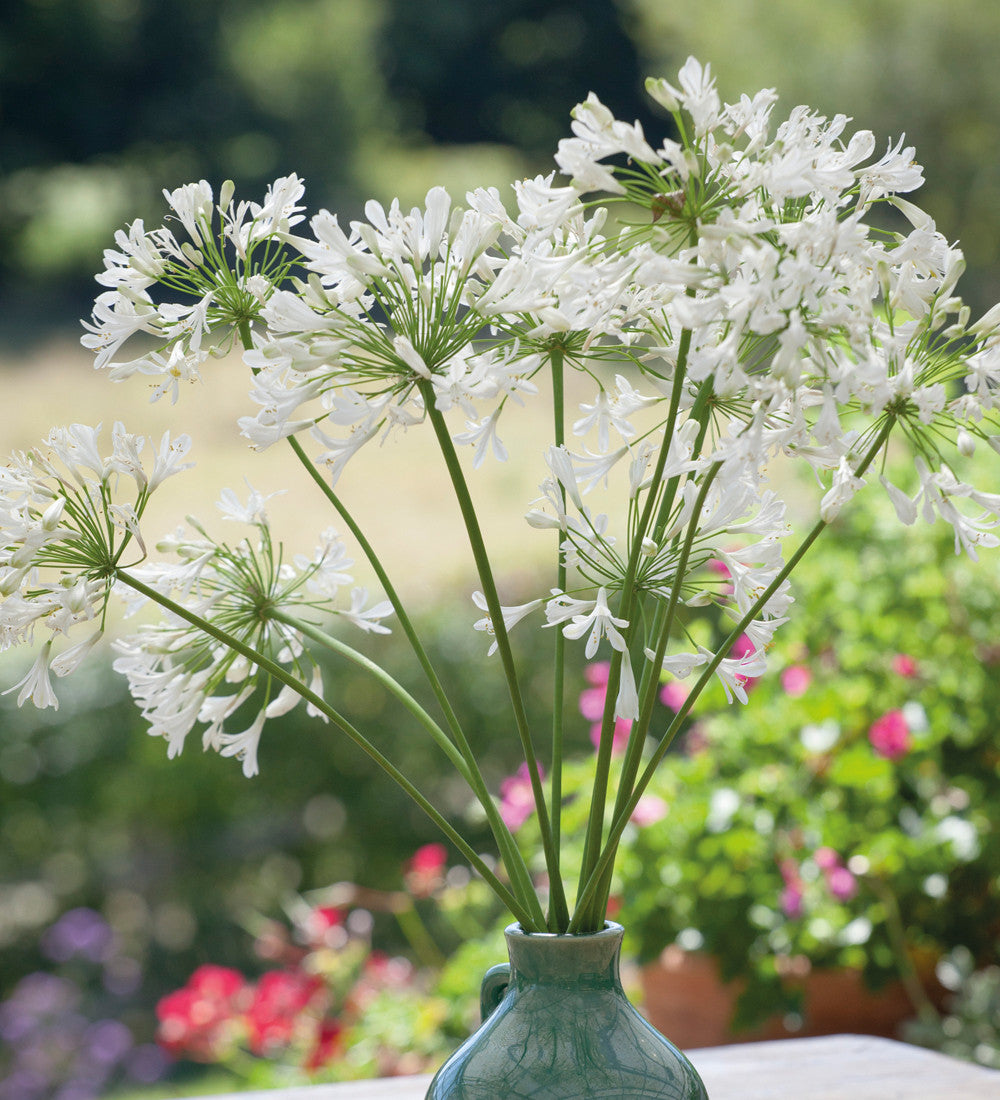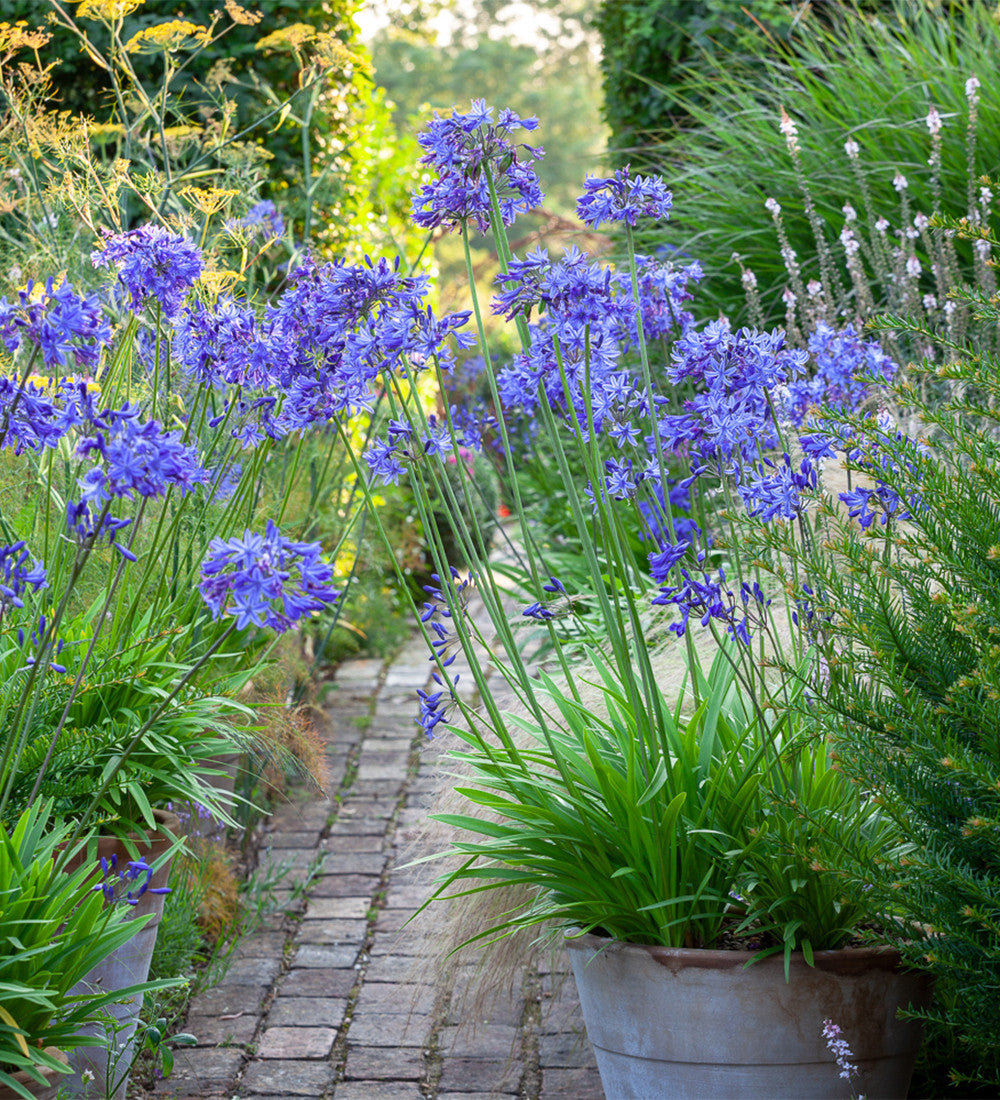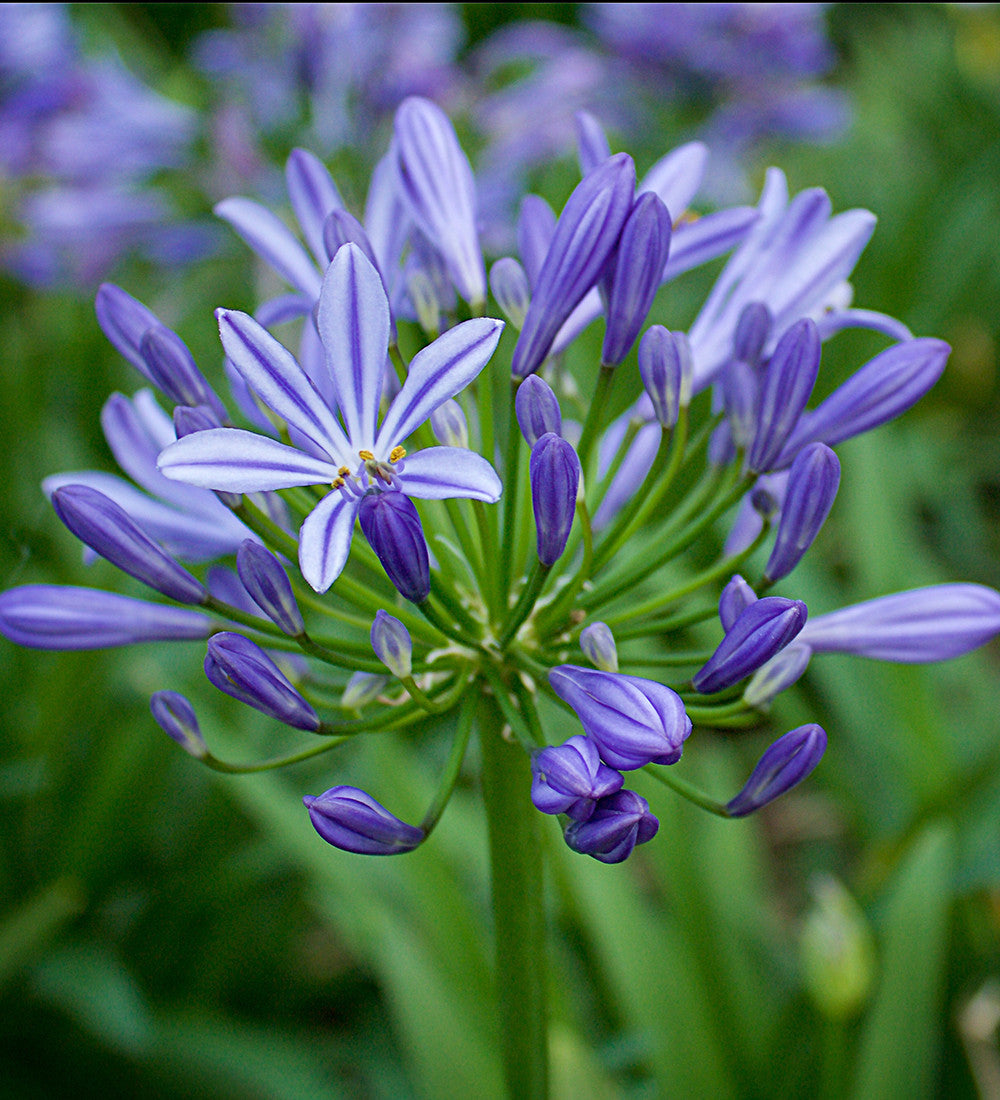
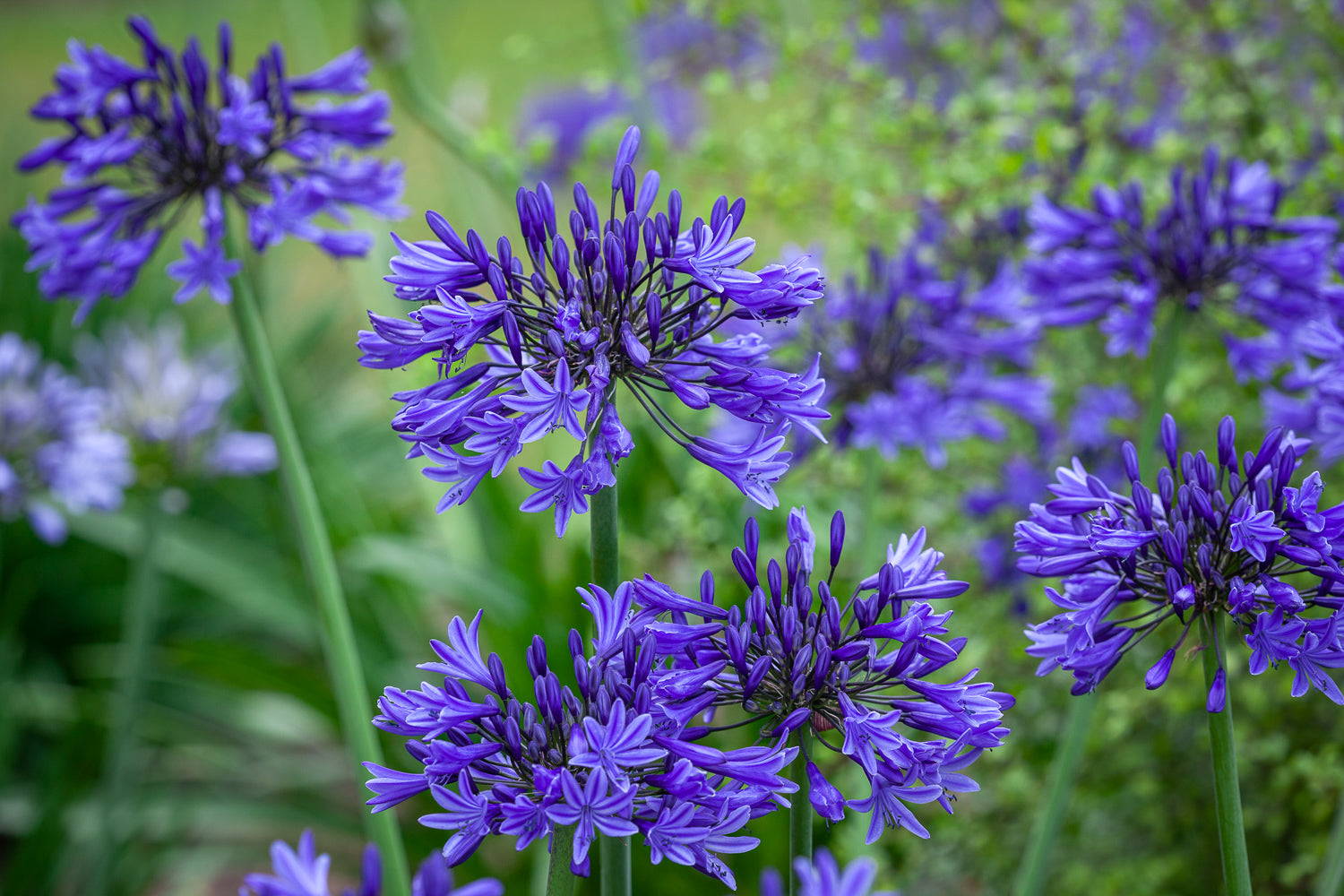
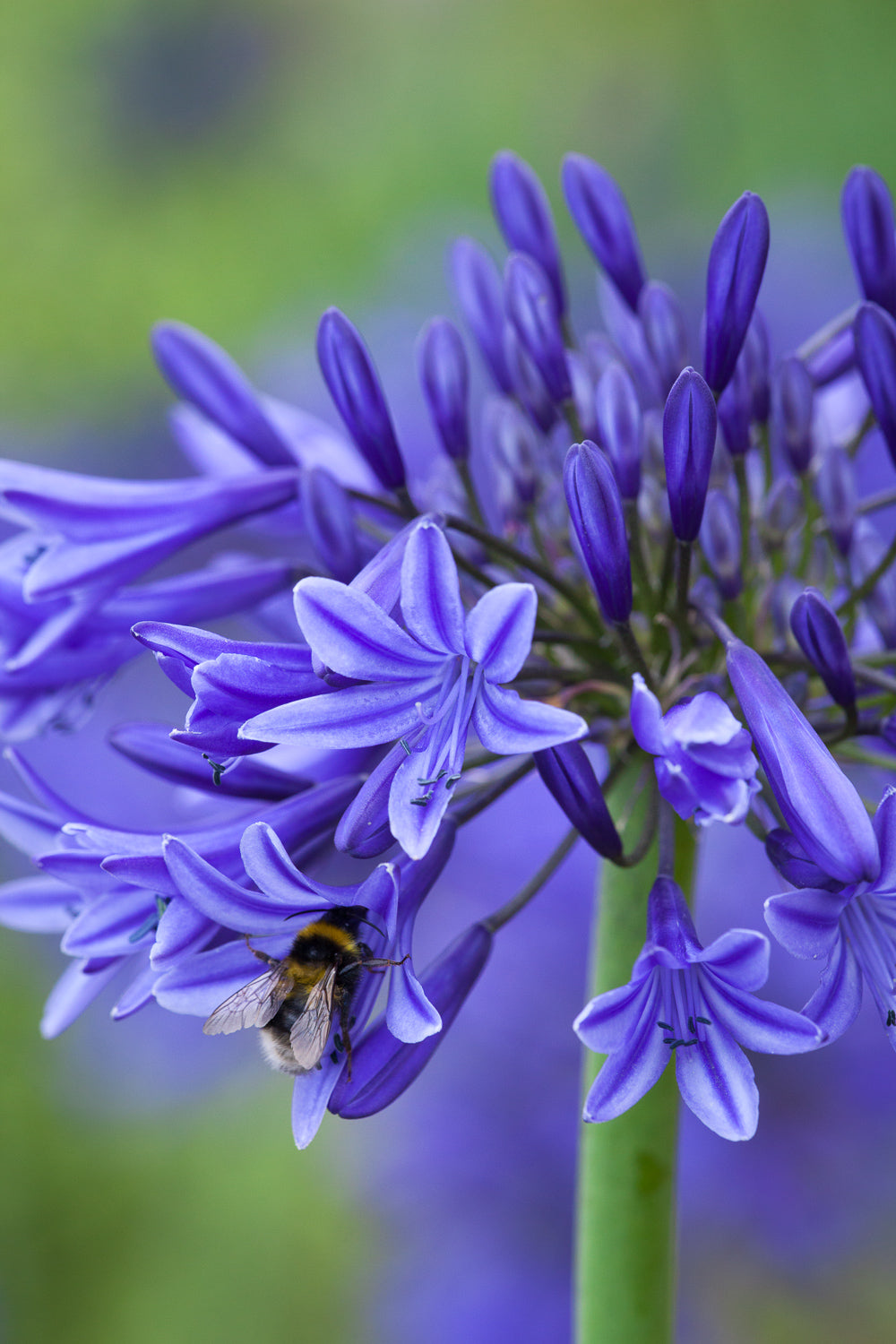
Spring is the best time to plant your agapanthus in a sunny, sheltered position. Incorporate grit into poorly drained soils and plant with the crown just below the soil surface.
Agapanthus are either deciduous or evergreen, the deciduous types are hardiest, losing their leaves and dying down in winter and reemerging in spring. Once they are established, they should withstand most conditions. However, I’d still advise mulching the plants in autumn/winter or covering the crown of the plant with straw or fleece to protect them from cold.
Evergreen types are more tender and their leaves can be damaged by frosts so they will need good protection over winter. Evergreen types in pots should be brought undercover over winter. If your agapanthus are in the ground, a mulch of straw or fleece is essential (unless you live in South-West England).
Established clumps of agapanthus can withstand -10ºC to -15ºC if the ground is well drained, but the number of flowers may be reduced the following summer. Planting in beds in a sheltered position (for example, against house walls) can reduce the likelihood of frost damage. If your soil gets water-logged, consider planting in containers.
Agapanthus can be reluctant to flower if subjected to drought conditions after flowering. To ensure a good display the following year, keep plants moist until autumn, which will encourage the development of new flower buds. Cut down spent flower stems so that the plant concentrates on flower bud formation rather than seed production.
It may take two or three years for plants to establish before flowering really takes off, but after this they will grow into long-flowering clumps. If clumps become too big, they can be lifted and split every four to five years.