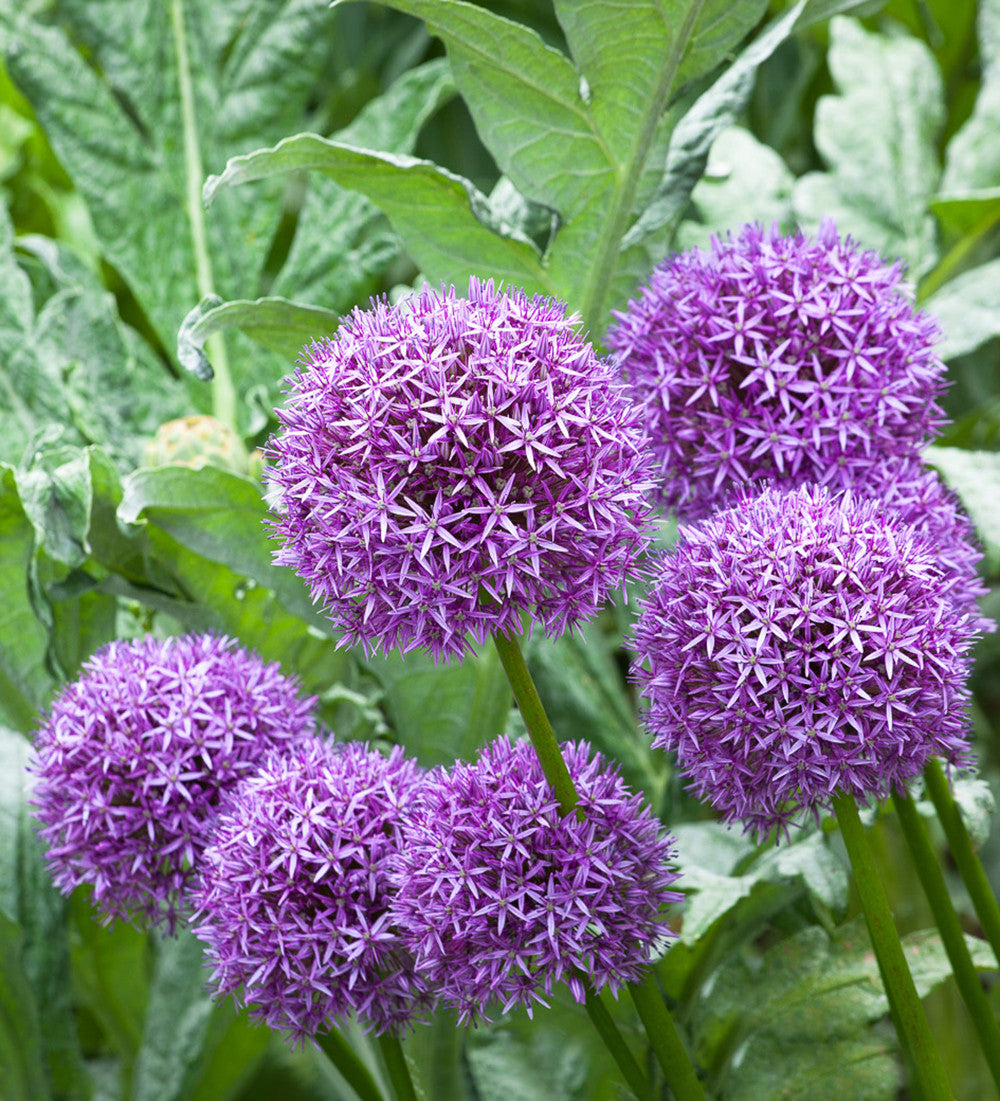
Ornamental alliums are usually relatively problem free in the garden but can sometimes be affected by the diseases common to edible alliums like onions and garlic. Onion fly, allium white rot and downy mildew are all common issues for edible alliums that can sometimes affect the ornamental varieties. To help prevent this, avoid planting ornamental alliums where edible alliums have been planted before.
Onion fly
The maggots of the onion fly (which looks like a small grey house fly) do the most damage, eating the roots of plants in the onion family. If this is happening, the plant may fail altogether, or you might notice yellowing leaves.
The bulbs should be dug up – if you see any maggots or larvae, dispose of the bulbs straight away.
Allium white rot
This is a fungal disease that impacts the bulb and more commonly affects onions, garlic and leeks. The bulb will show signs of furry white growth and leaves might yellow and wilt. Bulbs should be disposed of – avoid planting any alliums in the affected area in the future as the fungus can survive in the soil for years.
Downy mildew
Damp, wet weather can lead to downy mildew on alliums. You’ll see this show up as yellow, brown or pale green patches on the leaf surface and mouldy growth on the underside. Leaves may wilt and die.
Avoid congested clumps of alliums by lifting and dividing every few years to ensure good air circulation. Don’t overwater or allow soil or compost to become waterlogged. Pick off and dispose of any affected leaves.
Allium leaf miner
Both the fly and the maggots of the allium leaf miner cause damage to alliums – the female flies puncture and feed on the leaves, while the larvae feed on the stems and bulbs. Both the flies and the pupae are about 3mm long. The plant is likely to show distorted or twisted leaves.
Why are my allium leaves turning yellow?
Allium leaves will yellow and brown as they die back. If it’s too soon for that, it may be allium white rot.
Why are my alliums not flowering?
Leave the browning foliage on your bulbs until every leaf has died right down so the photosynthesis provides food for the bulb.
Alternatively, it could be that the bulbs weren’t planted deeply enough, or the soil has become waterlogged, leading to bulb rot.
Will squirrels or deer eat allium bulbs?
Squirrels and deer don’t tend to eat allium bulbs.
Why are my alliums drooping?
Alliums are drought tolerant but they should be watered in a dry spell, and alliums in pots can dry out very quickly. Otherwise, it could be that the soil or compost is waterlogged – ensure good drainage.
Why have my alliums died?
It could be one of the problems that affect the onion family, such as allium white rot. But if it’s just the leaves that are dying back, this is normal – the leaves come up early, in March, and start to die back while the allium is in flower.