Before planting, hydrate the desiccated roots by soaking them in tepid tap water overnight. The easiest way to do this is to rest the base of the bulb on the rim of an appropriately sized jam jar so that all the roots (but not the bulb base), can sit in the water below.
Select a tight-fitting pot, with about 2½cm (1in) between the bulb and the side of the pot – the size of the pot will depend on the bulb, but make sure the depth is at least 30cm (1ft) to allow room for good root growth.
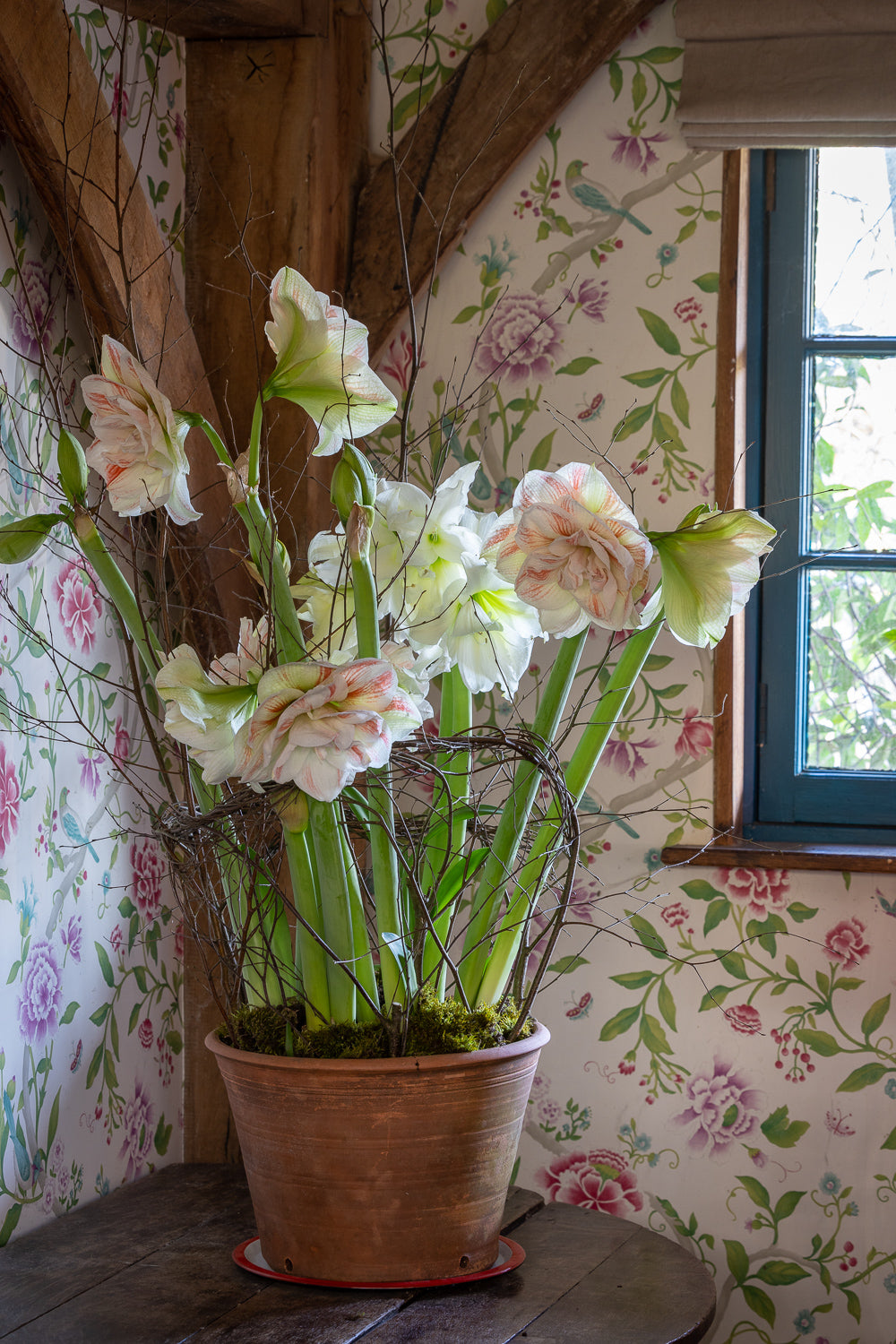
Large bulbs may have several flower spikes but for a really impressive display you can plant three bulbs in a pot together. It’s expensive the first time, but I have kept our bulbs for years, and they flower each year. If you plant more than one bulb in the pot, leave 3-4cm (1½in) between each bulb.
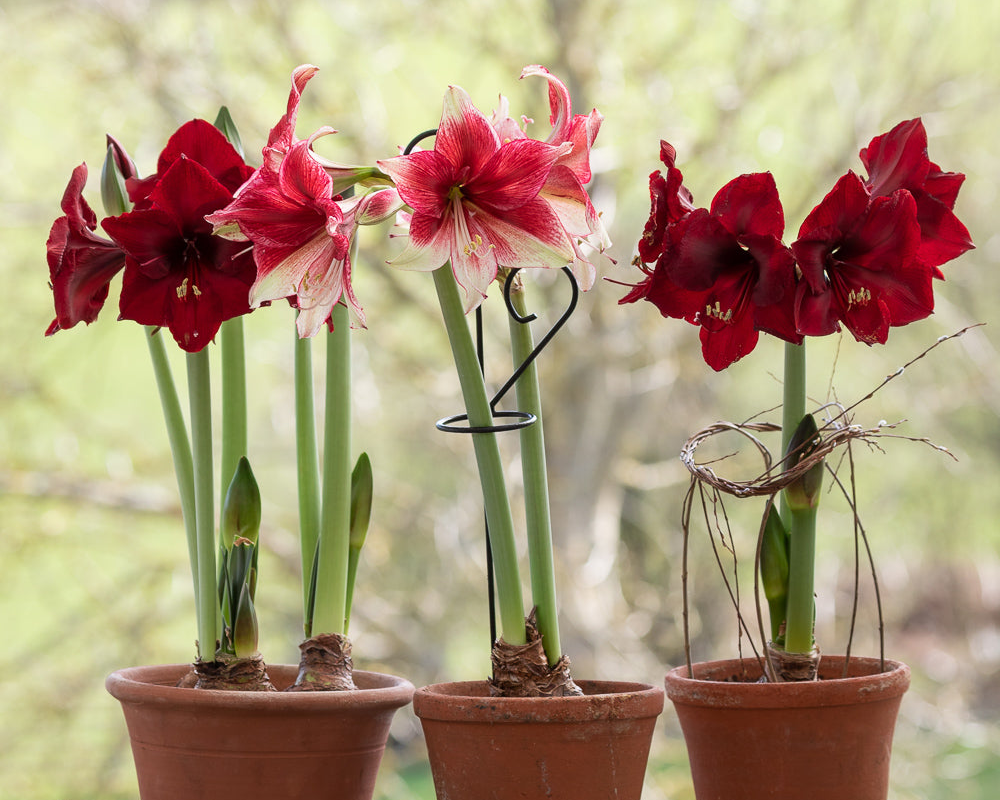
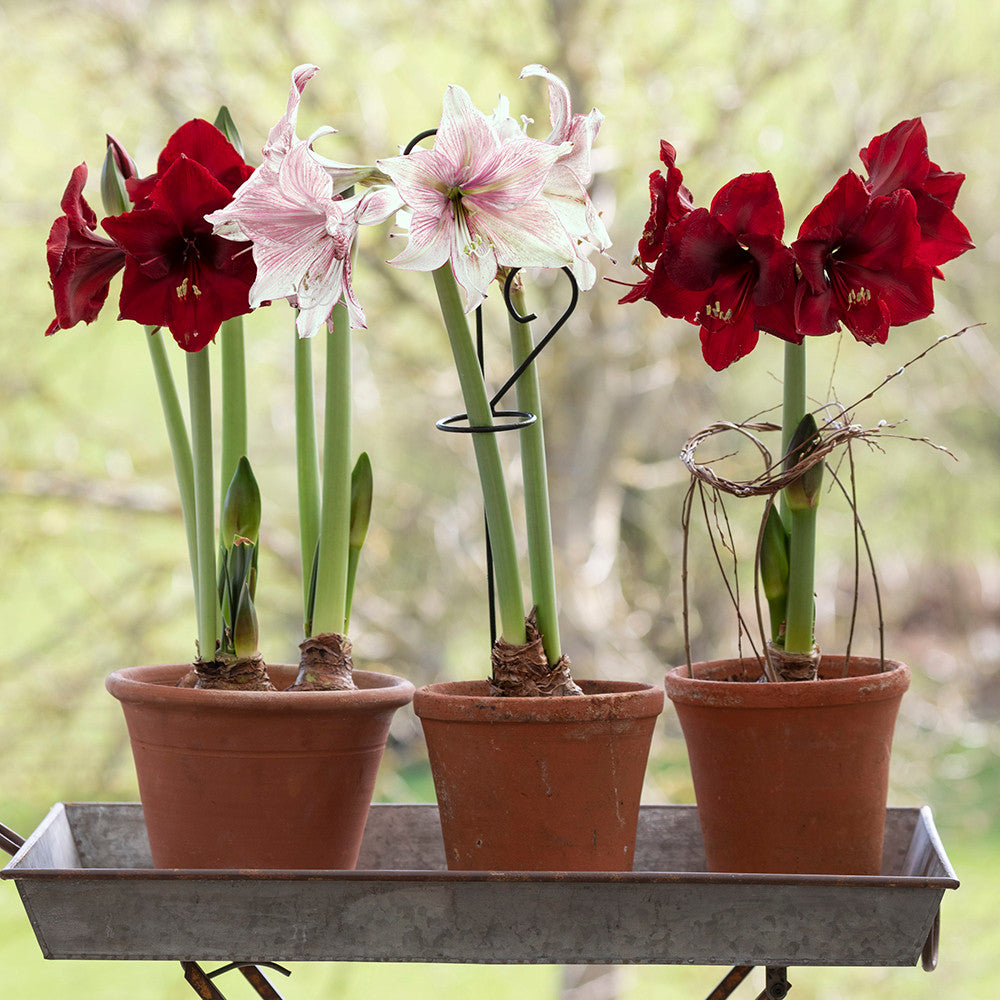
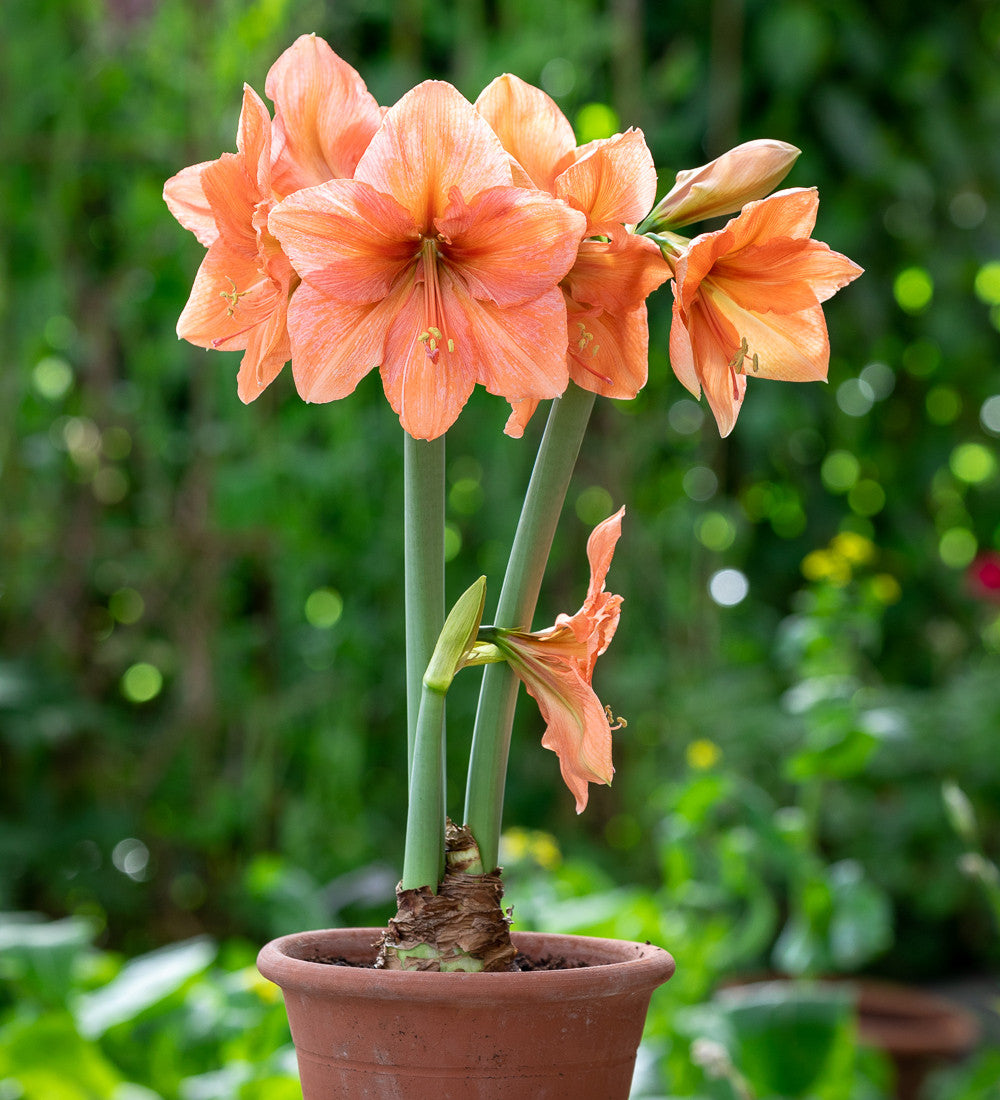
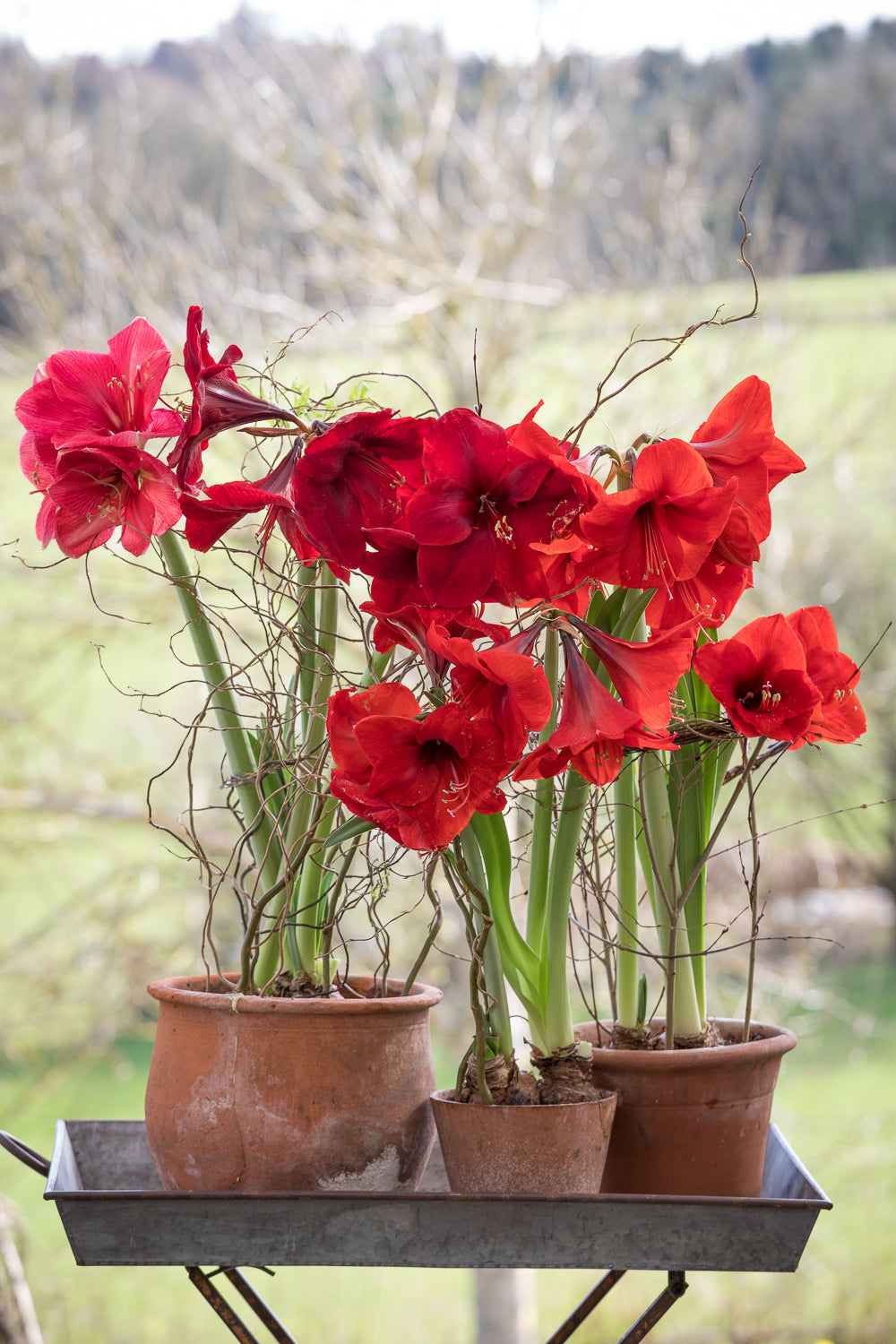
Plant the bulb in the pot with the shoulder of the bulb sitting a third above the surface of the compost. It’s the apex of the bulb (where the leaves emerge) that is the most vulnerable to rot and where water can seep in and decay the heart, so this part mustn’t sit wet on watering.
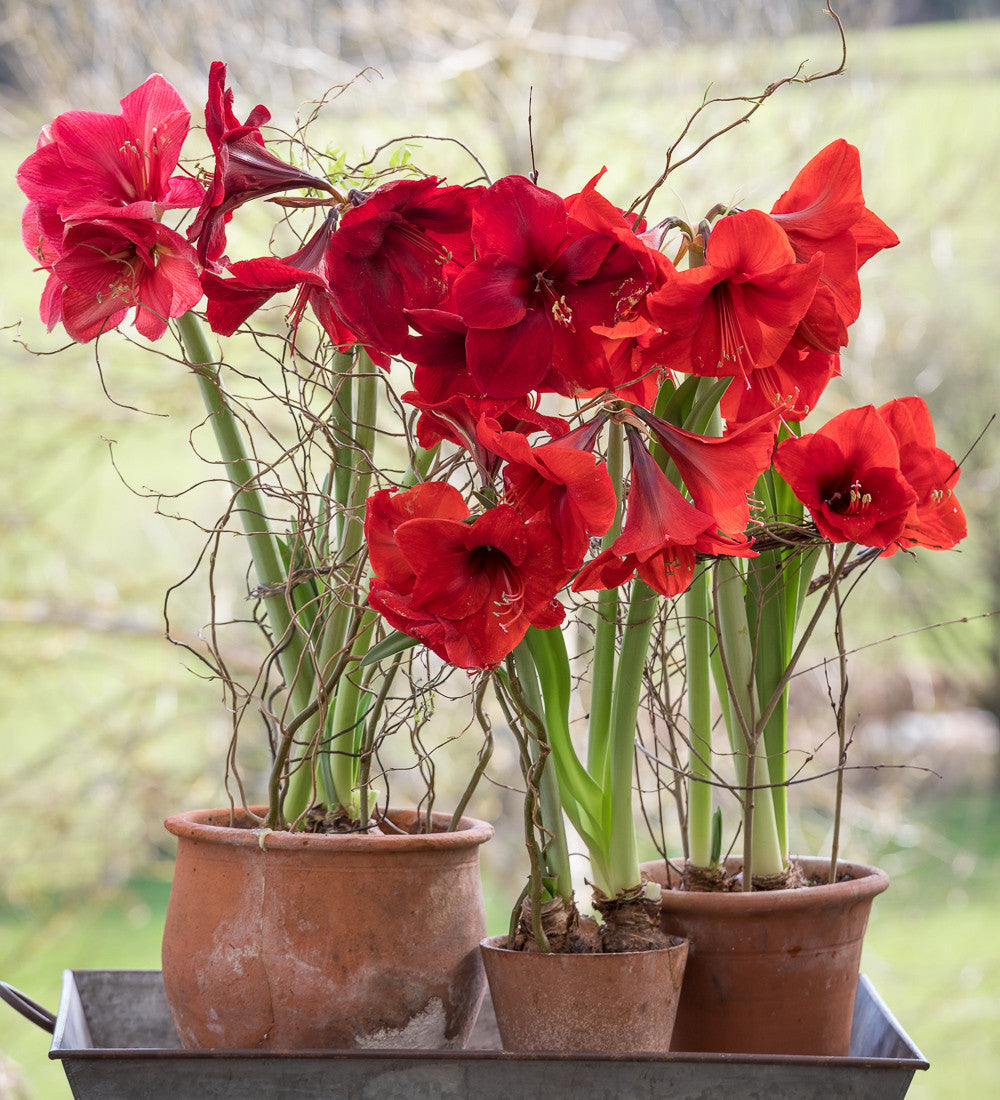
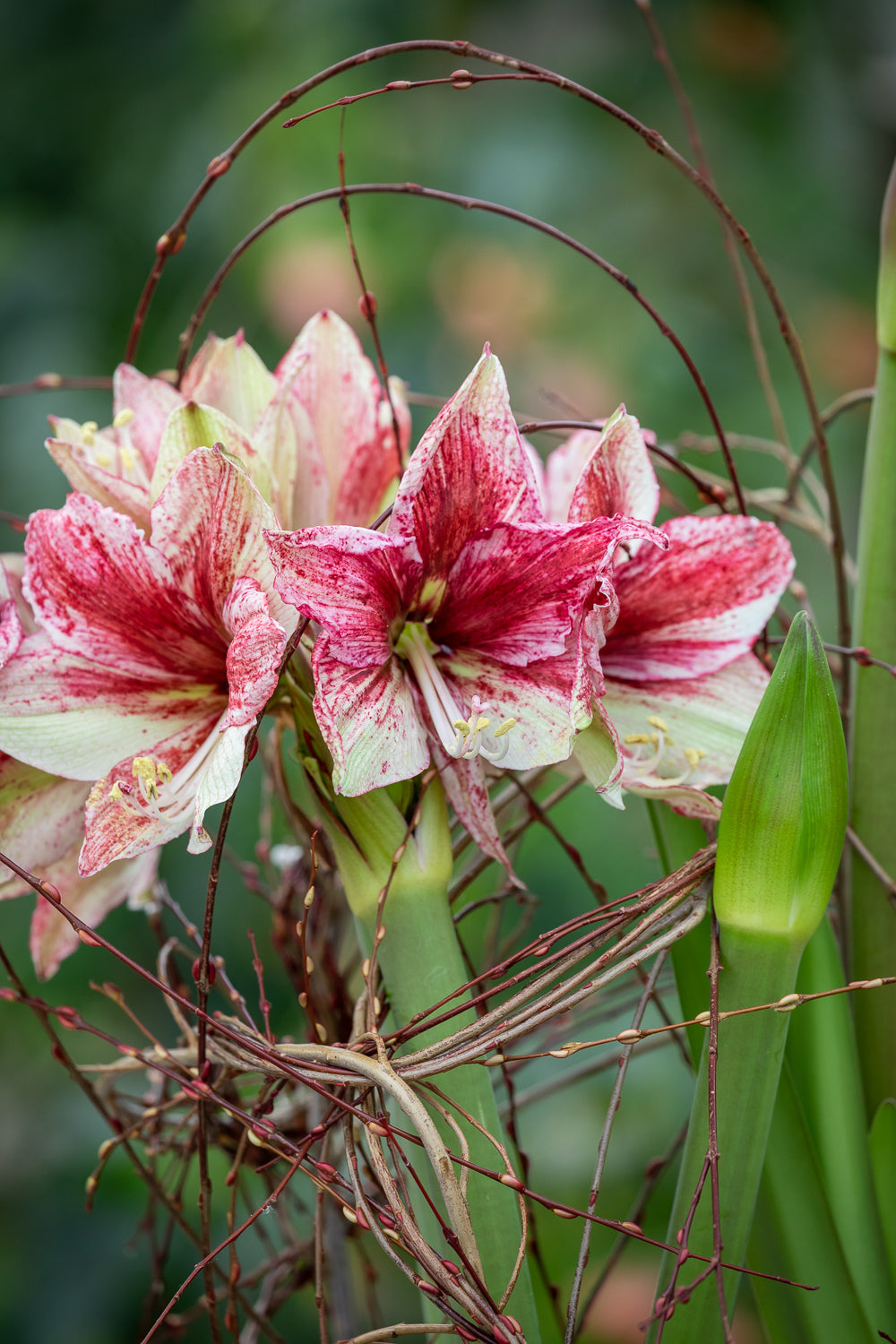
Planted so high, the whole thing is in danger of being top heavy so add support – either tap a cane into the pot and tie it into the stem, or use willow to make a nest-like support.
Place the pot in a light and well-ventilated spot, free from draughts – aim for about 20-22°C. A shelf above a radiator is ideal.
Keep the compost moist until a shoot appears and then water more frequently, about twice a week when the plant is growing. Water from the top using tepid tap water.
When the amaryllis is flowering, move the pot somewhere cooler if possible to prolong the display.
Forcing amaryllis in water
You can also use a beautiful glass forcer made specifically for the purpose of forcing bulbs. Fill the forcer with water, enough to fill the bottom section of the vase, but not touching the bulb. The roots will grow down into the water.
Place the container in a warm, bright room (about 20-22°C), checking the water level daily. Keep it out of direct sunlight. Change the water every week or so. Unfortunately, you won’t be able to reuse these bulbs the following year, but it makes a wonderful seasonal display.