Skip to content

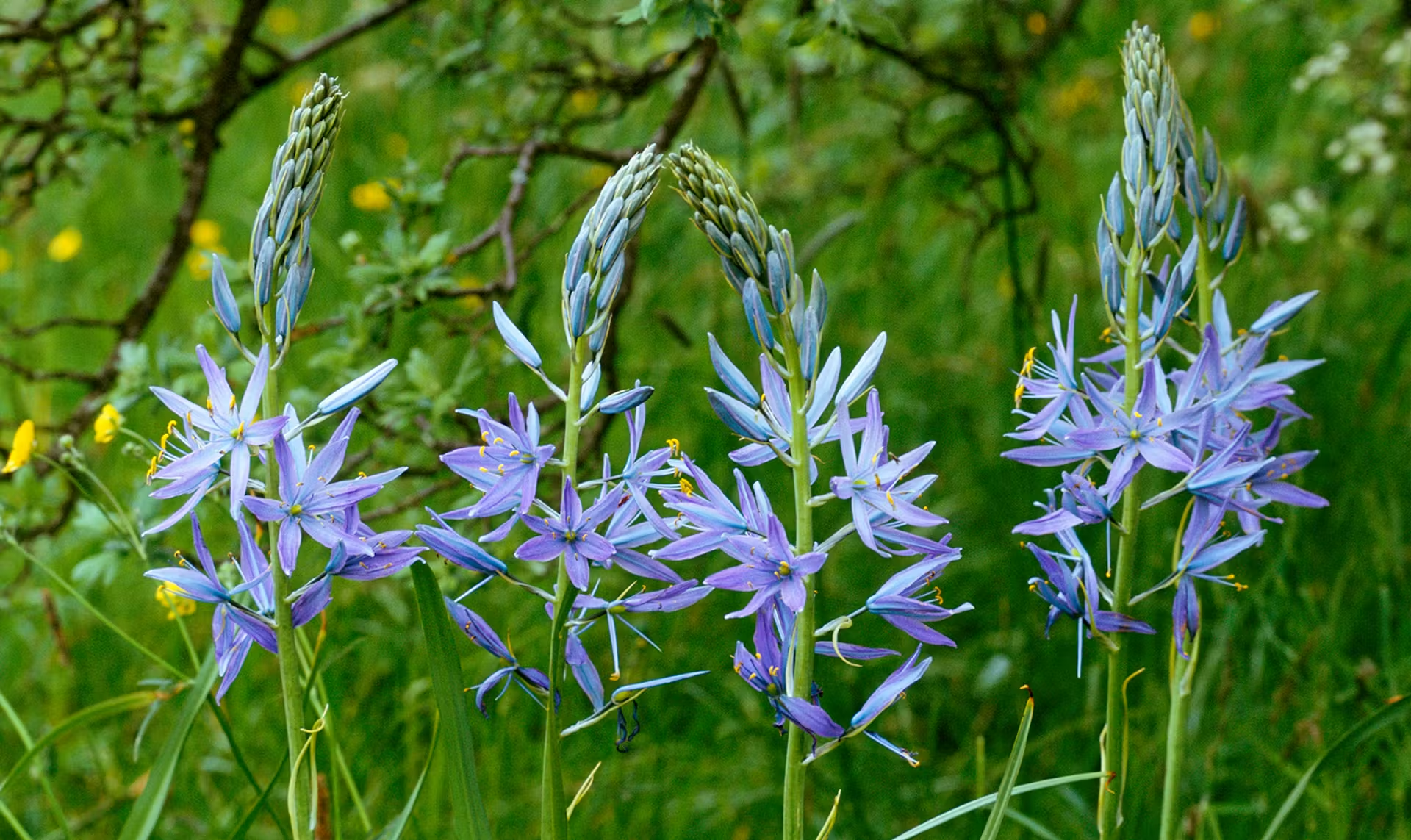
Camassias are a wonderful sight in April and May when their brilliant firework spikes emerge in blue, violet and white. They hold the fort between the spring tulips, which are just coming to an end, and summer’s full burst of colour. Even better, camassias are one of the most tolerant and long-lived bulbs you can grow – they don’t mind heavy soil and, undisturbed, they will gradually multiply to form good clumps.

They are wonderful naturalised in meadows and long grass, with their star-like florets poking up above the blades, and they look equally good in drifts through borders.

Last updated: 4th Mar 2025

Jan J
Feb F
Mar M
Apr A
May M
Jun J
Jul J
Aug A
Sep S
Oct O
Nov N
Dec D
Sowing
Planting
Flowering
Spring
  • Enjoy your camassia flowers in April, May and into June.
  • Water during prolonged dry periods.
Summer
  • Wait for foliage to completely die back before trimming.
  • Summer is the best time to lift and divide any clumps.
Autumn
  • Plant camassia bulbs directly outdoors in a sunny position.
Winter
  • Place any camassias planted in containers somewhere frost free.

Camassias prefer humus-rich, moisture-retentive soil. They are happy in heavy soil.

Plant camassia bulbs in full sun or part shade.

Autumn is the best time to plant camassia bulbs directly outdoors.

Plant camassia bulbs in autumn in a site that gets plenty of sun, though they will tolerate partial shade.

Use a bulb planter or a trowel to make a hole for each bulb. Plant the bulbs at least 10-15cm (4-6in) deep (that’s about twice the height of the bulb) and space them at least 10cm (4in) apart.

The bulbs are rounded and have small pointy ends – plant with the pointy end facing upwards.

After planting, water the camassias in well, gently soaking the soil to settle it around the bulbs if the weather is dry.

Watering

Water in newly planted camassia bulbs. After this, they should get enough water from the rain. Water during prolonged dry periods and keep an eye on bulbs planted in containers. Water them freely during a drought.

Fertilising

Camassias generally don’t need added feed, but those growing in a border can be mulched.

Deadheading

Only cut back foliage when it has completely died back in summer. Flowers can be cut off at the base once they’ve faded unless you’re planning to save the seed.

Propagating & Dividing

Camassia bulbs will gradually clump-up over time. To divide, lift the bulbs in summer (after flowing, when the bulbs are dormant), and then separate the clumps to plant elsewhere in the garden.

Bulbs can be propagated by removing the offsets that have formed around the main bulbs – these can be replanted individually.

Alternatively, collect seed when it is ripe in early summer. Sow in a seed tray and leave it in a cold frame to germinate. It can take up to three years to flower.

Overwintering

Camassia bulbs planted in containers should be placed somewhere frost free. Bulbs in the ground are usually hardy, but if you live in a very cold area of the UK, the soil should be mulched to protect the bulbs in late autumn.
Camassias are very unlikely to be affected by pests or diseases and don’t even seem to be troubled by slugs.

Why is my camassia not flowering?

It could be due to a lack of watering through a dry period, or if it’s been a very wet winter and spring, it could be that the soil has become waterlogged and the bulbs have rotted. If you have an established clump of camassia, the bulbs could have become crowded. If this is the case, lift them in summer and divide the bulbs to plant elsewhere in the garden.

  • Camassias flower in spring in April, May and into June.

  • Plant bulbs with the pointy end up at about twice the height of the bulb – around 10-15cm (4-6in) deep.

  • You can snip off faded flowers at the base of the stem, but leave foliage in place to die back completely before trimming.

  • You can leave the flowerhead to fade and the seed to ripen if you want to collect the seed. Foliage should be left in place until it has completely died back in summer.

  • Camassias may be mildly irritating to cats, dogs and other animals.

  • They are hardy in many areas around the UK, but if you live in a very cold area, mulch the soil over winter to protect the bulbs. And place containers somewhere frost free.

  • Yes, camassia is a perennial bulb and will return and multiply each year.

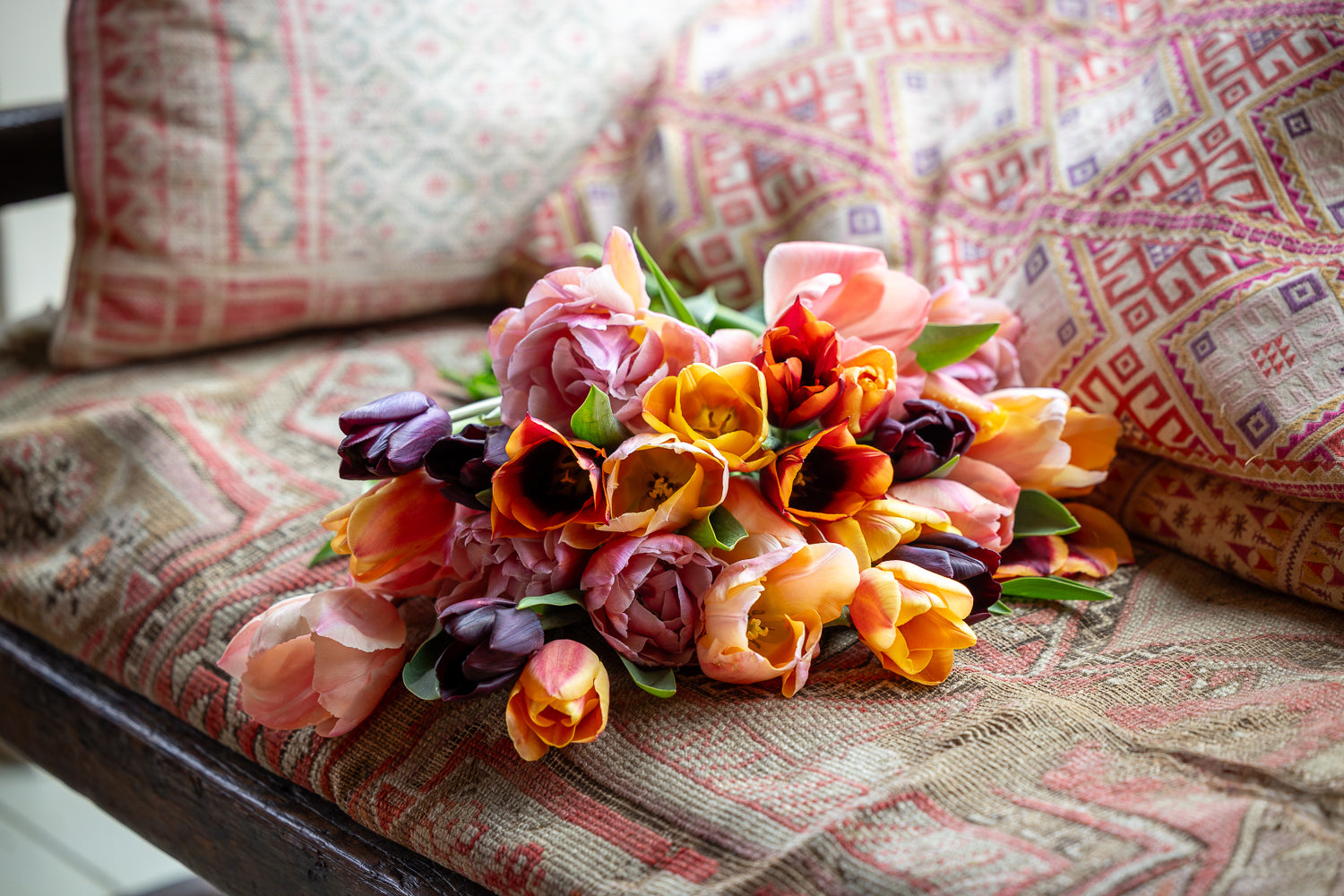
Camassias make wonderful cut flowers and last for about a week. Cut them in the morning or evening and leave them in a bucket of water somewhere cool overnight before arranging in a vase.

Spend a further £60 to receive free standard delivery

Your basket is empty.