
Hollyhock seeds should be sown undercover in April and May. The seeds can also be sown directly outdoors in May and June.
If you’re planting seeds undercover, fill a tray with compost and water it well to ensure that it is consistently moist. If you water after sowing, the water can move the seeds about and they might end up bunching together.
Sow the large seeds individually, spacing about an 5cm (2in) apart on the compost surface. Don't push the seed, leave them on the surface so they are clearly visible as you continue to sow. When the tray is full, cover lightly with compost.
Place the tray in a warm spot to germinate. You don't need light at this stage. I cover seed trays with an empty, opened out compost bag to keep in warmth and moisture and to speed up the germination process. After about a week, check trays every morning and night for germination. Once this starts, remove the light-excluding plastic.
Hollyhocks take around 10-14 days to germinate and then another 3-4 weeks before they're ready for pricking out. If roots are showing at the base of the tray, they're ready to move on.
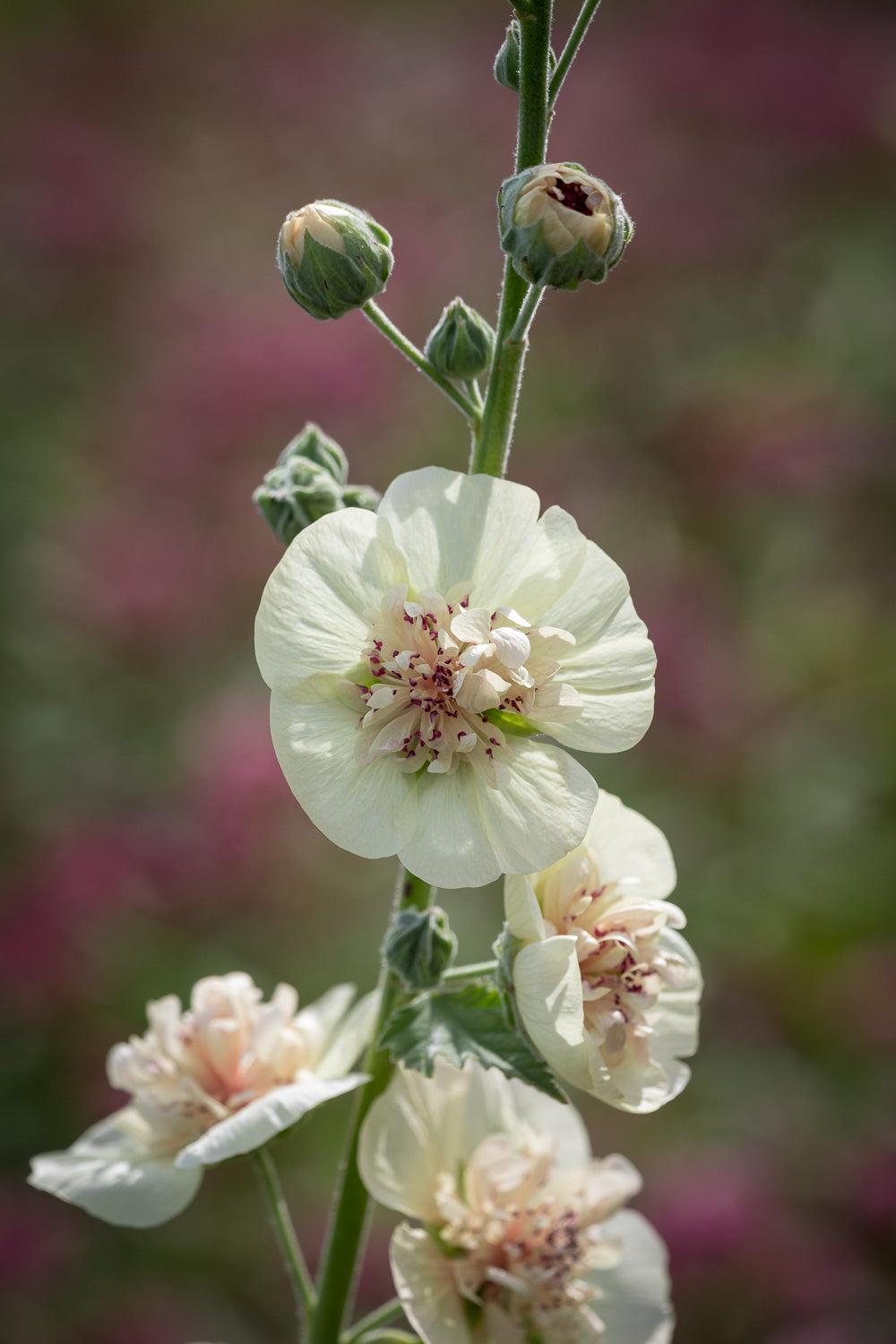
How to plant, grow & care for Hollyhocks
When you think of a British cottage garden, you think of hollyhocks. Their tall, towering stems can line a path, stand either side of a gate or bring height and colour to the back of a border. They are wonderful plants that flower all summer long, and no country-style garden is complete without them. With their open, saucer flowers splashed all the way up their jack-and-the-bean-stalk stems, they will bring as much joy to you as they do to the butterflies and bumblebees. They come in some brilliant colours, which you can find in our selection of hollyhock plants.
Written by: Sarah Raven
Last updated: 8th Jan 2021
- In early spring, sow hollyhock seeds undercover.
- Prick out seedlings and plant plug plants in larger pots to allow their roots to develop before planting out.
- In early summer, plant out your hollyhock plants.
- Collect seed from any dry seedheads
- Cut back after flowering.
- Plan ahead and think about which hollyhock plants you’d like in the garden next year.
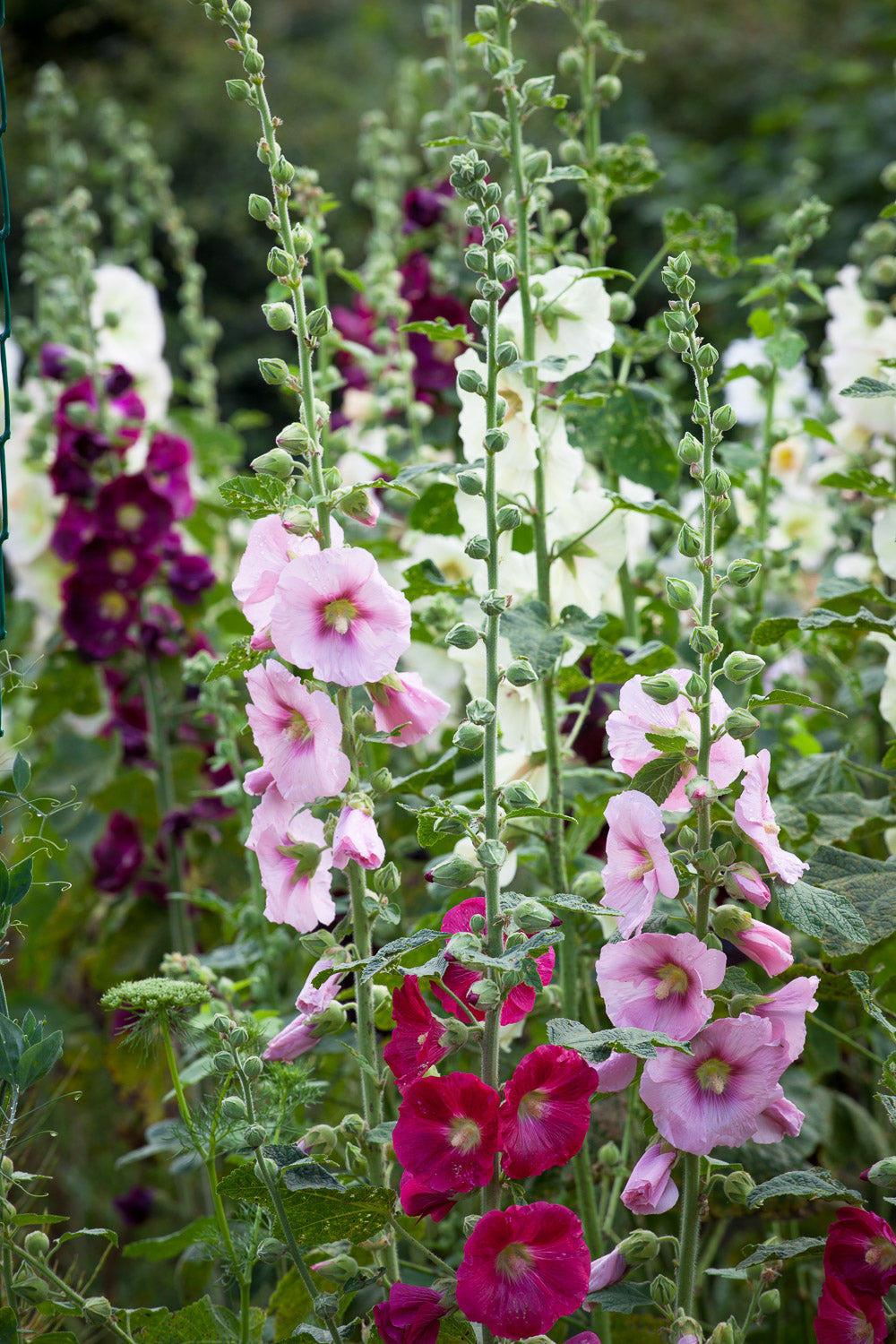
Where & when to plant
Where to plant
Hollyhocks prefer well-drained soil.
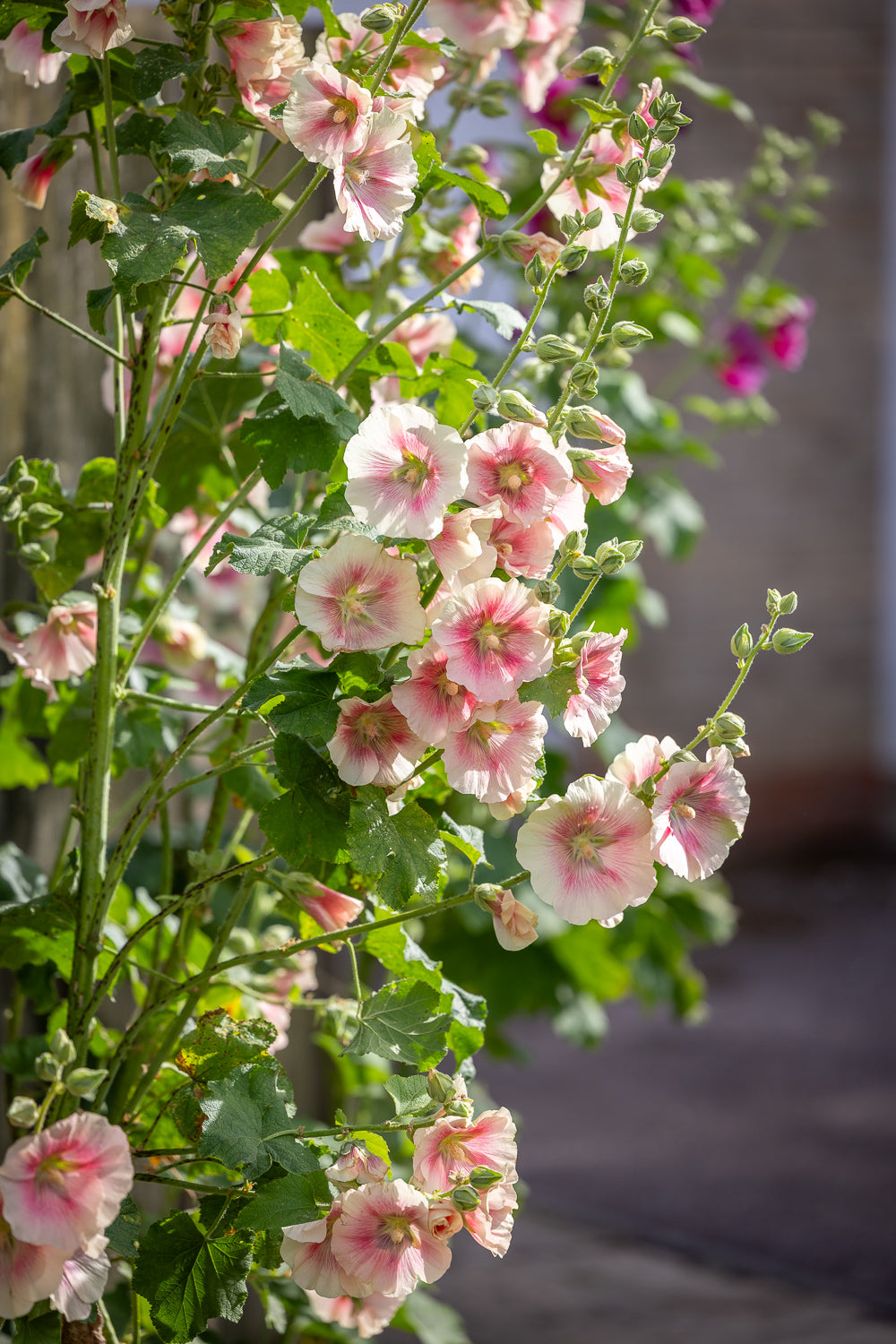
Find a bright spot for these sun-loving plants. A sheltered position is preferred and planting them along a fence or a wall will give them protection and reduce the chance of them blowing over in strong winds.
When to plant
The best time to sow hollyhock seeds undercover is April and May. You can sow the seeds directly outdoors in May and June. If you have bought hollyhocks as plants in pots or raised them from seed, they can be planted out May to July. They flower the following year after planting.
watering
Water newly planted hollyhocks and seedlings regularly. Once the plant is established, you can reduce watering but make sure they are watered in a drought.
fertilising
If you have good soil with plenty of nutrients, hollyhocks won’t need any extra feed. Hollyhocks growing in containers will need regular feeding with a liquid fertiliser.
staking
Hollyhocks are naturally tall and at risk of blowing over in strong winds. If you plant them along a wall or a fence, they should be well protected, but if you need to, add a cane to support each flower spike.
deadheading
Hollyhocks self-seed readily if you allow the flowerheads to go to seed. If you don’t want this to happen (and you don’t want to collect the seed), you can cut the flower spikes at the base of the stem once flowering is over.
propagating
You can allow hollyhocks to naturally self-sow, or you can wait for the seedheads to go brown and dry and then collect the seed – you can sow this in spring to make new plants.
Hollyhocks that have sprung up of their own volition will often creep to the sunny, open front of the bed. Watch out for this and dig some up and put them further back out of the limelight to get a balanced sweep.
Don't transfer them directly, though – they need a short spell of TLC. So dig up self-sown seedlings and pot them into a 9cm (3.5in) pot. Once the roots have filled it, plant them in the garden.
overwintering
Hollyhocks are fully hardy and don’t need to be protected over winter.
rust
Hollyhocks are prone to rust. Rust fungus forms little pustules on the underside of hollyhock basal leaves and often spreads from there up the stem.
You can use strong fungicides to tackle rust, but you can also work to manage the problem organically. You should pick off affected leaves as soon as you spot them. Ensure there is good air circulation around the plants and water the soil around the plant (not the plant itself) as the fungal spores can be spread by water splash. You can also make a chive tonic by decomposing chive leaves in water – this is an effective natural fungicide.
At the end of summer, make sure all dead and diseased leaves are cut back and disposed of, but don’t compost them as the fungal spores could spread.
how to treat rust on hollyhocks?
You can use strong fungicides to tackle rust, but you can also work to manage the problem organically.
why are my hollyhocks not flowering?
Many hollyhocks are biennials, so in the first year the plant will be establishing its roots and foliage, and it will go on to flower, set seed and die in its second year.
why are my hollyhocks falling over?
Hollyhocks can reach over 2m (6.5ft), so if they are growing in an exposed position, give each plant a stake for support.
why are my hollyhocks turning yellow?
Hollyhocks are prone to rust and this can show up as yellow spots on the leaves. But yellow leaves can also indicate overwatering or water-logged soil.
what animal eats hollyhocks?
Deer are said to love hollyhocks, so you might find that they have munched them while you weren’t looking.
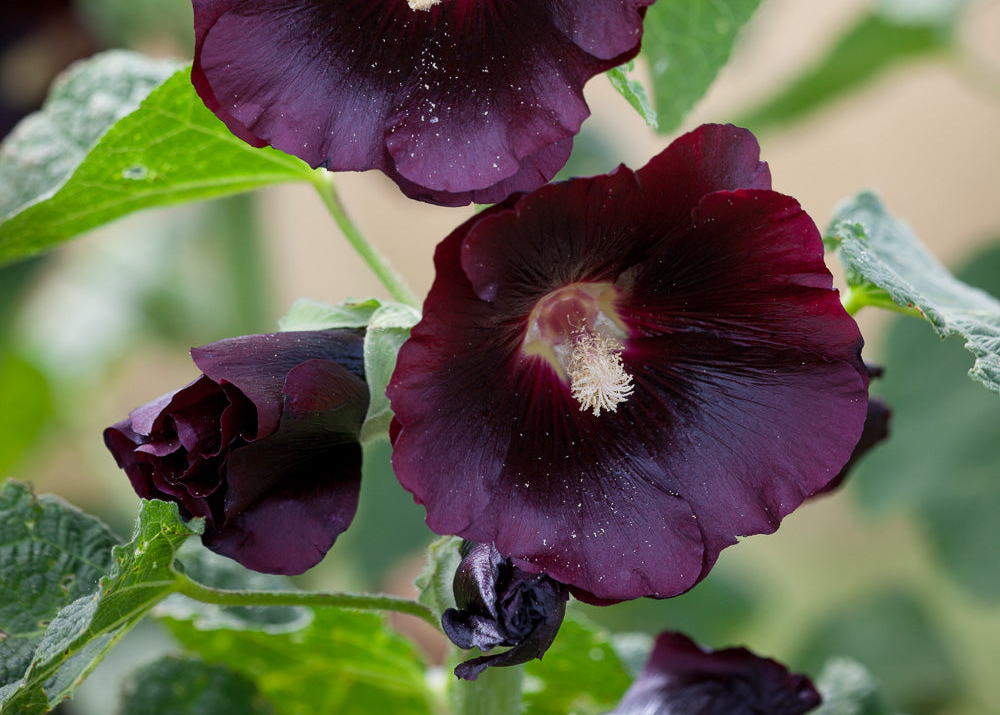
Frequently asked questions
-
how do you transplant hollyhocks?
Hollyhocks have long taproots, making them hard to transplant. If you have a young plant that has sprung up you can dig up the self-sown seedling and pot it into a 9cm (3.5in) pot. Once the roots have filled it, you can plant it out.
-
are hollyhocks poisonous?
Hollyhocks aren’t poisonous to pets or people, however some people find that they can irritate the skin.
-
are hollyhocks edible?
If you have grown your hollyhocks organically (without any chemicals or fungicides), then you can use the flowers in salads or as a pretty garnish. The leaves are also edible.
-
why do hollyhocks change colour?
This could be where a hollyhock has self-sown its seed – the new plants will be different to the parent plant.
-
can hollyhocks survive frost?
Hollyhocks are fully hardy and won’t need protection over winter.
-
do hollyhocks self seed?
Yes, hollyhocks readily self-sow.
-
are hollyhocks deer resistant?
Deer are said to love hollyhocks, so you might find that they have munched them while you weren’t looking.
-
can you grow hollyhocks in pots?
It is possible to grow hollyhocks in pots, but you ideally need a deep container to accommodate their taproots.
-
do hollyhocks bloom the first year?
Many hollyhocks are biennials, so in the first year the plant will be establishing its roots and foliage, and it will go on to flower, set seed and die in its second year.
I think hollyhocks look almost at their best in triumphant lines down a wall, or lining a path on their own. And they give brilliant punctuation marks through a mixed shrub and herbaceous border.
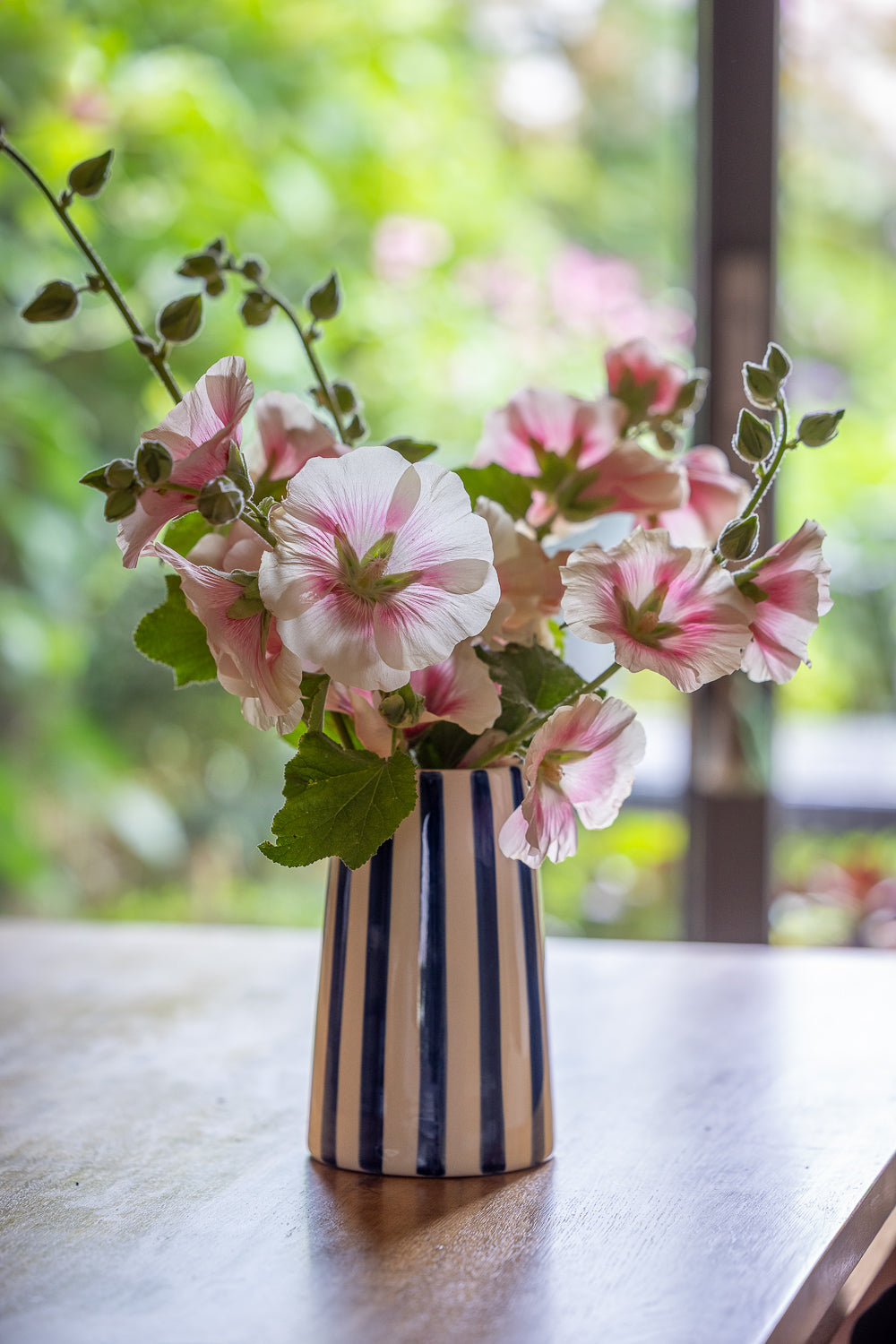
How to cut and arrange Hollyhocks
For height, you can’t do much better than a few hollyhock stems. Use their full length with either several colours jumbled together or a single colour in a stately vase.