Skip to content

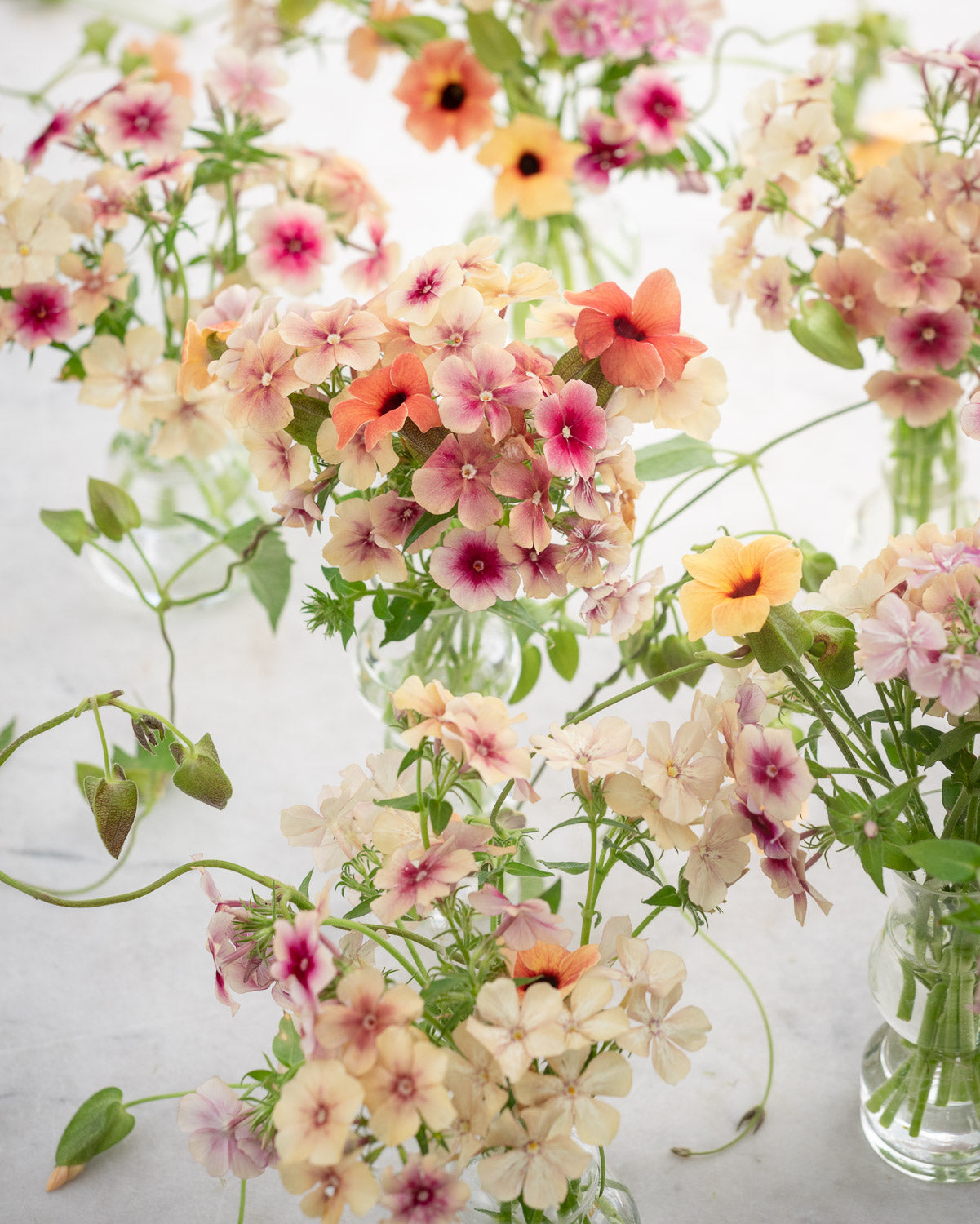
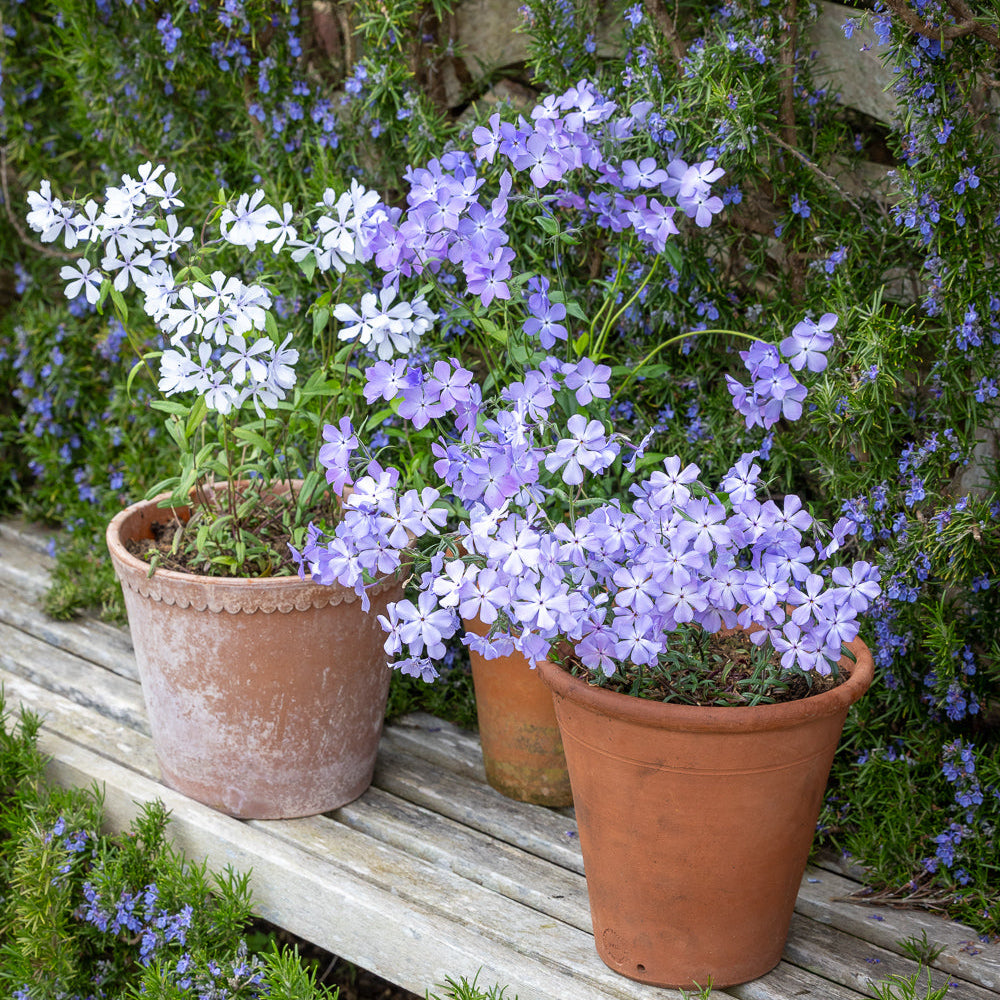
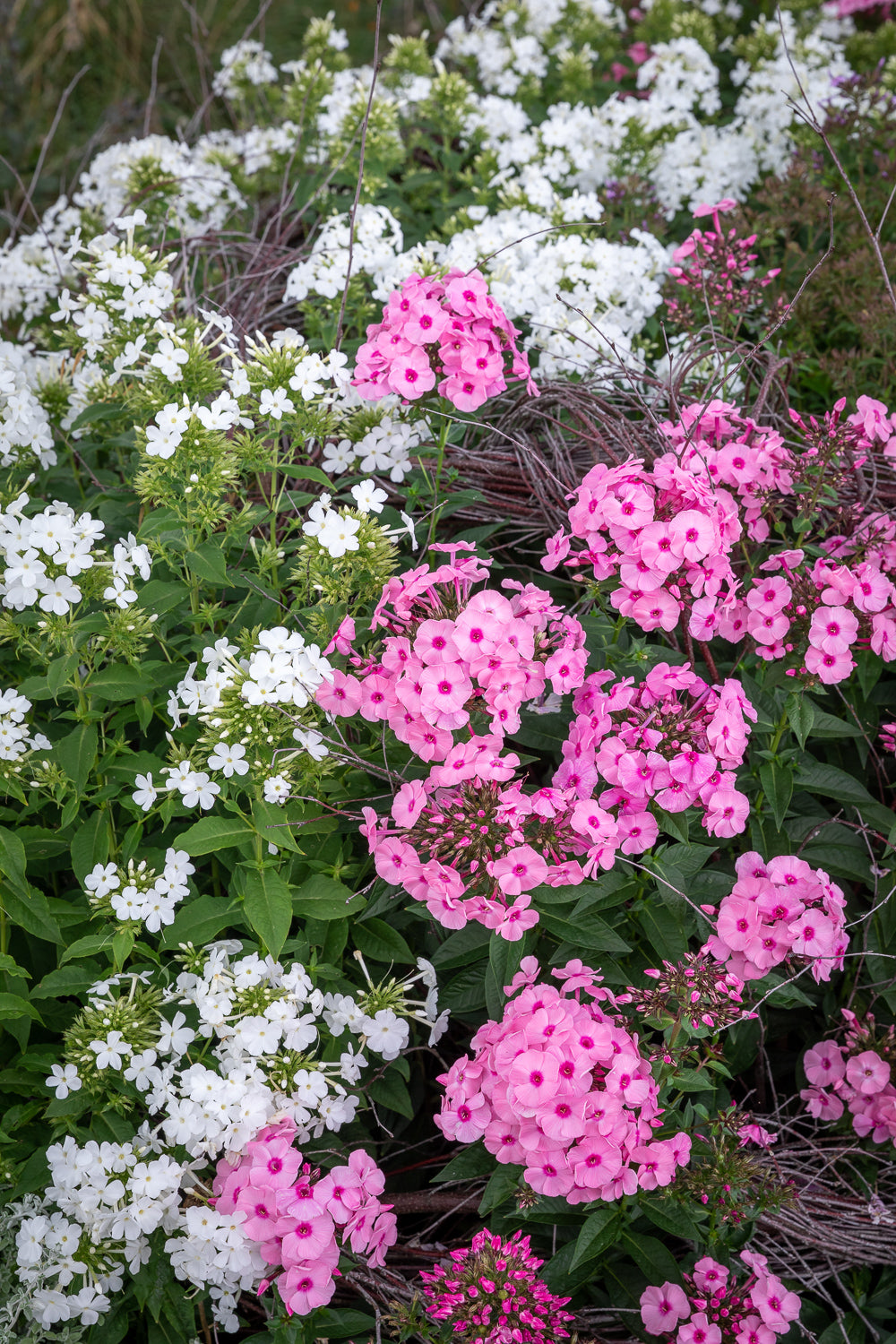
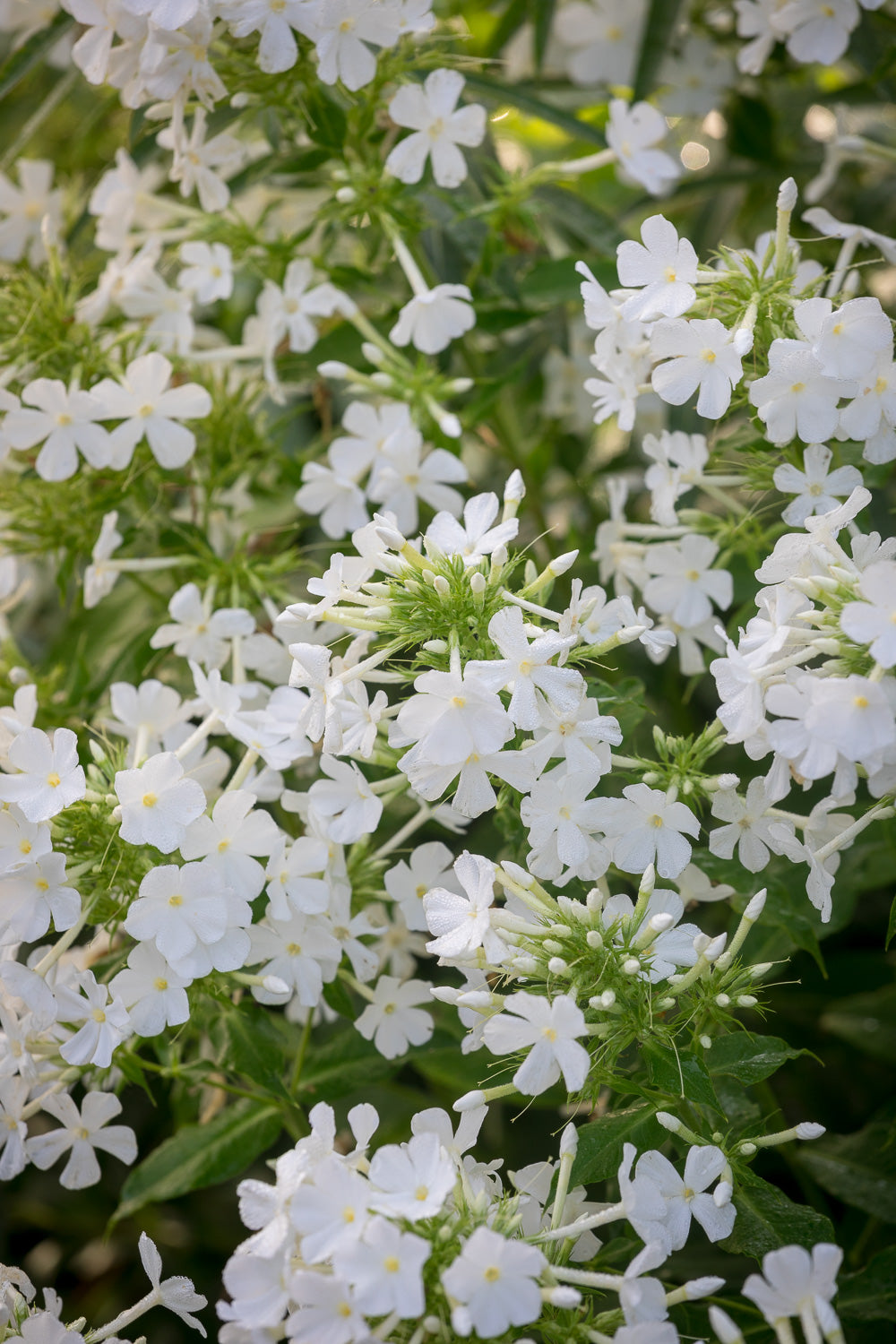
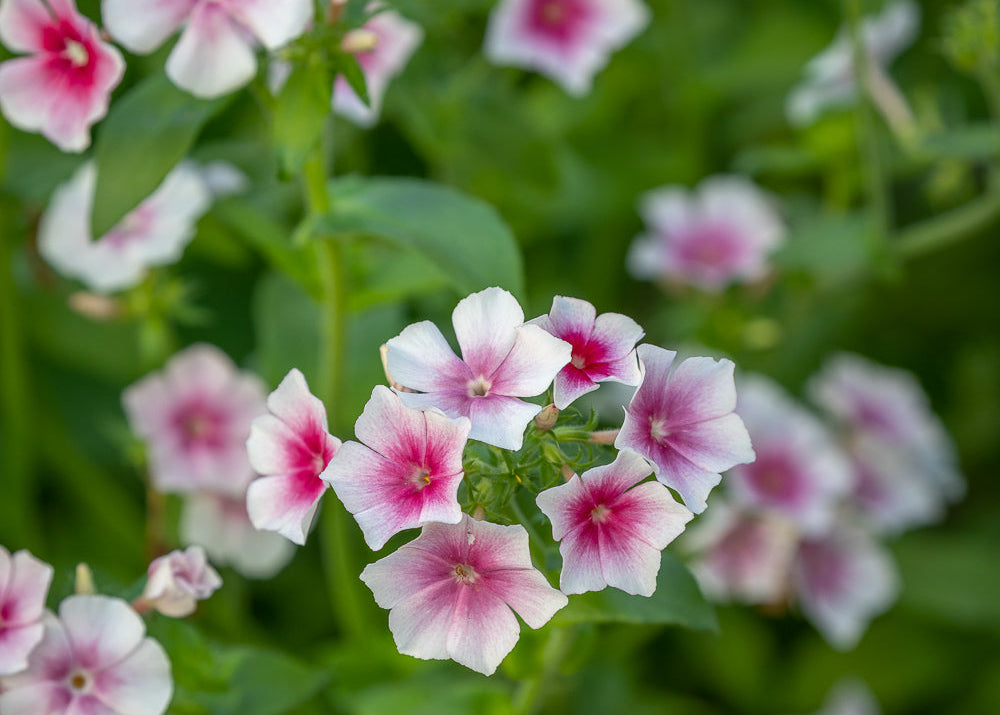
For ice-cream-soft clouds of late summer flowers – almost all of them deliciously scented – you can’t do better than phlox. The taller perennial varieties are great for borders; the shorter half-hardy annual varieties with their antiqued, pastel tones are ideal for pots or the cutting garden; and the so-called woodland phlox (Phlox divaricata) is a compact perennial perfect for planting under roses or along the edges of a path. All of them bloom for months, attracting multitudes of butterflies and bees. We continually trial the best varieties to bring you a range of seeds, seedlings and larger plants that we know won’t disappoint.

Jan J
Feb F
Mar M
Apr A
May M
Jun J
Jul J
Aug A
Sep S
Oct O
Nov N
Dec D
Sowing
Planting
Flowering
Spring
  • Sow seed for annual phlox.
  • Plant out young plants of perennial phlox. 
  • Feed established plants if you have poor soil and mulch well with compost.
Summer
  • Plant out young plants of annual phlox once the risk of frost has passed.
  • Staking can help support young plants as they grow, especially if your site is windy.
  • Water regularly. Mulching can help retain moisture in the soil.
  • Deadhead old flowers, and pick stems to enjoy indoors.
Autumn
  • Plant out young plants of perennial phlox to give them time to establish before winter. 
Winter
  • Cut perennial phlox to ground level once stems have died back.
  • Divide clumps every three years in late winter/early spring.

Phlox love rich, fertile soil which does not dry out too much in summer. If your soil is poor or prone to drought, be sure to add plenty of compost before planting and to feed your plants in spring. Mulching around the base of the plants will also help retain moisture. 

Full sun or part shade will suit phlox well. 

Sow annual phlox seeds undercover in March-April, or direct sow in May. Plant out seedlings once the frosts have passed (and once hardened off) in late May or June. Plant young plants of perennial phlox in the garden March-May or September-October.

It tends to be the annual phloxes that are grown from seed. For best results, sow them undercover in late March or April. 

Fill divided seed trays or Jiffy modules with peat-free compost and moisten well. Sow thinly, pushing in seeds to a depth of about 3mm and place in a propagator or on a warm windowsill (a temperature of 18-20C is ideal), and cover with an empty plastic compost bag or black bin liner to keep out the light and to keep the soil moist.

 Check every morning for germination, at which point remove the bag and place the tray in a light, cool place – a propagator in a frost-free green house or a cool windowsill is ideal. If more than one seed per module has germinated, remove the weaker seedling. Water sparingly.

When you can see roots filling the bottom of the module, pot the seedlings on into 9cm pots, pinching out the growing tips when the plant is about 8cm tall to encourage bushier growth. If the plant develops any flowers or buds while still small, pinch these out too. Plant out after the frosts, hardening the plants off over 1-2 weeks before you do so. 
For the best results, we recommend potting these on into 9cm pots (or similar), before planting in their final position outside.

Step 1.

Choose a good quality, multi-purpose,peat-free compost and mix with a small amount of horticultural grit to ensure good drainage. 

Step 2.

Fill a clean 9cm pot with the mix and in the middle of the pot make a hole slightly deeper and wider than the seedling. 

Step 3.

Position the seedling in the hole, ensuring the roots are fully covered and that the seedling is firmly placed, tapping to settle the soil. Top tip – always handle seedlings by the leaf, not the stem so you don’t damage the lifeline of the plant. 

Step 4.

Water well, and leave somewhere bright but sheltered during the day.

Step 5.

To allow them to acclimatise, cover with horticultural fleece overnight or bring undercover if you have a greenhouse, cold frame, or conservatory.

Step 6.

Keep moist and plant into their final positions once the risk of frost has passed, usually in late May. 

watering

Phlox need to be well watered when planted and during the growing season. Mulching around the plants will help to retain moisture.

fertilising

Phlox likes rich, fertile soil, so dig in plenty of organic matter before planting.

staking

Perennial border phloxes have sturdy stems, so staking is generally not required, unless your garden is very windy, or you are growing the taller varieties (over 1.2m). Annual phloxes can have thinner, more spindly, stems, so staking can be useful. Insert canes in spring and stretch netting over them above your young plants, which will then grow up through it.

deadheading

Deadhead regularly to encourage more flowers to form. Use secateurs to remove faded flowers, cutting on the diagonal just above a bud or leaf node. Drastic as it may sound, you can also cut stems back by up to a half in late May. This ‘Chelsea chop’, as it is known, will delay flowering by up to a month – useful if you want to stagger the blooms in your garden.

propagating

BY DIVISION

The easiest way to create new phlox plants for your border is by dividing large clumps in late winter/early spring. 

Dig up the plant and use a sharp knife to divide it into sections about the size of a saucer – each section should have some shoots and some roots. 

Replant each section immediately into soil enriched with some good compost. Water in well and mulch around the plant.

Note this only applies to perennial varieties.

FROM SEED

Annual phloxes are easily grown from seed – see instructions above. 

overwintering

Annual phloxes will need to be regrown from seed or planted as seedlings every year.

With perennial phloxes, cut down the stems in winter/early spring once they have died back and mulch around the plants well.

Powdery mildew

Powdery mildew – a fungal disease causing dry, dusty patches – is common in dry periods. To try to avoid it, plant plants in full sun and not too densely – you want the air to circulate – and water regularly in dry spells. Phlox paniculata ‘David’ has good mildew resistance. At Perch Hill we use a homemade spray as a preventative. To make it, mix 1 tsp bicarbonate of soda, 1 tsp vegetable oil and 1 tsp soap (we use Uncle Tom’s natural soap) with 400ml water and pour into a spray bottle. Shake well and spray on leaves, including the undersides.

Steel eelworm

These nematodes stunt the plant’s growth and cause leaves to distort, turning yellow and brown. Affected plants must be destroyed. Avoid planting phlox in the same spot for three years.

Deer and rabbits

Deer and rabbits have been known to nibble on phlox so, if this is a problem in your area, be sure to erect suitable fences to protect your plants.

Why are my phlox not flowering?

Phlox need sun and fertile soils to thrive, so it might be that you’ve placed it in too shady a spot, or that the soil needs improving. If this is the case, try feeding the plants and mulching well with compost. 

  • If the leaves are turning yellow and brown, and if growth is stunted and or distorted, then your plant might be affected by stem eelworm. Unfortunately, infected plants will have to be destroyed, and, since the nematode can persist in the soil, it’s best not to plant phlox in the same spot for the next three years.

  • No phlox is not a weed, but it can self-seed. Its pretty blooms are scented and very attractive to bees, butterflies and moths.

  • No, phlox is not known to be toxic to cats or dogs.

  • Border phloxes e.g. P. paniculata are perennials, and will come back year after year, while other types such as Phlox drummondii, are annuals. There are also low-growing perennial alpine forms, such as P. subulata, which is ideal for rockeries.

  • It depends which varieties you grow. Border and annual phloxes will die back in winter, so are not evergreen. Alpine phloxes and Phlox divaricata are evergreen or semi-evergreen. 

  • It depends on the variety, but border phloxes will generally form good clumps over time. Phlox paniculata ‘David’ is fairly vigorous, but all border phloxes can be easily divided if clumps become too large. 

  • Phlox loves the sun, but it is also happy in partial shade.

  • Phlox can reseed themselves if conditions are right, but they are not as prolific in doing so as other plants such as Verbena bonariensis or eryngiums.

  • Once the stems have died back, cut them down to the ground, ready for growth to restart the following spring.  This only applies to perennials.

  • No, the alpine forms of phlox such as P. subulata and P. douglasii are creeping, while other forms are upright. 

  • Phlox looks great with hydrangeas, grasses and other herbaceous perennials such as eryngiums and echinaceas. At Perch Hill, we grow the smaller annual forms with garlic chives (Allium tuberosum).

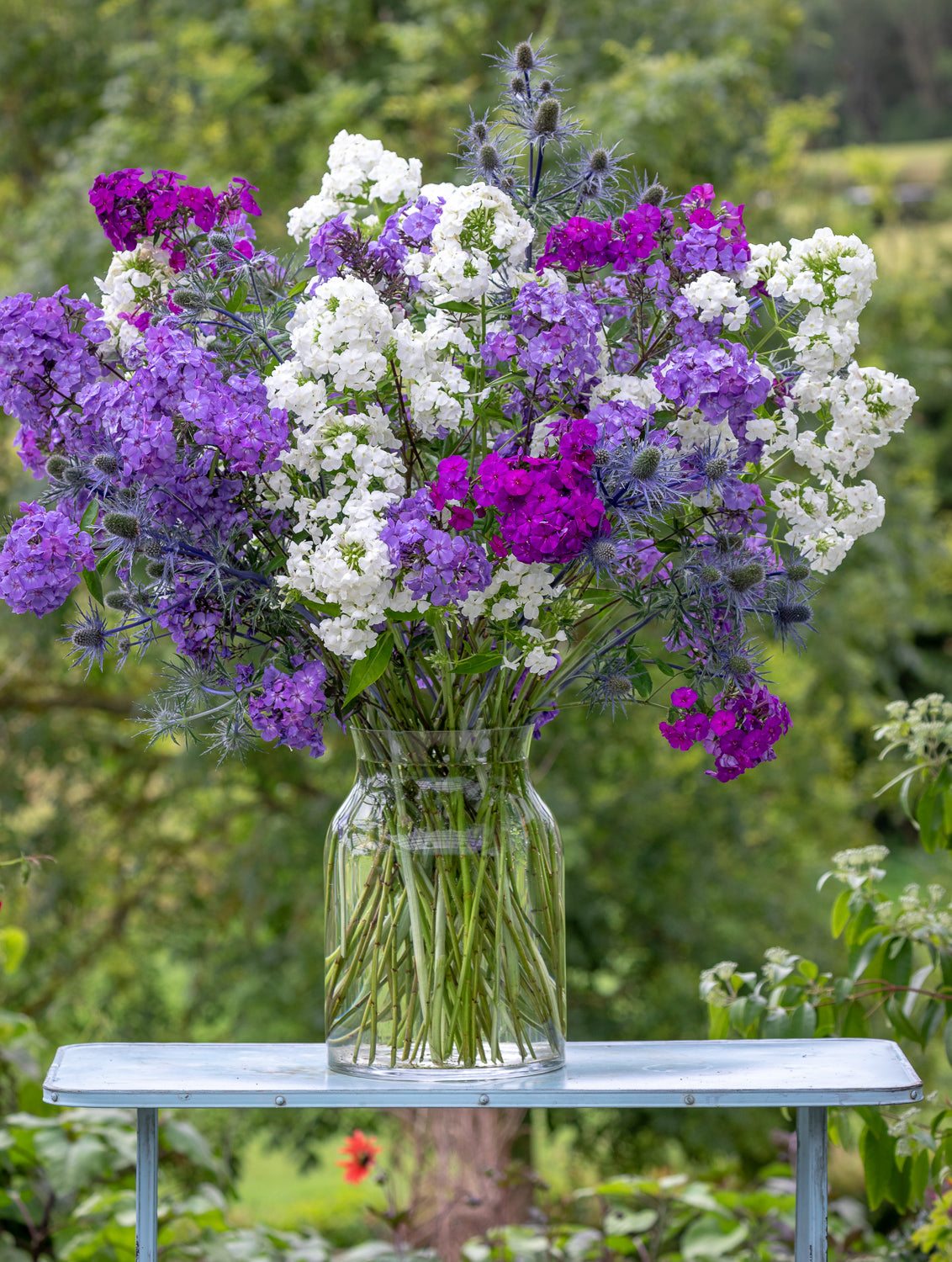
Both the annual and perennial phloxes make wonderful cut flowers, lasting for two to three weeks in the vase and filling the room with their beautiful scent. They need no prior conditioning, but you can tap perennial phloxes on a table to loosen any dying flowers and then simply pick them off individually to tidy up the flowerhead.

Spend a further £60 to receive free standard delivery

Your basket is empty.