Skip to content

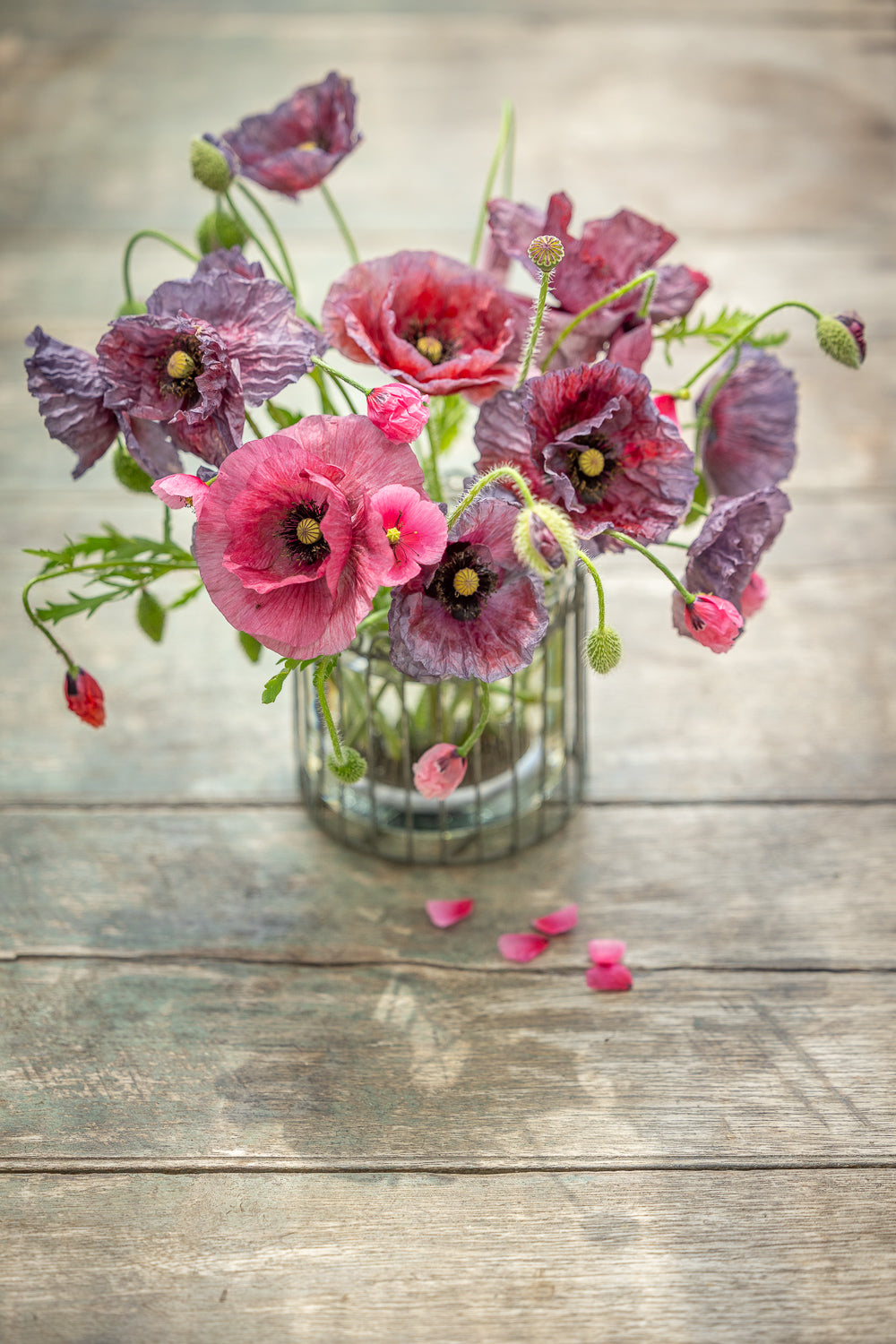
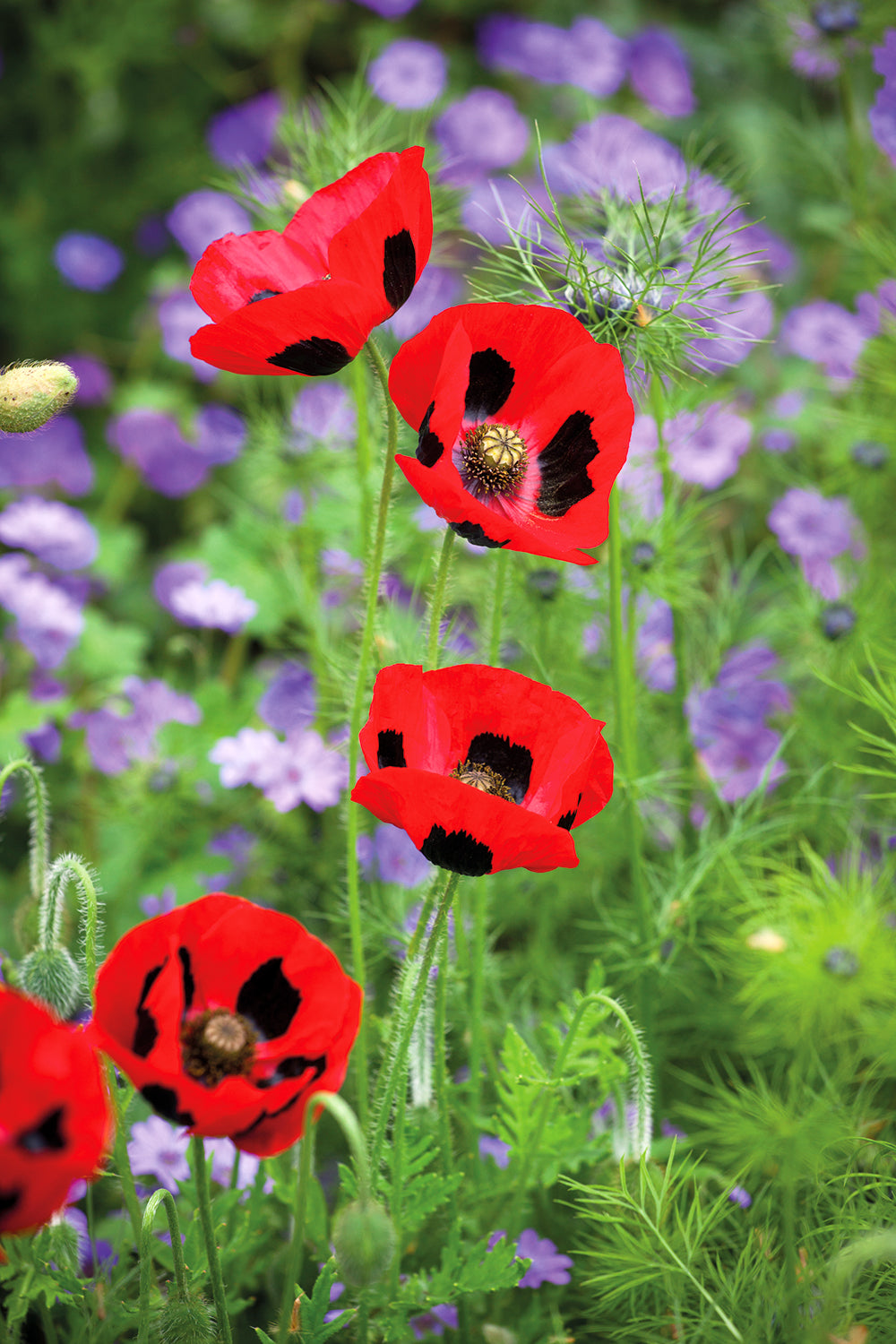
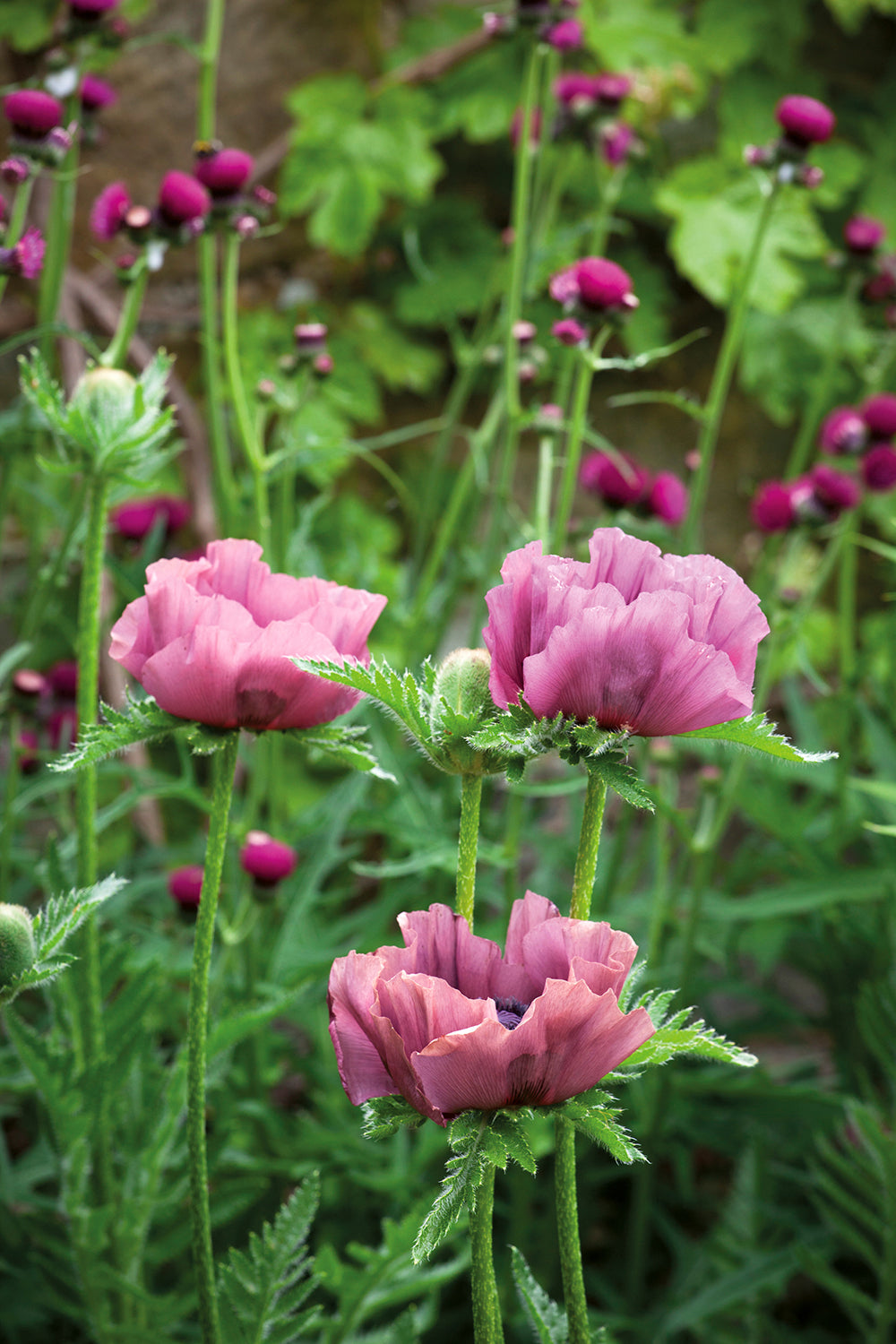
Who couldn’t love poppies? They are the sweetest, simplest flowers that, if they like your garden, will return year after year as they seed themselves about. They come from a huge geographical area from Iceland to Africa, Eurasia to North America and have a wide range of forms: annuals, biennials or perennials. They all make good cut flowers to bring into the house with rich colours from the purest white, through pastels, pillar box red to the darkest plum with spots, stripes, silks, satins or the laciest of frills. Buy poppy seeds or poppy seedlings and bare rooted plants and enjoy their blowsy presence all summer long.


Written by: Sarah Raven

Last updated: 25th May 2021

Jan J
Feb F
Mar M
Apr A
May M
Jun J
Jul J
Aug A
Sep S
Oct O
Nov N
Dec D
Sowing
Planting
Flowering
Spring
  • Sow annual poppy seed undercover or direct.
  • Plant out seedlings or bare rooted plants in their final position.
Summer
  • Stake oriental poppies, remove foliage after flowering.
  • Cut flowers of annual and biennial poppies.
  • Direct sow Iceland poppies.
Autumn
  • Dead head opium poppies for drying.
  • Propagate oriental poppies by division.
Winter
  • Plant bare-rooted oriental poppies.
  • Decide which poppies to grow in the spring.

Annual cornfield poppies like poor recently disturbed soil, Californian poppies like arid soil, and the perennials like a deep, rich, well-drained soil.

Plant your poppies in full sun.

Poppy seeds can be started under cover in March or direct sown in both spring and autumn. Bare rooted perennial varieties go in during the dormant season from October to March.

E.g. Eschscholzia californica (Californian poppy), Papaver rhoeas (common poppy), Papaver somniferum (opium poppy)Once you have these poppies in your garden you will probably never have to plant them again as they seed themselves and come up in the most delightfully random places. The opium poppies, in particular, have beautiful seed heads which can be used in dried flower arrangements.

Sowing annual poppy seeds

If you start them off from seed, they are usually best sown direct where you want them to grow as they tend to resent root disturbance. So, find a sunny spot with fairly indifferent soil, scratch the surface in spring or autumn and sprinkle the seed on top, raking in gently to settle them in. You can also sow under cover a little earlier and then transplant to their final position once the risk of frost has passed. 

Planting annual poppy seedlings

If you have ordered seedlings, make sure you acclimatise them to outdoor conditions before you plant them out. Soak the plants well and then plant out in the border or cutting garden, leaving 20-30cm between plants. Water in well to settle the roots, and only water again in very dry conditions or if you have decided to plant them in containers.
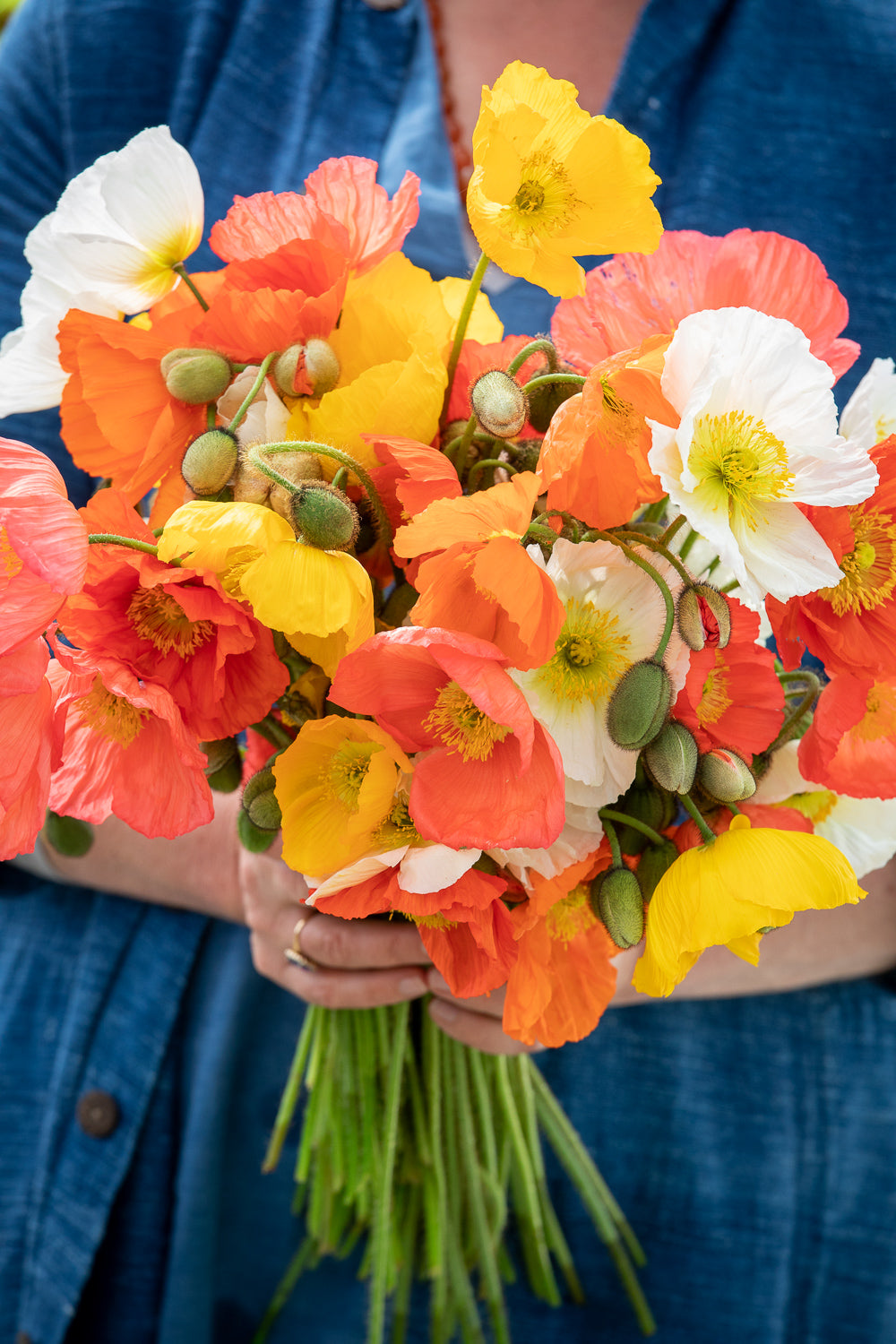
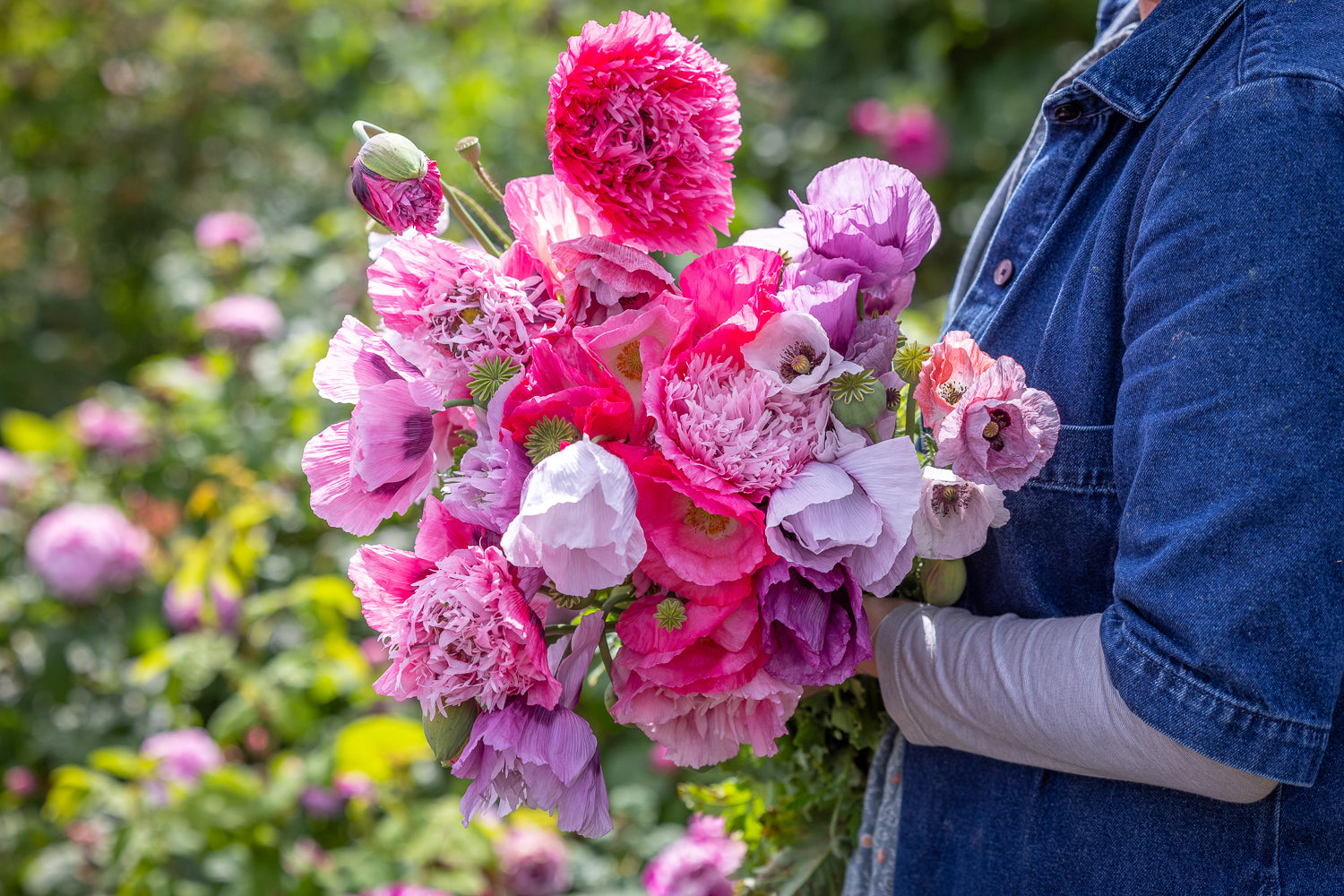
Once established most of our poppies need very little cossetting. The annuals prefer poorer drier conditions, so don’t over water or feed. The perennials like richer living and will give you a longer flush of foliage (and occasionally flowers) if you cut them back after flowering. They can also need staking as the large oriental poppy heads can flop onto the ground if left unsupported.

Most of the annual poppies are pretty trouble free, but there are some pests and diseases that can attack, particularly the perennial oriental poppies.

aphids

Greenfly might well appear on the tips in spring, so squash any that you see, and wait for the ladybirds and lace wings to come to your rescue. They can cause quite severe disfiguration of the leaves so SB plant invigorator is a good treatment if the problem persists.

downy mildew

A fungal infection that attacks mainly young plants, leaving yellow patches on the upper surface of the leaves. Remove affected leaves as soon as you see the problem and ensure good air circulation. Make sure that your poppy plants are not growing too close together in the row and try not to water from above.

powdery mildew

This one leaves white powdery fungal growth on the leaf surface; it is unlikely to kill the whole plant as long as you remove affected leaves promptly. It is caused by dryness at the roots and dampness around the leaves, so ensure you water at the base.

pedicel necrosis

This disease affects the flower buds which turn brown and fail to open properly. It is usually caused by too much rapid growth promoted by high nitrogen fertiliser. So, make sure you do not overfeed your plants.

why are my poppies drooping? 

Usually plants droop because they are too dry or too wet, so ensure you have the watering regime right. Some fungal diseases can also cause wilting, so ensure good hygiene and air circulation.

why are my poppies so small? 

If you have grown your poppies from seed, you need to make sure they are not sown too thickly otherwise they will be competing too much for food and water and fail to thrive. Thin them out to about 20cm apart once they have two true leaves.

why are my poppies not flowering? 

Make sure you are not over feeding your poppy plants as this can prevent flowering. You should also make sure they are getting enough sunshine.

  • It seems that deer are quite discerning in their poppy eating habits. They love an oriental poppy with its juicy stems and leaves, but they turn their noses up at the annuals – perhaps aware of the toxic properties of some varieties.

  • Some varieties are definitely toxic to pets and it is the unripe seed pods that can be particularly harmful if eaten in quantity. So dead heading your poppies as soon as they have finished flowering is a good precaution.

  • The perennial varieties will clump up but should not become invasive. The annuals will definitely spread if you do not deadhead them as soon as they have finished flowering. If you want to dry the beautiful seed heads you will need to hang them up in a shed if you do not want the seed to drop on the ground and reappear next year.

  • Deadhead your poppies as soon as they have finished flowering to stop them spreading all over your garden.

  • The annual varieties certainly need full sun, but perennial types can cope with some partial shade.

  • Yes, they do.

  • You will need to condition them by searing the ends of the stems in boiling water for ten seconds. They will then last for a couple of days in a vase.

  • Yes, you can. If you want to grow the annual poppies make sure the compost has plenty of grit as they need it quite free draining. The perennial types will need a richer mix of loam-based compost.

  • They are very easy to grow, and if you let them set seed, they will return year after year without any intervention from you!

  • Our native red cornfield poppy symbolizes remembrance of those killed in the first world war, having appeared in abundance in the ravaged fields of Flanders. Prior to that the opium poppies have always been associated with sleep and death.

  • If your definition of a weed is any plant that is growing in the wrong place then, yes, poppies can be weeds. Because they are so keen to set seed, and their seeds remain viable in the soil for long periods, they can be troublesome for the tidy gardener. But they are very easy to pull up and compost if you don’t want them.

  • The variety Papaver rhoeas (cornfield poppy) is definitely native to the UK. The opium poppy, having been introduced by the Romans has naturalised here, having been grown as a medicinal plant for thousands of years.

You will need to condition them by searing the ends of the stems in boiling water for ten seconds. They will then last for a couple of days in a vase.

Spend a further £60 to receive free standard delivery

Your basket is empty.