Skip to content

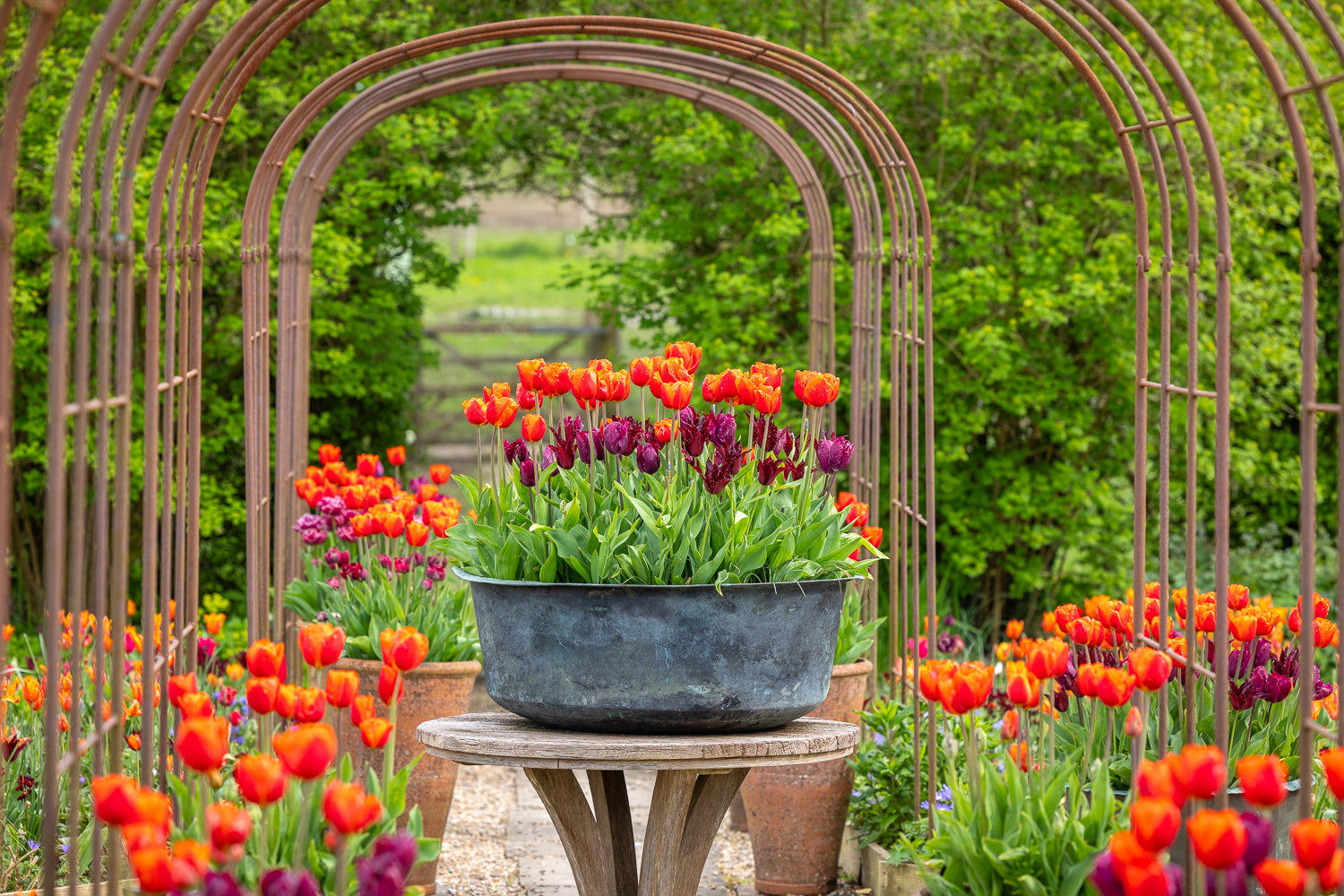
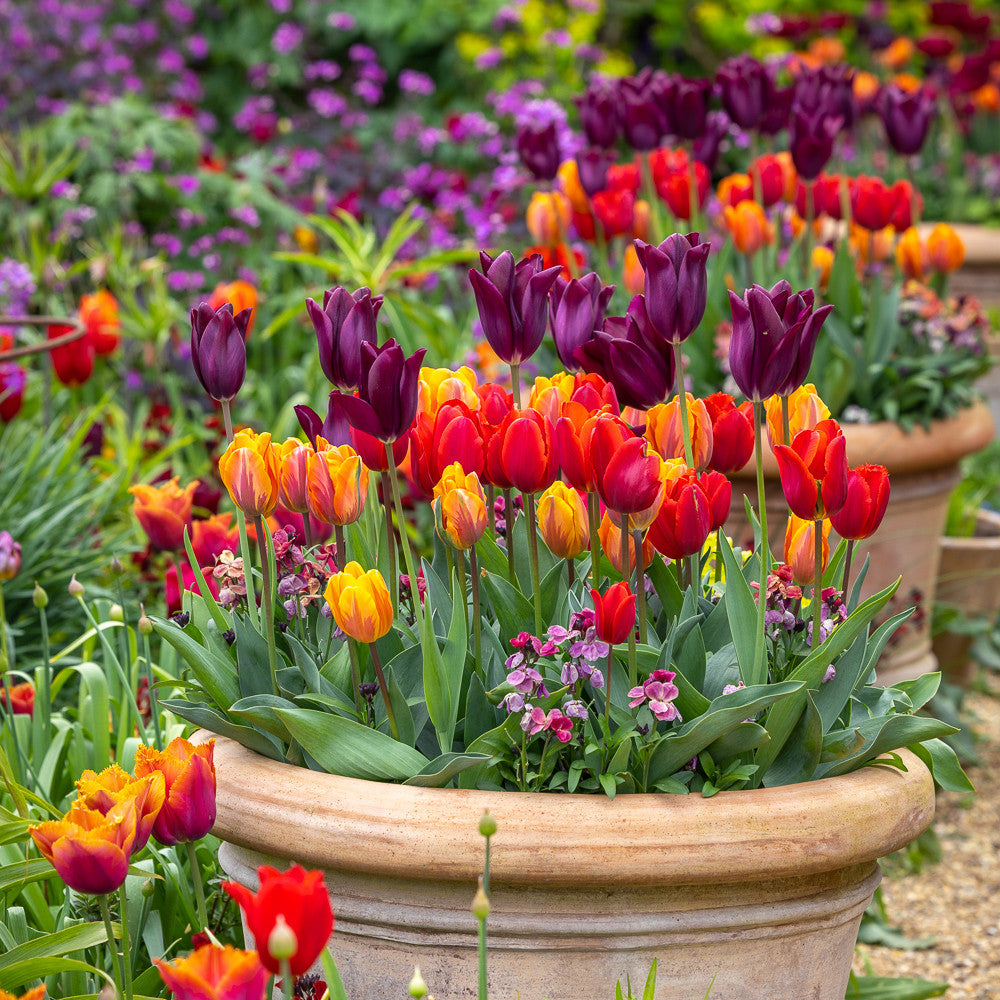
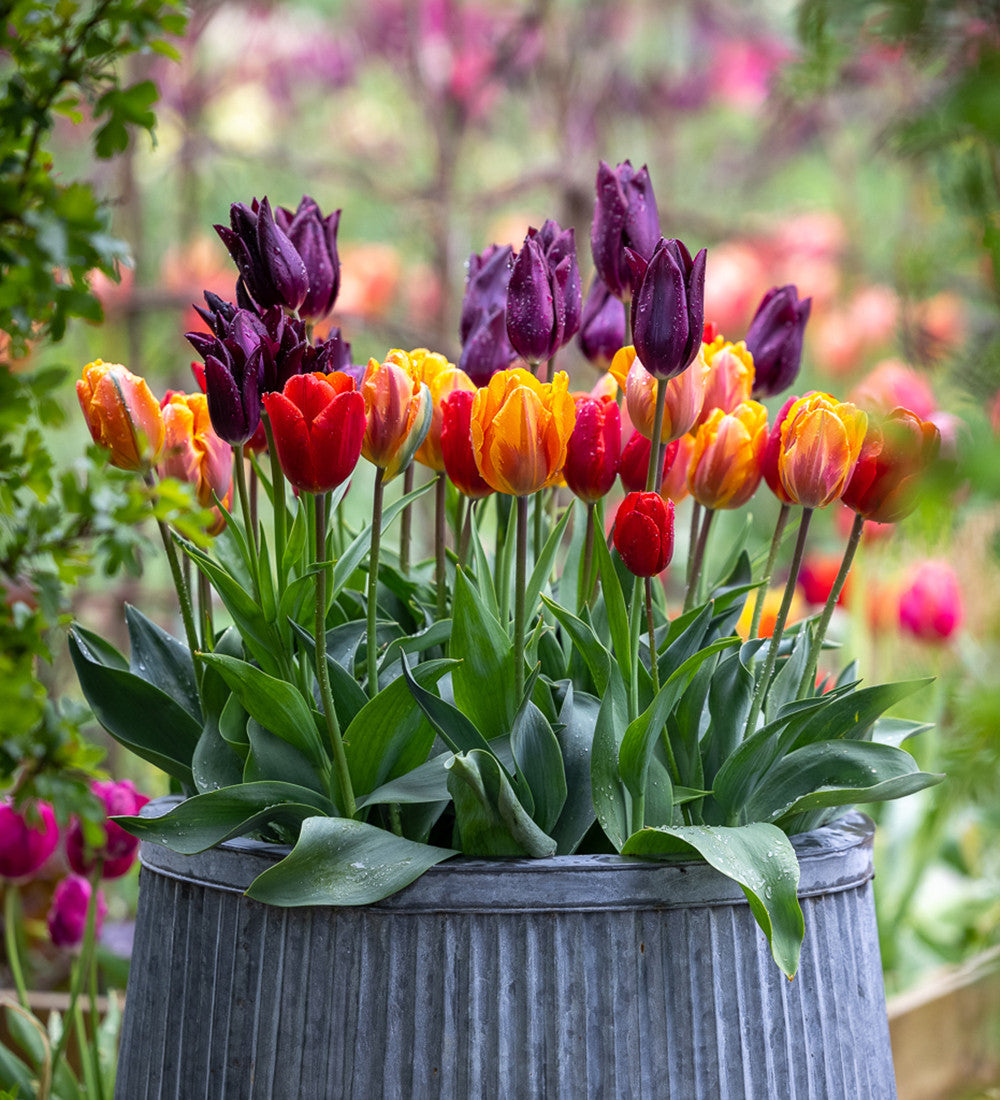
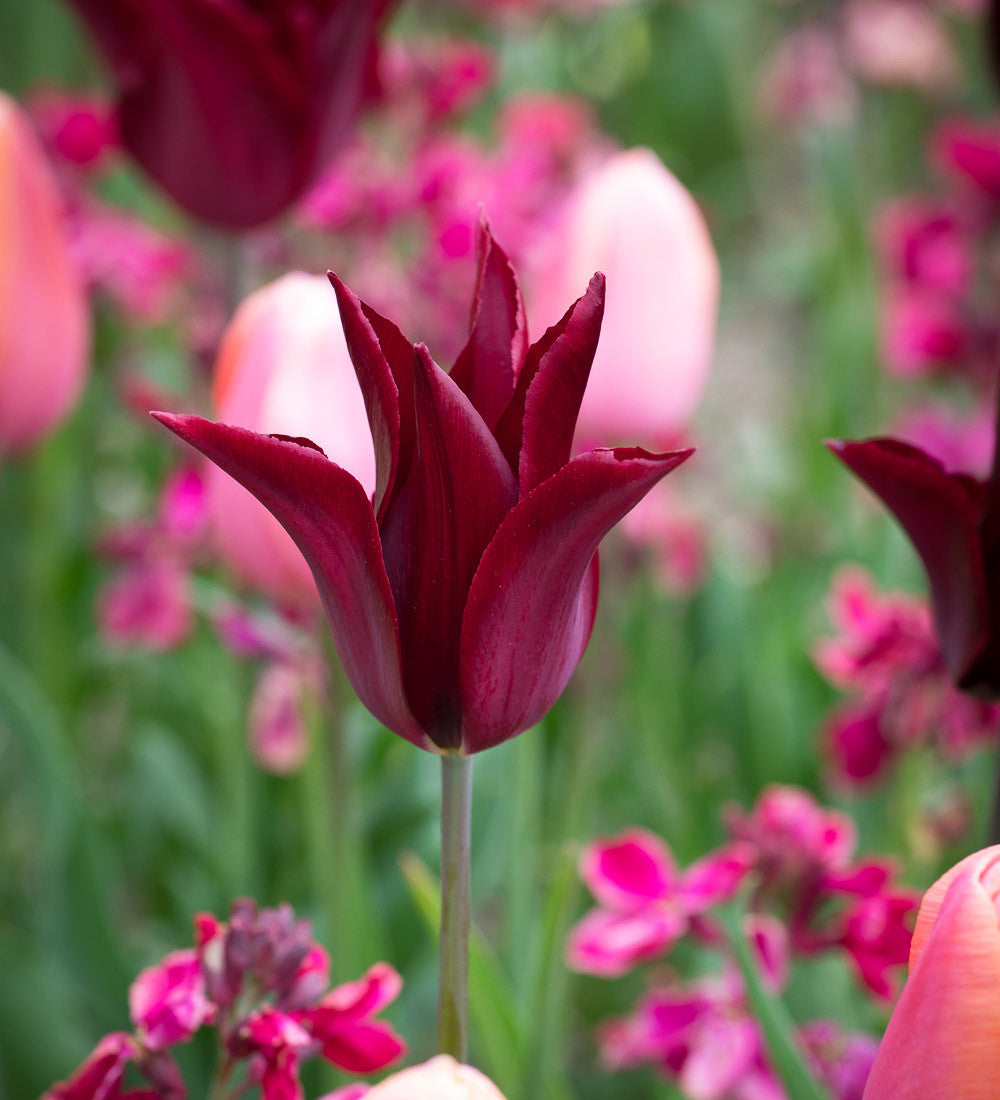
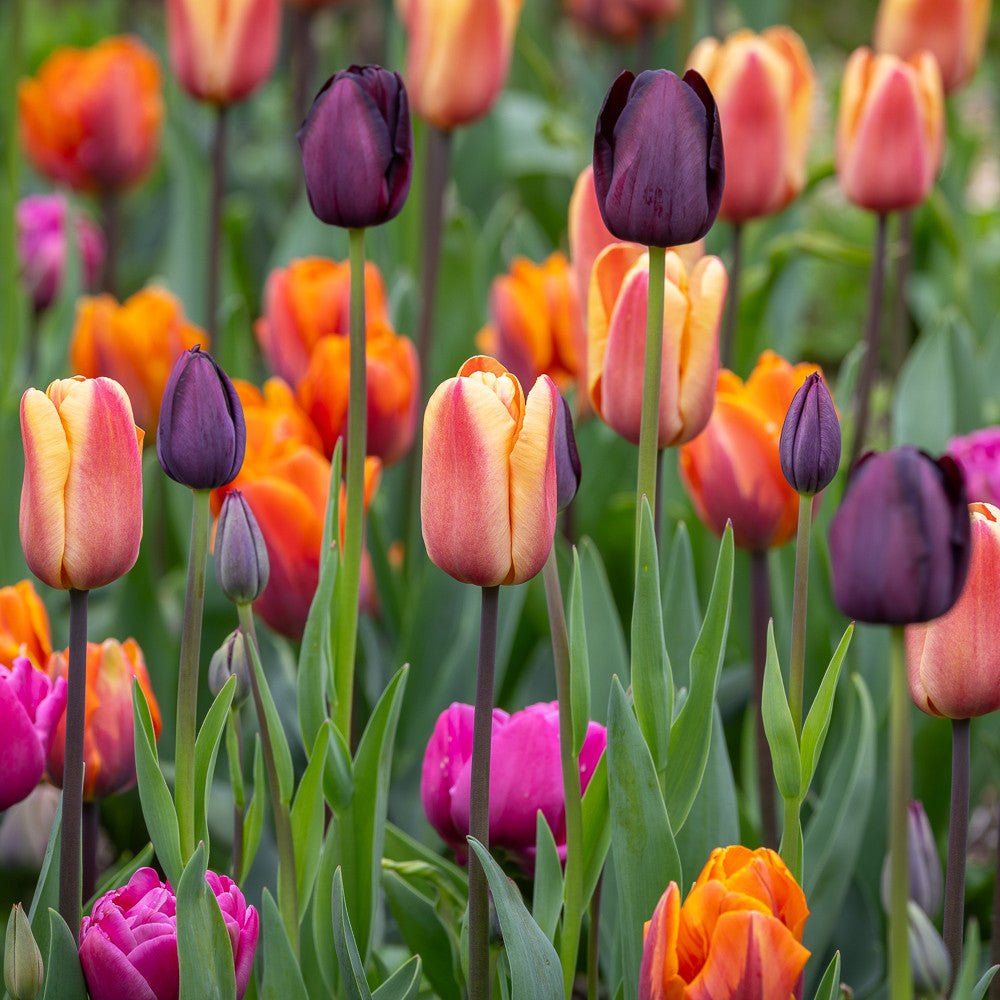
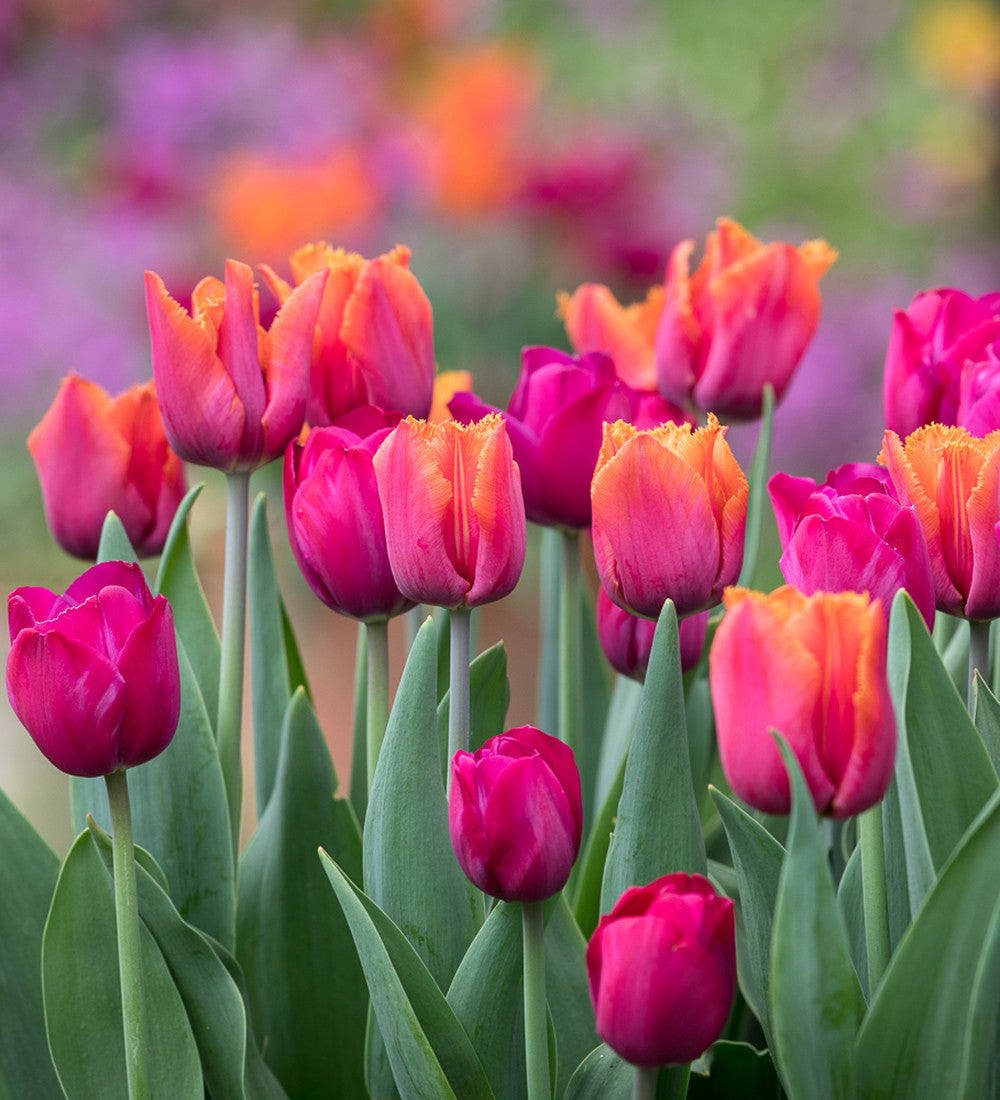
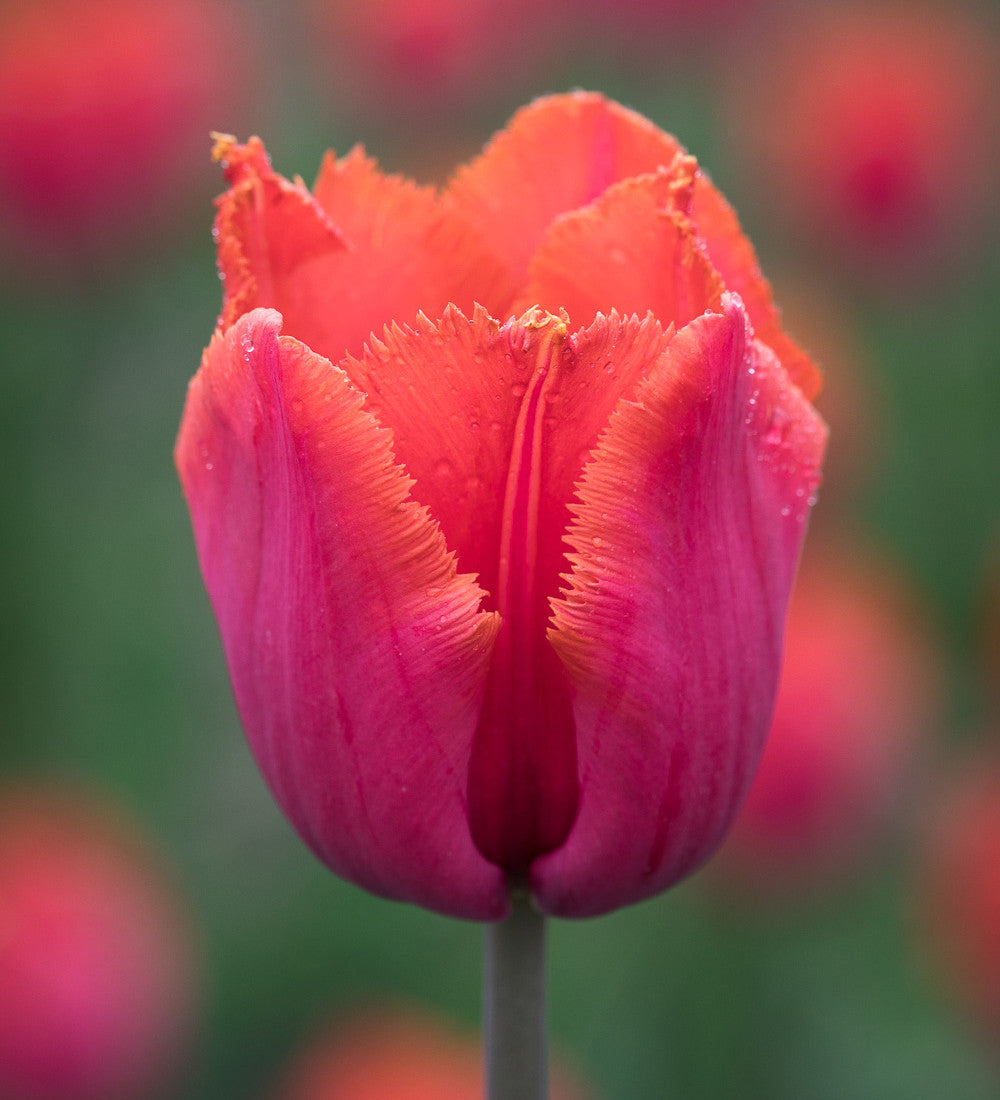
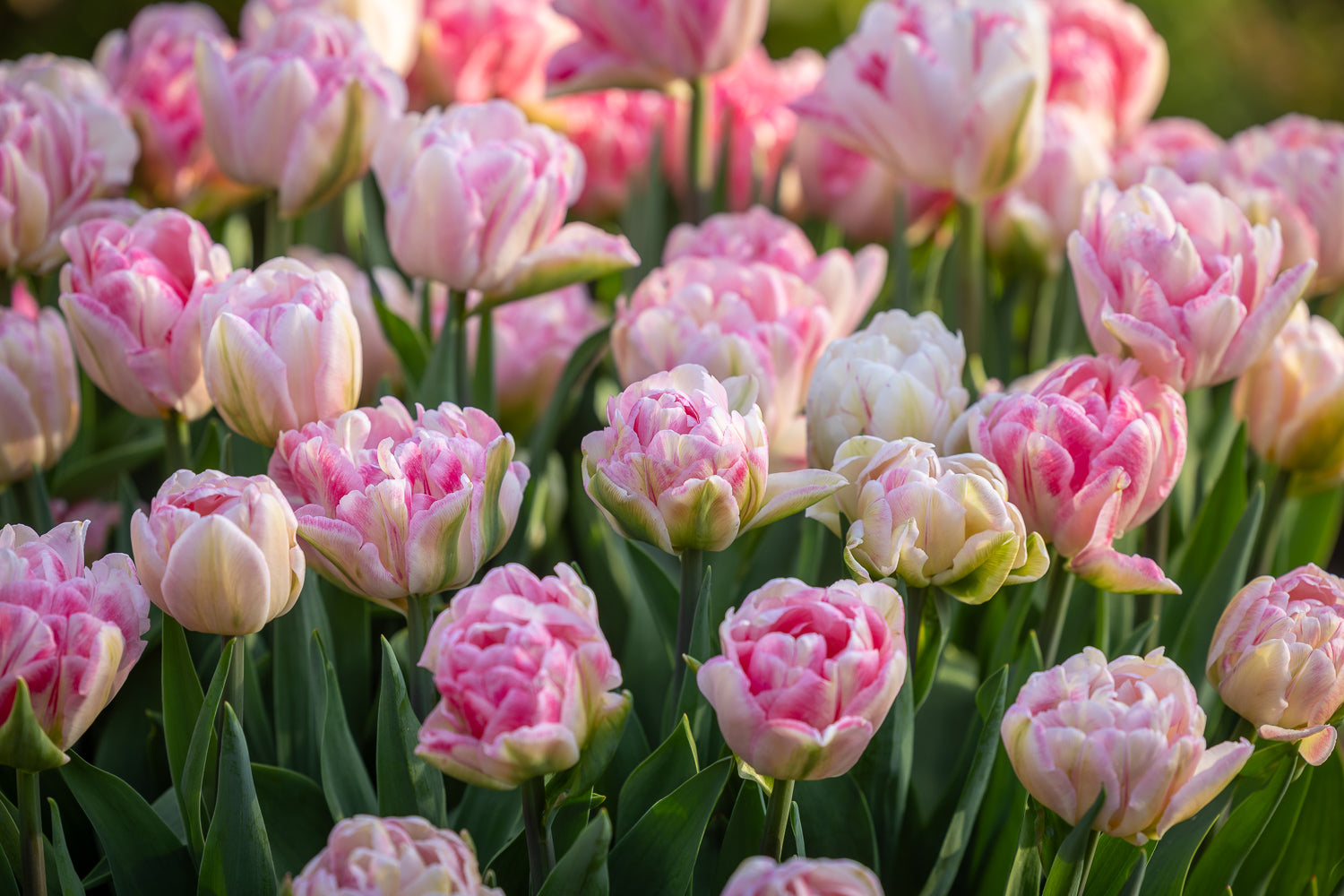
Spring would not be spring without fabulous, heart-lifting tulips. Tulips are my favourite spring bulb – I love their big statement colours, their interesting shapes and the life they bring to borders and containers. Every year I dither over whether to go for dramatic circus-tent stripes, romantic shades of pink, cream and white, renaissance jewel colours or all of the above. Pick your own colourful varieties from our wonderful selection – they are the biggest, best quality tulip bulbs, and our exclusive tulip bulb collections mix different colours, shapes and textures for fantastic results and a succession of tulips.

Jan J
Feb F
Mar M
Apr A
May M
Jun J
Jul J
Aug A
Sep S
Oct O
Nov N
Dec D
Planting
Flowering
Spring
  • Add a slow release fertiliser.
  • Enjoy your colourful display of tulips.
  • Deadhead or pick your tulips.
Summer
  • Leave the browning foliage on your tulips until every leaf has died down.
  • In mid-June, rake up all the dead foliage, mulch with 5-8cm (2-3in) of compost or well-rotted manure and over plant with half-hardy flowers or vegetables.
Autumn
  • From late-October, you can start to plant tulip bulbs.
Winter
  • Continue to plant tulip bulbs in containers or in borders.

Tulips prefer fertile, well-drained soil

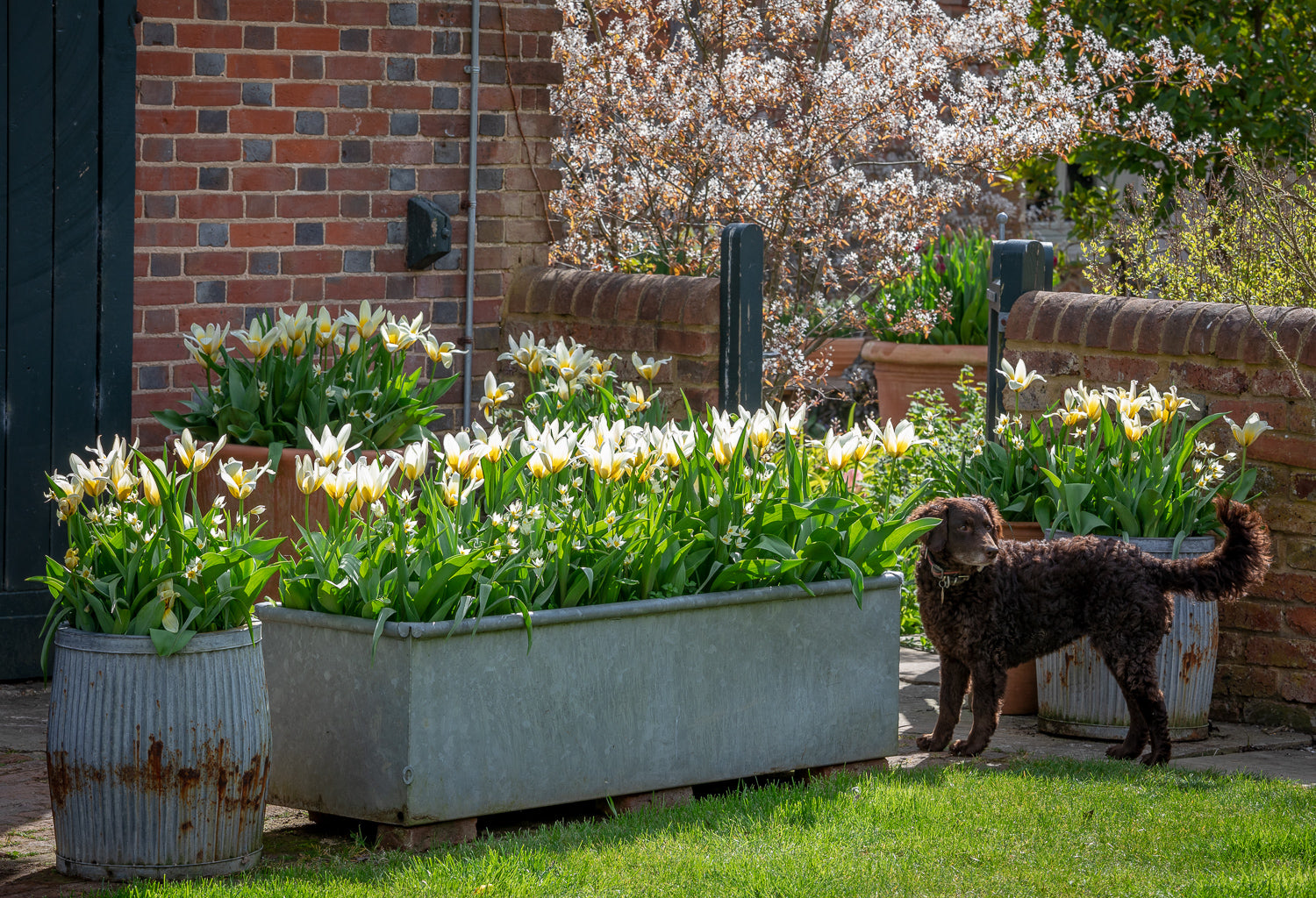
Most tulips thrive in a position in full sun, but most varieties will flower well in part shade. The whites and pale colours work particularly well in shade, glowing out from dimly lit corners.

Tulip bulbs are best planted from late-October and November-December.

Plant your tulip bulbs in late October, November or December. The cold temperatures help to wipe out viral and fungal diseases that lurk in the soil and which may infect the bulbs. Planting late is a traditional means of disease protection.

Most gardening books recommend planting tulips at twice the depth of the bulb – at about 8cm (3in) in the case of most tulips – but I prefer planting tulip bulbs much deeper. If planted deeply, tulips are less likely to try to reproduce and are more likely to flower for year after year.

You can plant tulips in your borders individually or in small groups amongst existing perennials, but if you are planting a lot of bulbs, it may be easier to dig out a trench or hole about 20cm (8in) deep. If you garden on heavy soil, cover the base with 5cm (2in) of washed sharp sand, horticultural grit, or spent compost. You can also add a handful of bone meal to encourage formation of next year’s flowers and mix it into the soil/grit at the base of the hole or trench.

Place the tulip bulbs, pointy end up, about 8cm (3in) apart and cover with soil. Again, if you garden on heavy soil you can mix grit at approximately one-third grit and two-thirds infill soil.

If you’re short of space, cover the bulbs with soil and then add a second layer of bulbs before filling in the hole. There is still enough soil above the bulbs to allow you to overplant the tulips without damaging them.

To help you plant your tulips more easily, you can use a traditional bulb planter, or bulb planting trays. If you're planting through herbaceous plants and shrubs or through grass, a bulb planter is brilliant – it’s like a massive apple corer and when you press it into the ground it cuts out a core of soil. Plop a little bit of spent compost or grit into the bottom of the hole, add the tulip bulb and backfill with grit and compost just like you would in the trench.
Watering

Water your tulips in well when you plant them, then it's unlikely you’ll need to water them again because it's bound to rain (this is the same for pots sitting outside). Though do water them during a prolonged dry spell. The tulips will start to sprout in March. If it’s still rainy, just let them get on with it.

Fertilising

After planting your tulips, mulch with organic matter. You could also mix in a slow-release fertiliser with your mulch at this stage. Fertliliser should not be placed directly into the planting hole. It is important not to use liquid fertiliser in autumn as the nutrients will just be leached away in the wet winter weather.

Come spring, feed your tulips again as the shoots first emerge. Feed with a slow-release fertiliser that will help build up the bulb’s reserves. Ensure that the leaves are left on after flowering so that they can continue to photosynthesise.

Staking

Staking tulips isn't necessary with deep planting. The bulb is anchored so deeply in the ground that it shouldn’t get blown over in the wind.

Deadheading

To deadhead tulips, cut the stem off just above the leaves. It is important to deadhead tulips, as this encourages the plant to put its energy into making bulbs for the next season, rather than seedheads. That said, remember to leave the browning foliage on your tulips until every leaf has died down, usually by early summer. This allows the bulb to store more food and produce flowers the following year.

Deadheading will minimise the risk of tulip fire, as the spores can persist in the petals after flowering. Removing them before they drop means they won’t land on the soil, where they could survive until the following season.

Propagating

Not all tulips are reliably perennial, but there is more chance of success with varieties from the Fosteriana, Darwin Hybrid, Viridiflora and Lily-flowered tulip groups.

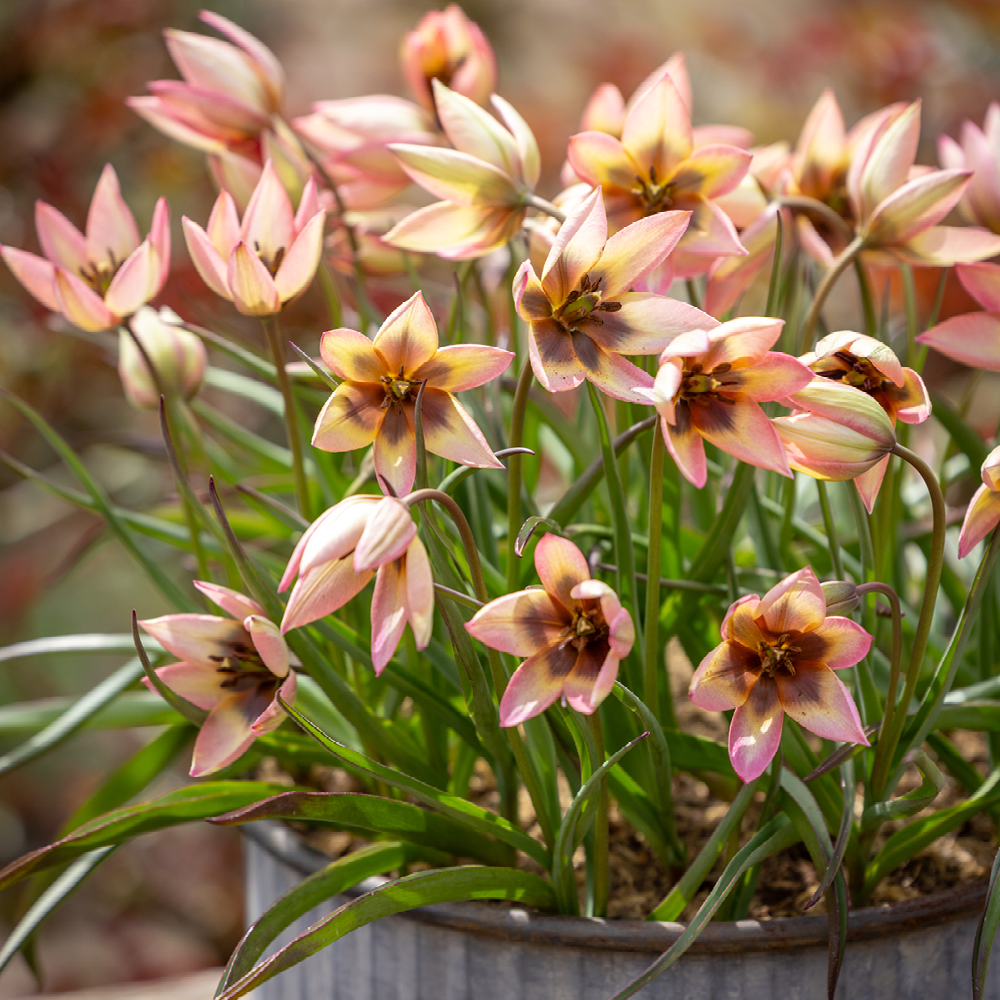
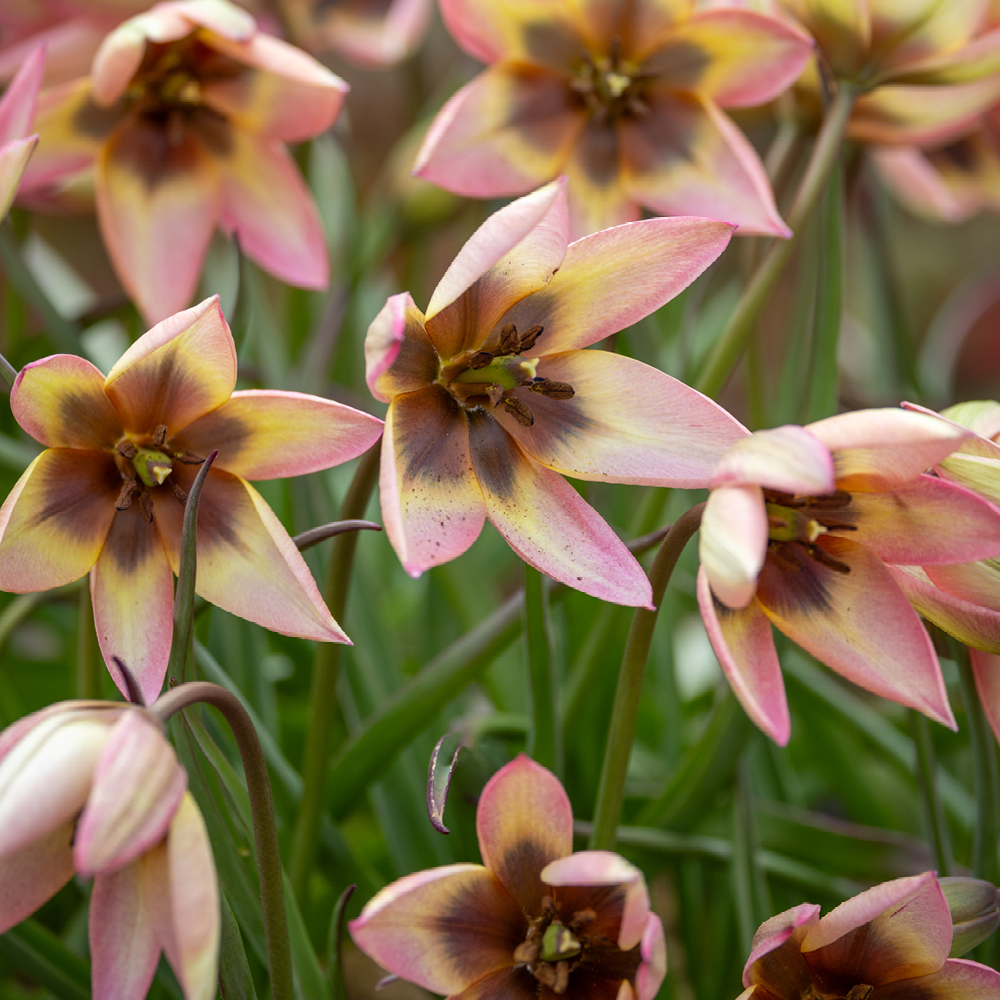
Most dwarf species tulips (such as T. humilis) and their hybrids will also flower year after year, and many will bulk up into clumps after a few years.

Overwintering

I have found no benefits from digging up tulip bulbs after flowering each year, so as a result I leave them in place. In mid-June I rake up all the dead foliage, mulch with 5-8cm (2-3in) of compost or well-rotted manure and over plant with half-hardy flowers or vegetables.

Tulip fire

Tulip fire is a fungal disease. As the tulips emerge, keep a look out for any distorted, twisted or sick-looking, discoloured foliage. If you see any, dig out that tulip, or clump, as soon as you can and dispose of it (but do not compost it).

If you don't notice any problems until the tulips begin to flower, but then see mini flecks and burns, these must also be uprooted and got rid of.

Squirrels

As the squirrel population grows, more of us are having our tulip bulbs nicked as soon as they are planted. To prevent this, plant the bulbs deeply, whether in pots or in the garden. Then lay some chicken wire (approx 1.5 cm / 0.5 in square) directly over the bulbs before covering both with compost. Unless the squirrels are very canny, this should protect your bulbs.

For bulbs already planted, liberally cover the top of the compost with holly sprigs, chilli flakes or powder. That should keep squirrels away, along with rats and mice too.

Why are my tulips drooping?

A warm, dry spring can cause tulips to droop. Water the tulips in a drought.

Why are my tulips short?

This could be because they were planted very late.

Why did my tulip bulbs rot?

There are a couple of fungal diseases that affect tulip bulbs that have been planted or are in storage. Diseased bulbs should be lifted and disposed of.

Why are my tulips not flowering?

Flowering can become incredibly unreliable the longer the tulips have been in the ground. If it’s the second or third year for the tulips you’ve planted, then it’s a good idea to plant new tulip bulbs for a revived display. Make sure they are getting enough sun and remember to feed your tulips.

Why are my tulip leaves curling?

Tulip fire can cause distorted growth in tulips, with leaves curling and shrivelling.

Why are my tulip leaves turning yellow?

Tulip leaves turn yellow and brown 4 to 6 weeks after flowering ends. If it’s too early in the season for the flowers to be dying back, then it could be poor drainage or not enough water that’s causing the problem. Otherwise, consider whether the bulbs are too shallow (i.e. were not planted deep enough) – if so, the roots may have been damaged by wind rock, this is where high winds loosen or damage plant roots.

  • Yes, tulips are toxic to both cats and dogs.

  • The tulip was originally a wildflower growing in Central Asia. It was first cultivated by the Turks as early as 1000AD. The flowers were introduced into Western Europe and The Netherlands in the late 16th century.

  • Yes, deer do like a tulip.

  • If you’ve forgotten to plant your bulbs, they can still be planted in January if the bulb is firm. They will flower a bit later and the show won’t be as spectacular as from autumn planted bulbs.

  • Not all tulips are reliably perennial, but there is more chance of success with varieties from the Fosteriana, Darwin Hybrid, Viridiflora and Lily-flowered tulip groups. Most dwarf species tulips (such as T. humilis) and their hybrids will also flower year after year, and many will bulk up into clumps after a few years.

  • Almost all tulips prefer full sun, but some will tolerate light shade.

  • Pots could be brought indoors as they are about to flower but need to be kept cool otherwise they will go over very quickly.

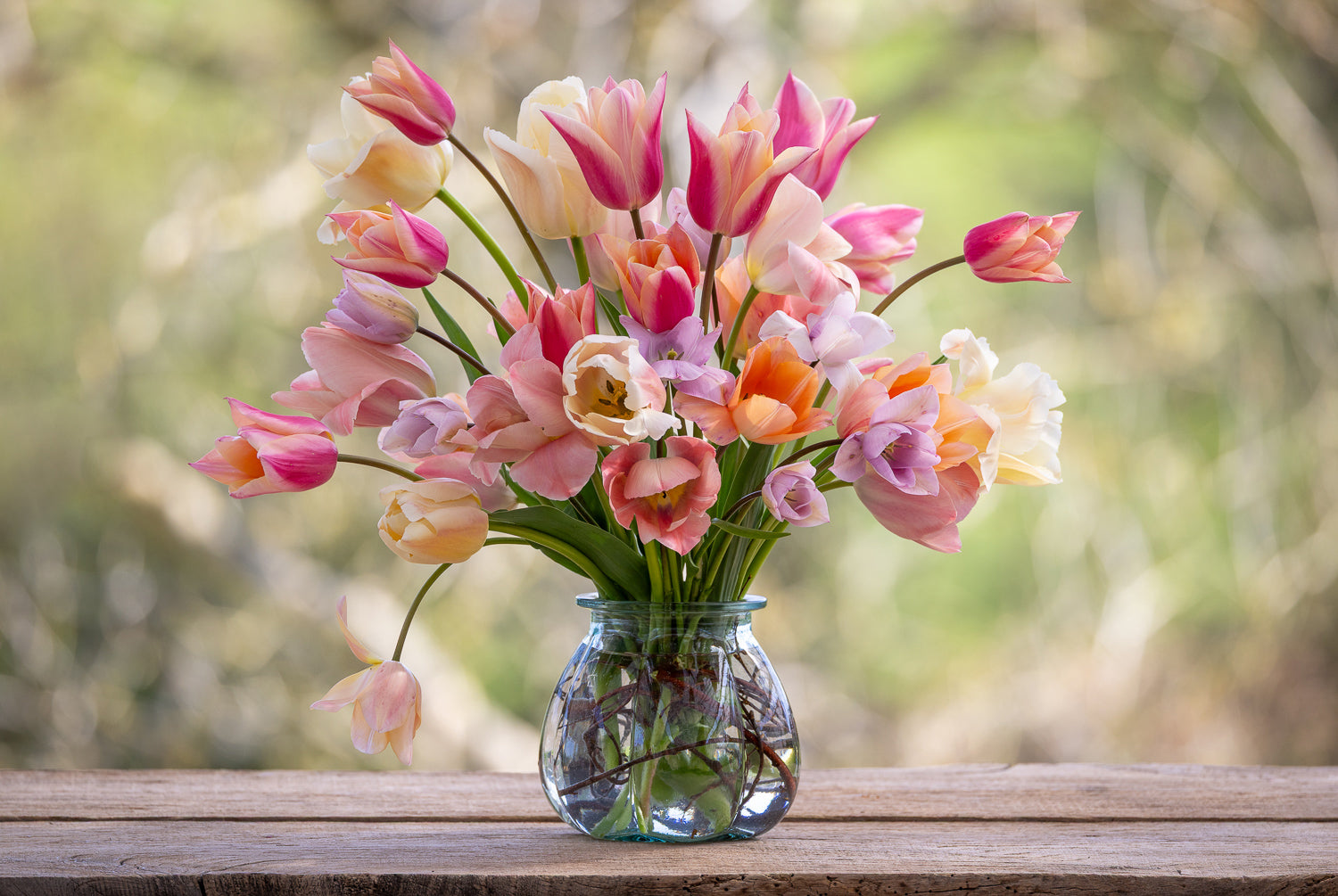
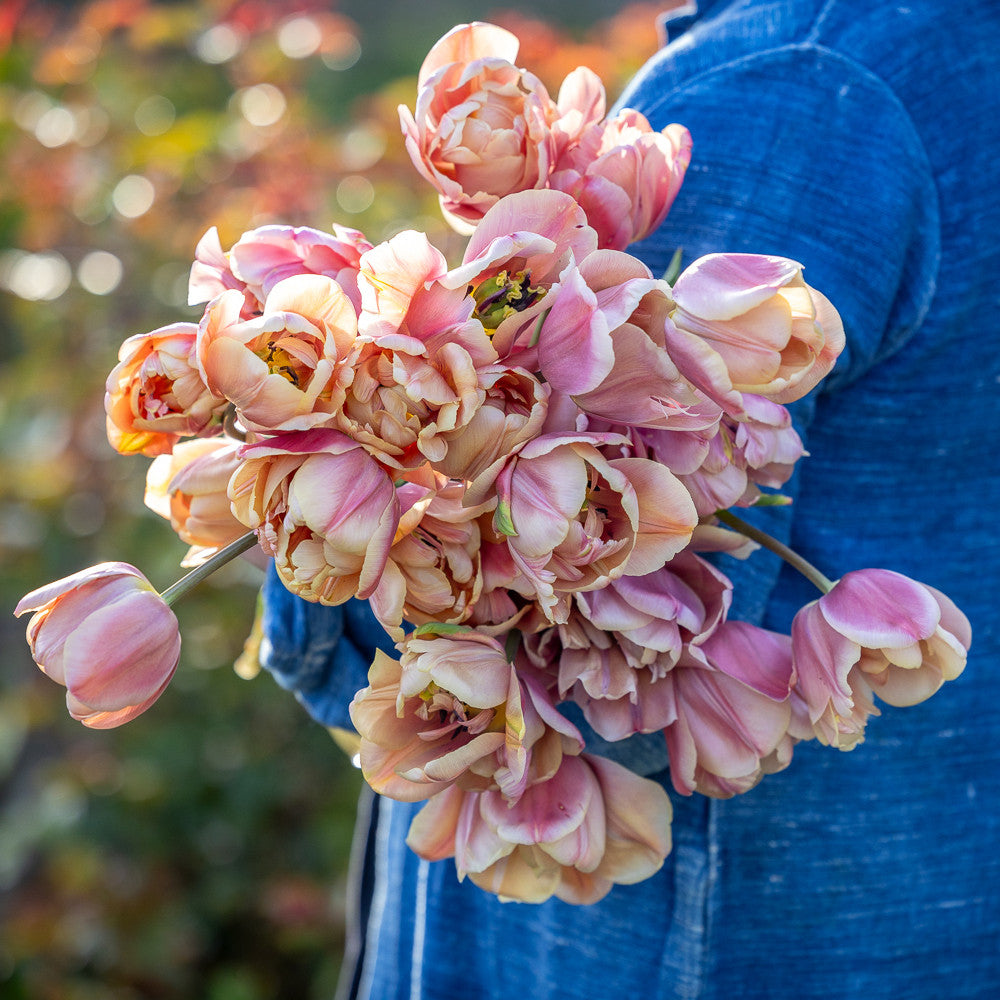
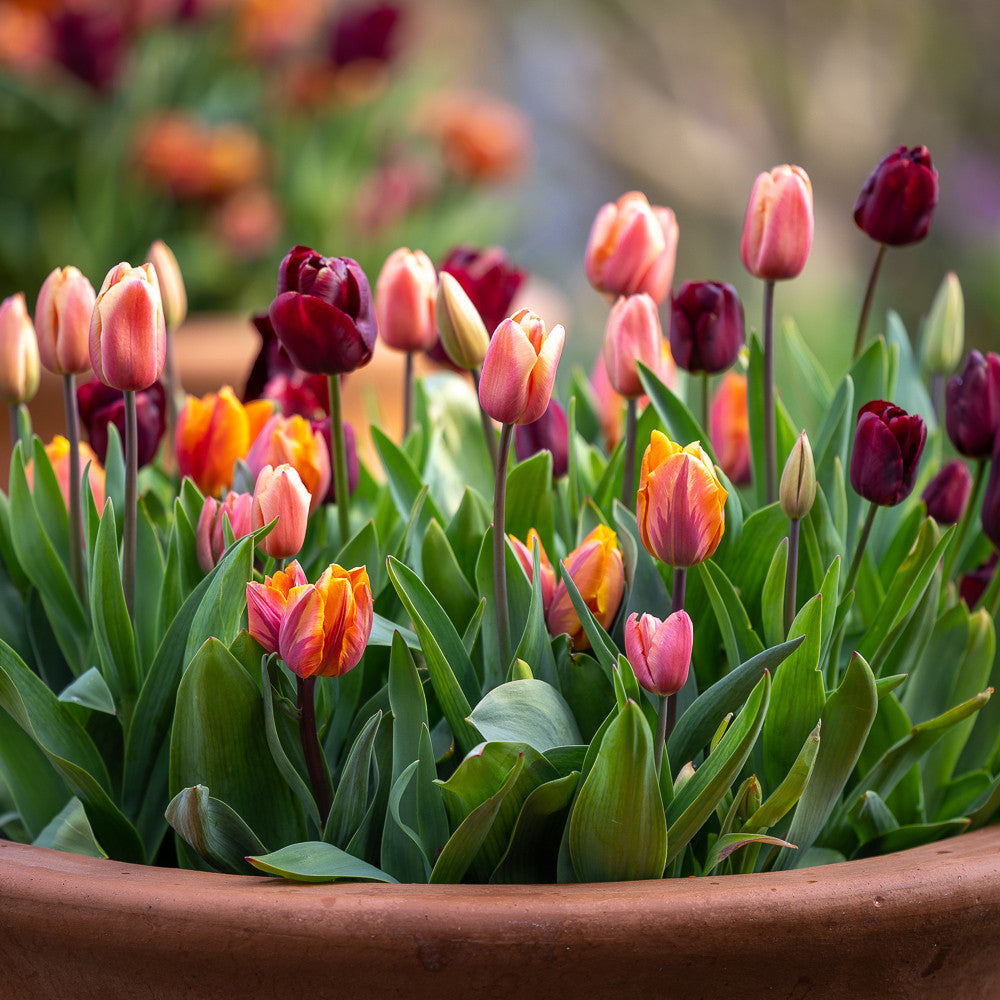
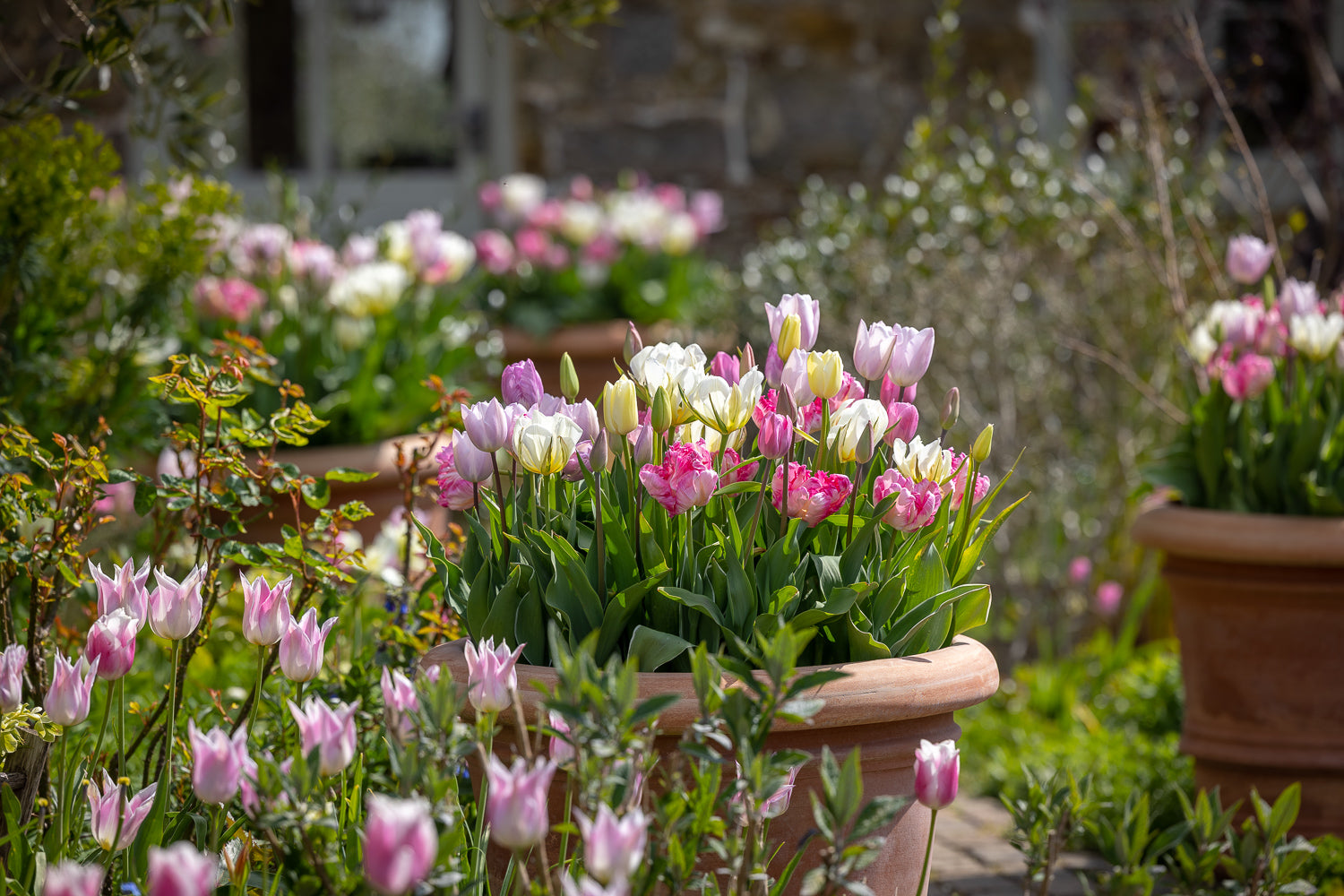
Tulips are colourful and dramatic in a vase all on their own, but they also mix well with other flowers and foliage from the spring garden.

Spend a further £60 to receive free standard delivery

Your basket is empty.