
Skip to content

There's lots of pruning, deadheading and harvesting to be done in August, so if you're off on your holidays make sure you get some help for your garden or plan ahead. You can also start preparing for the autumn veg patch and start to sow flowers for next spring.

The cutting garden

Sowing & growing

  • Collect seed pods for plants that you’re planning to reseed, and those that you don’t want to reseed themselves.
  • Towards the end of August you can start planning next year’s colour by sowing your hardy annuals.
  • Chrysanths will benefit from being pinched or sheared back, encouraging more growth and flowers.
  • Keep picking your cut flowers to encourage more blooms and a longer flowering season.
  • Feed your containers to keep your display going into the autumn. Varieties such as Arctotis 'Wine', 'Mahogany' and 'Flame' are superb container plants, and perfect for filling a sunny corner. There are huge numbers of flowers until November if there's no hard frost, but it's key to deadhead them at least twice a week. You can break off the old flowering stem or cut it to the base with scissors. Keep watering and feeding containers, if it is very hot then you may need to water several times a day.
  • Start planting early-flowering biennials (for example, honesty and wallflowers) sown under cover in May and June. If planted in their final flowering position in August, you're guaranteed whopper plants before the late autumn cold sets in.
  • Take pelargonium cuttings – they’re growing at full tilt now so they’ll root very quickly to give you plants for your windowsill all winter. Watch Sarah take pelargonium cuttings in our growing guide to find out how to do this.
  • Take cuttings from other tender perennials, plants such as arctotis, argyranthemums, verbenas and plectranthus.

Bulbs & tubers

  • Support your dahlias, lilies and gladioli with stakes, metal supports and flower rings to ensure the weight of their beautiful flower doesn’t cause their stems to break. It's never too late to stake large plants such as dahlias to keep them looking good until the frosts. Do this before the autumn winds sweep in.

Harvesting

Lovely things to pick and arrange from your garden in August:

  • Bulbs: lilies (Oriental Hybrids and L. speciosum) and gladioli
  • Hardy annuals: all the late-flowering varieties
  • All half-hardy annuals and dahlias
  • Perennials: Euphorbia schillingii and E. ceratocarpa, heleniums, phlox and echinacea

Pick regularly, arranging flowers in a series of mini bottles down the centre of a table, mantelpiece or window ledge. Most varieties last better when cut on a short stem.
Perennials, shrubs & trees

Pruning & tidying

  • Most long-flowering perennials such as Geranium psilostemon and Geranium 'Johnson’s Blue’ have finished blooming now, so cut them right to the ground and water to encourage them to put up a second flush of foliage as soon as possible and generally prevent the garden from looking frazzled and messy.
  • Trim back your lavender once it has finished flowering, to stop it growing leggy.
  • Although weeds will be growing more slowly than in the spring, it’s an idea to continue to hoe the soil to keep them down. This should be done in warm, dry conditions to ensure any weed seedlings left on the surface dehydrate and die.
  • Pull alstroemerias – as alstroes go over from their first flowering, pull (rather than cut) the stems, as you do rhubarb. This encourages more growth from below ground to give you a huge second flush of flowers right through the autumn. Make sure stakes are in place too, as most alstroes are vigorous and will flop about in the autumn gales. Watch Sarah’s simple video for how to harvest alstroemeria for more tips.
  • Stake late-flowering perennials such as asters, echinaceas and rudbeckias. They will have so much more impact in the garden looking perky and upstanding, rather than trailing along the ground.
  • Prune your wisteria after flowering by removing all the whippy side shoots from the main branch framework to about about five leaves from the main stem.
  • Prune rambling roses after flowering.

Planting

  • Plant foxgloves, sweet rocket, sweet williams and other perennials, so the roots have time to establish themselves and put on lots of growth before the autumn.

The kitchen garden

Vegetables

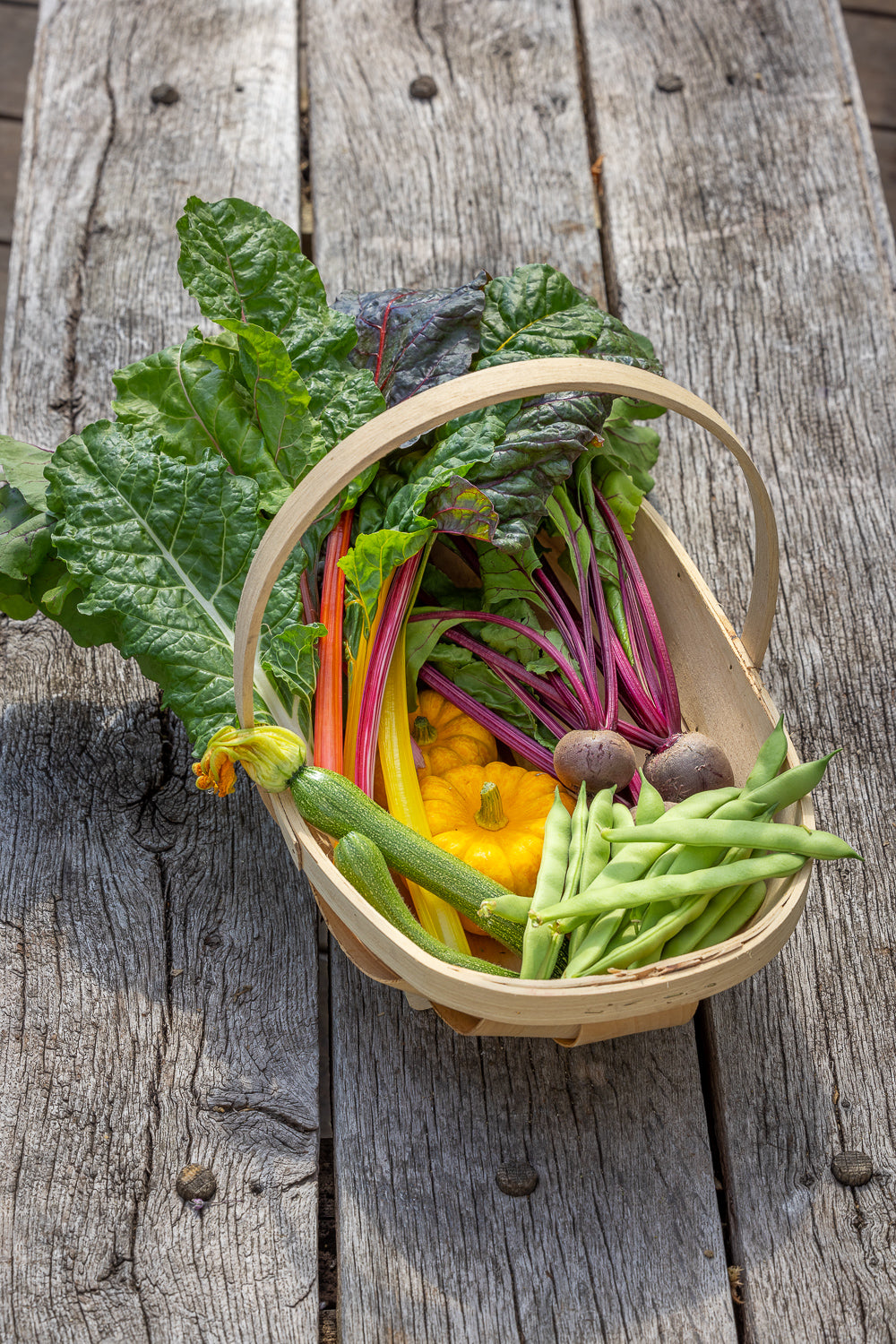
  • Plant out your leeks and brassicas if you haven’t already, and you can also squeeze in a final sowing of spinach and chard in the first couple of weeks of August.
  • Sow salad leaves under cover, or out in the open if in warmer parts of the UK.
  • Watch your tomatoes and potatoes closely for blight. This will first be visible in the leaves, and can often be prevented with Bordeaux mixture. Potatoes can also be protected simply by earthing up the tubers.
  • Another problem to keep an eye out for is blossom end rot on your tomatoes. This is first spotted on the fruit itself, as a brown or black spot that grows in size and gradually becomes sunken and flat. The risk of blossom end rot can be prevented by frequent watering – the disease being caused by the plants not receiving a sufficient quantity of calcium.
  • Do a last sowing of beetroot – a patch of a purple variety such as 'Boltardy’, a stripy pink and white, such as 'Candy Stripe’, (syn. 'Chioggia’) and an orange such as 'Burpee’s Golden’. Mixed up, these colours look fabulous in chunks on top of a simple rocket and feta salad.
  • Keep on top of weeding and remove any dead or diseased leaves.
  • Continue to feed tomatoes.
  • Look out for seed potatoes to give you new potatoes at Christmas. These prepared tubers can be planted now in a frost-free greenhouse, or in containers that can be moved under cover once it gets cold. They will take about 12 weeks from planting to cropping.

Salad & herbs

  • Sow basil, marjoram, borage, chives, coriander and dill in pots outside, to make moving them indoors as easy as possible in the late autumn.
  • Cut back herbs to encourage a new flush of leaves that you can harvest before the frost. Any not used fresh can be dried or frozen for later use.
  • Divide clumps of chives.
  • Sow hardy salads and herbs as soon as possible to give your crops a sheltered spot in the garden right the way through the autumn, winter and early spring. If you grow the cut-and-come-agains such as mizuna, 'Red Frills’ mustard and salad rocket, lettuces such as 'Salad Bowl', 'Navara' (a red oak leaf variety) and 'Merveille de Quatre Saisons', you’ll have plenty of delicious things to eat. If your veg patch is chock-a-block, sow in a gutter pipe inside to transplant outside in about a month’s time when there should be more room.
  • Sow winter purslane now too, a slightly fleshy, succulent, cut-and-come-again salad plant, very rich in Vitamin C, which is, again, 100 percent hardy. It will happily self sow in a sunny or partially shaded corner, germinating in the autumn, or early spring and making an invaluable addition to salads in the leaner months.
  • Propagate rosemary. Pull a sideshoot from a main stem with a small heel of bark attached. Strip off a few of the bottom leaves and pinch out the tip to reduce water loss. Then poke each stem into a gritty mix of moist compost in a small pot, three or four cuttings arranged around the edge. Find them a cool, but well lit spot, and keep the pot well watered.
  • If not already done, cut back both bronze and green-leaved fennel. Left to self seed, it can become a major invader and choke other plants. I used to love fennel – and indeed its fresh foliage is a great boon early in the year as a backdrop to tulips and alliums – but it’s a major take-over merchant.
  • Sow parsley. It’s a slow herb to germinate and won’t be harvestable for about 10 weeks but you’ll be able to pick it all winter. My favourite variety, with big leaves and excellent flavour, is 'Giant of Napoli'.
  • Sow a patch of chervil, an invaluable winter herb with a gentle aniseedy flavour, lovely in salads and omelettes. It will only germinate as the weather cools, but is 100 per cent hardy and will happily grow outside through rain, snow and hail.

Harvesting

Here's what you could be picking and eating this time next year or, if you're an old hand, already are:

  • Brassicas: kohl rabi
  • Roots: radishes, carrots, maincrop potatoes, onions and beetroot
  • Salad crops: salad leaves, pea tips, all lettuce and Florence fennel
  • Leafy greens: chard
  • Legumes: peas, French and runner beans
  • Squash: courgettes, Red Kuri squash, Pumpkin 'Munchkin'
  • Fruity veg: tomatoes, cucumbers, aubergines, peppers, chillies
  • Herbs: parsley, chervil, par-cel, coriander, dill, lovage, mint, chives, fennel, rosemary, sage, bay, winter savory, thyme, and also basil and oregano outside
  • Edible flowers: runner bean flowers, nasturtiums – pick all parts of the plant: the flowers, baby leaves (check there are no yellow eggs on the back laid by the cabbage white butterfly), the buds and the seed pods, which divide easily into three or four segments and make delicious eating. Similarly with runner beans, harvest the flowers in bright red ('Polestar'), white (in the case of 'White Lady’), or pink and white (with 'Painted Lady’) as often as you harvest the beans. They taste delicious and are excellent on potatoes or salad.

Spend a further £60 to receive free standard delivery

Your basket is empty.