The cutting garden
Sowing & growing
- Sow an annual meadow. Choose an area in a sunny spot, with well-drained soil. Clear, dig over and rake to form a fine seedbed. Keep an eye out for weeds but otherwise leave alone – no thinning, no staking. If there is no rain for two weeks, water again with a deluge to encourage germination.
- Once the frosts are over, plant out hardened off half-hardy annuals.
- Thin hardy annuals in seed beds, to make ready for planting out.
- Sow some fast-growing annuals to fill in gaps that may appear later in the season.
- Direct sow zinnias.
- Do a second sowing of half-hardy annuals inside, eg antirrhinums, amaranthus, and Moluccella laevis (Bells of Ireland), to give you flowers until nearly Christmas.
- Sow biennials, eg foxgloves, honesty and wallflowers.
- Harvest seed of cowslips and primroses before it drops, and sow straight into a seed tray. Put this somewhere cool and keep it well watered. They might not germinate until the autumn, so don’t forget to water.
Bulbs & tubers
- Once spring bulbs are over, rather than cutting down the foliage, leave to die and break down naturally. Doing this and adding liquid fertiliser around the clumps will encourage strong growth next spring. It’s still an idea to deadhead any faded flowers to prevent plants wasting energy creating seed heads.
- Start successional planting of gladiolus bulbs.
- Lift and divide bluebells when they start going over. Transplanted in the green, still in active growth, their roots settle in quickly. Remove flower heads.
- Deadhead and top-dress late varieties of tulips such as 'Orange Favourite' and 'Double Maureen' with blood, fish and bone. This encourages them to grow well until their leaves die right back, photosynthesising enough to store starch in the bulb for a good show next year.
Harvesting
Lovely things to pick and arrange from your garden in April:
- Bulbs: Narcissi, fritillaries, hyacinths, tulips, alliums
- Hardy annuals: Euphorbia oblongata, first autumn-sown marigolds
- Perennials: Euphorbias, polyanthus, hellebores and first Solomon seal and lily of the valley
Many tulips are looking at their best now. They continue to grow once you’ve cut them, as the main growth plate is just below the flower head. With the heavy-headed parrots, whose heads tend to droop after a day or two in, push a darning needle through the stem just below the head. This disrupts the growth plate and hence slows cellular division and the droopy-head syndrome.
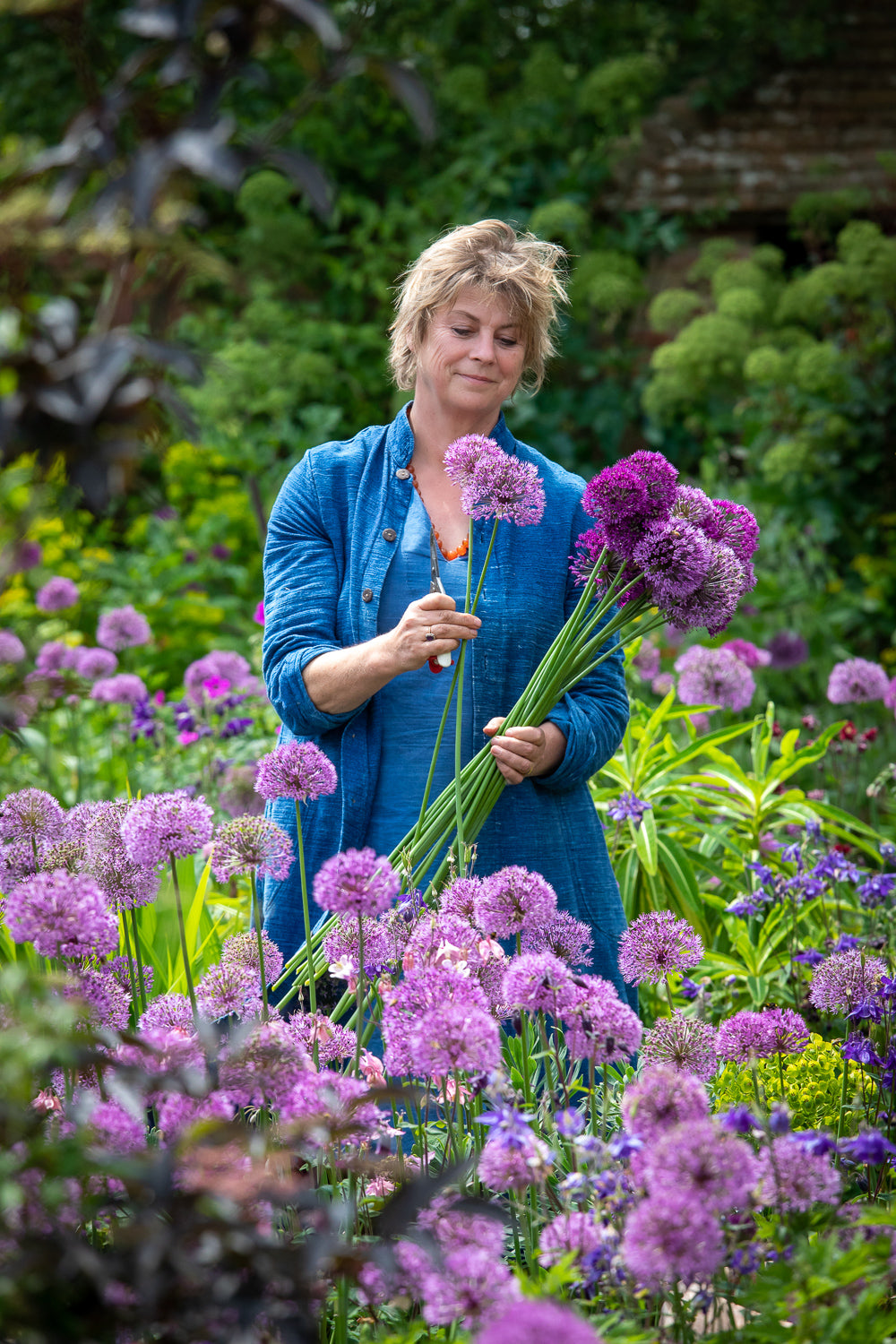
Cut plenty of alliums for a vase – they're at their peak of flowering. Add a drop of bleach or slosh of vinegar to the flower water. This stops bacterial build-up and slows the stem ageing, and hence reduces any oniony smell.